
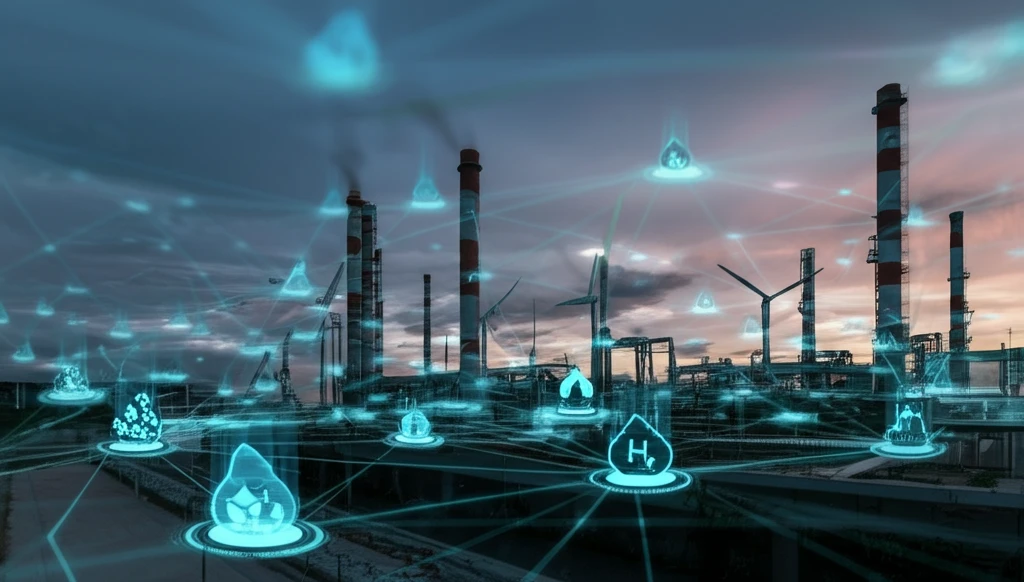
Interconnected direct air capture and green hydrogen facilities symbolize sector coupling.

Can Green Hydrogen and Carbon Capture Save the Planet (and Your Wallet)?

"Discover how integrating green hydrogen production with direct air capture can make a cleaner energy future more affordable and efficient."


The Earth's atmosphere is straining under the weight of excess carbon dioxide (CO2), and finding effective ways to remove this greenhouse gas is more critical than ever. Direct Air Capture (DAC) technologies are emerging as a promising solution, literally sucking CO2 out of the air. Simultaneously, green hydrogen (GH), produced from renewable energy sources, is gaining traction as a clean energy carrier. However, both DAC and GH face significant economic hurdles that have slowed their widespread adoption.

One innovative approach is gaining momentum: sector coupling. This involves integrating DAC and GH production systems to share resources and increase overall efficiency. Think of it as a symbiotic relationship where the waste of one process becomes the fuel for another. By strategically combining these technologies, we can potentially overcome the economic barriers that plague them individually and accelerate the transition to a cleaner, more sustainable energy landscape.

This article delves into the exciting possibilities of sector coupling, exploring how integrating solid DAC systems with green hydrogen production can unlock economic synergies and drive the adoption of cleaner energy solutions. We'll explore the science, the economics, and the potential impact of this integrated approach.

What is Sector Coupling and Why Does It Matter for Clean Energy?

Interconnected direct air capture and green hydrogen facilities symbolize sector coupling.

Sector coupling is essentially the strategic integration of different energy-related systems to maximize efficiency and minimize waste. In the context of DAC and GH, it means connecting these two technologies so they can share resources like power sources and energy storage. This interconnectedness leads to several key benefits.

Think of it this way: standalone DAC plants and GH production facilities often operate below their full capacity, especially when relying on intermittent renewable energy sources like solar and wind. Sector coupling allows these systems to complement each other, using excess energy from one to power the other, thereby increasing overall utilization and reducing energy waste.

  • Increased Efficiency: By sharing resources and optimizing energy flows, sector coupling reduces overall energy consumption.
  • Reduced Costs: Sharing infrastructure and maximizing resource utilization lowers both capital and operational expenses.
  • Enhanced Sustainability: Integrating renewable energy sources and reducing reliance on fossil fuels leads to a smaller carbon footprint.
  • Improved Grid Stability: Sector coupling can help balance energy supply and demand, making the grid more resilient to fluctuations in renewable energy production.
For example, DAC systems can be powered by excess renewable energy generated during off-peak hours, which would otherwise be wasted. Similarly, the heat generated during GH production can be used to enhance the efficiency of DAC processes. This synergistic relationship not only reduces costs but also makes both technologies more environmentally friendly.

The Future is Integrated: Embracing Sector Coupling for a Sustainable Tomorrow

The integration of solid DAC systems with green hydrogen production through sector coupling represents a significant step towards a more sustainable and economically viable clean energy future. By strategically connecting these technologies, we can unlock synergies that drive down costs, enhance energy efficiency, and accelerate the transition to a carbon-neutral economy. This approach not only addresses the urgent need to reduce atmospheric CO2 but also paves the way for innovative business models and a more resilient energy grid. As we continue to develop and refine these integrated systems, sector coupling promises to play a pivotal role in shaping a cleaner, healthier planet for generations to come.

About this Article -

This article was crafted using a human-AI hybrid and collaborative approach. AI assisted our team with initial drafting, research insights, identifying key questions, and image generation. Our human editors guided topic selection, defined the angle, structured the content, ensured factual accuracy and relevance, refined the tone, and conducted thorough editing to deliver helpful, high-quality information.See our About page for more information.

This article is based on research published under:

DOI-LINK: https://doi.org/10.48550/arXiv.2406.00665,

Title: Integrating Solid Direct Air Capture Systems With Green Hydrogen Production: Economic Synergy Of Sector Coupling

Subject: econ.gn cs.sy eess.sy q-fin.ec

Authors: Sunwoo Kim, Joungho Park, Jay H. Lee

Published: 02-06-2024

Everything You Need To Know

1

What is Direct Air Capture (DAC), and how does it relate to the goal of a sustainable future?

Direct Air Capture (DAC) is a technology designed to remove carbon dioxide (CO2) directly from the atmosphere. The primary goal of DAC is to mitigate the effects of climate change by reducing the concentration of greenhouse gases. When combined with green hydrogen (GH) production through sector coupling, DAC becomes part of a broader strategy to achieve a sustainable future by creating a cleaner energy landscape.

2

How does sector coupling between green hydrogen and Direct Air Capture (DAC) work?

Sector coupling integrates Direct Air Capture (DAC) and green hydrogen (GH) production systems. This integration involves sharing resources, such as power sources and energy storage, to increase efficiency. For example, excess renewable energy can be used to power DAC systems or the heat from GH production can enhance the efficiency of DAC processes. This interconnectedness reduces energy waste and maximizes the utilization of resources, which lowers costs and improves sustainability.

3

What are the primary economic hurdles faced by Direct Air Capture (DAC) and green hydrogen (GH), and how can sector coupling help?

Both Direct Air Capture (DAC) and green hydrogen (GH) production face significant economic challenges that have slowed their adoption. The main hurdles include high capital and operational costs, and the variability of renewable energy sources. Sector coupling addresses these issues by allowing DAC and GH systems to share infrastructure and resources, thereby reducing expenses. This integrated approach helps maximize the use of renewable energy, reduces waste, and drives down the overall cost of both technologies, making them more economically viable.

4

Besides reducing costs, what are the additional benefits of sector coupling Direct Air Capture (DAC) with green hydrogen (GH)?

Beyond cost reduction, sector coupling offers several additional benefits. It leads to increased energy efficiency by optimizing energy flows and resource utilization. It enhances sustainability by integrating renewable energy and reducing reliance on fossil fuels, which leads to a smaller carbon footprint. Sector coupling also improves grid stability by helping balance energy supply and demand, making the grid more resilient to fluctuations in renewable energy production. Furthermore, it can encourage the development of innovative business models in the clean energy sector.

5

How does the integration of solid Direct Air Capture (DAC) systems with green hydrogen (GH) contribute to a carbon-neutral economy and a more resilient energy grid?

Integrating solid Direct Air Capture (DAC) systems with green hydrogen (GH) through sector coupling is a key step toward a carbon-neutral economy. By capturing CO2 directly from the atmosphere, DAC reduces greenhouse gas concentrations, while the use of GH, produced from renewable energy, offers a clean energy alternative. This integrated approach also contributes to a more resilient energy grid by balancing energy supply and demand and reducing reliance on fossil fuels, which increases the grid's stability in response to fluctuations in renewable energy production. The synergies created by sector coupling drive down costs and enhance the overall efficiency of clean energy systems, creating a more sustainable future.

Newsletter Subscribe

Subscribe to get the latest articles and insights directly in your inbox.