
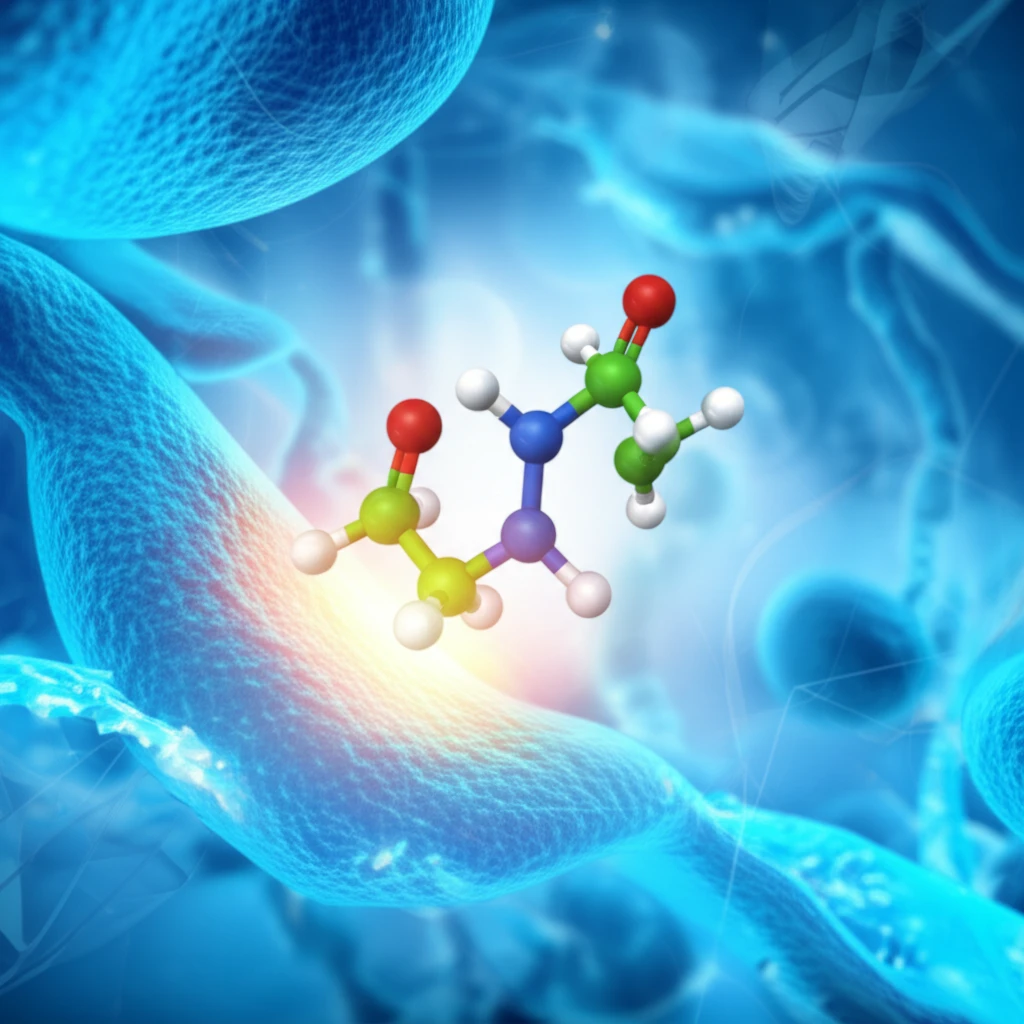
Eriodictyol molecule interacting with a colon cancer cell.

Can Eriodictyol, a Dietary Flavonoid, Be a Key to Colon Cancer Treatment?

"New research explores how eriodictyol interacts with apoptotic proteins, potentially unlocking new colon cancer therapies."


Colorectal cancer remains a significant health challenge worldwide, driving the need for innovative prevention and treatment strategies. Current treatments often target specific molecular pathways, but the search for novel agents continues to be a priority. One such agent under investigation is eriodictyol, a flavonoid found in plants like California yerba santa, known for its antioxidant and anti-inflammatory properties.

Apoptosis, or programmed cell death, is a crucial process in preventing cancer development. Cancer cells often evade apoptosis, leading to uncontrolled growth. Key proteins like p53, caspases, Bcl-2 family members (Bcl-2 and BAX), and APC (adenomatous polyposis coli) play critical roles in regulating this process. Understanding how these proteins interact and how they can be influenced by external agents is vital in cancer research.

This article explores a computational study that investigates the interaction between eriodictyol and various apoptotic proteins relevant to colon cancer. By using molecular docking techniques, researchers aimed to determine the binding affinity and interaction patterns between eriodictyol and these proteins, potentially paving the way for new therapeutic interventions.

Eriodictyol's Interaction with Apoptotic Proteins: A Molecular Docking Study

Eriodictyol molecule interacting with a colon cancer cell.

Researchers employed computational tools like AutoDock Vina and Molecular Graphics Laboratory to simulate the interaction between eriodictyol and key apoptotic proteins involved in colon cancer. This method, known as molecular docking, predicts how molecules bind to each other. Discovery Studio visualizer and PyMOL were used to visualize and analyze these interactions at the atomic level, pinpointing the specific amino acid residues involved.

The study revealed that eriodictyol exhibits significant binding affinity to several crucial apoptotic proteins:

  • p53: -10.6 kcal/mol
  • Caspase 8: -10.9 kcal/mol
  • Bcl-2: -9.0 kcal/mol
  • BAX: -9.5 kcal/mol
  • APC: -7.2 kcal/mol
Further analysis identified specific amino acid residues within these proteins that interact with eriodictyol. For example, in p53, CYS-277 and ALA-276 were involved in hydrophobic polar contacts. Similarly, interactions were observed in caspase 8 [THR-467, THR-337 (2), and GLU-396 (2)], Bcl-2 [ARG-103 (3), ALA-104 (2), and PHE-105, TYR-101], BAX [GLY-108, TRY-107, ASN-106, and GLN-155 (2)], and APC [GLU-40 (2) and LEU-37 (2)]. The root-mean-square deviation (RMSD) calculations also confirmed the stability and accuracy of these interactions.

Future Directions and Implications for Colon Cancer Therapy

This computational study provides compelling evidence that eriodictyol interacts with key apoptotic proteins involved in colon cancer. These findings suggest that eriodictyol may have a role as a potential anti-inflammatory agent in colon cancer, warranting further investigation.

The researchers suggest that the strong interactions between eriodictyol and APC, a tumor suppressor gene, are particularly noteworthy. This interaction could potentially restore normal cell function and inhibit tumor growth in colon cancer.

Future research should focus on validating these computational findings through in vitro (laboratory) and in vivo (animal) studies. These studies could explore the effects of eriodictyol on colon cancer cell growth, apoptosis, and tumor development, potentially leading to the development of new therapeutic strategies.

About this Article -

This article was crafted using a human-AI hybrid and collaborative approach. AI assisted our team with initial drafting, research insights, identifying key questions, and image generation. Our human editors guided topic selection, defined the angle, structured the content, ensured factual accuracy and relevance, refined the tone, and conducted thorough editing to deliver helpful, high-quality information.See our About page for more information.

This article is based on research published under:

DOI-LINK: 10.22159/ajpcr.2017.v10i1.14982, Alternate LINK

Title: Computational Studies On Different Types Of Apoptotic Proteins Docked With A Dietary Flavonoid Eriodictyol In Colon Cancer

Subject: Pharmacology (medical)

Journal: Asian Journal of Pharmaceutical and Clinical Research

Publisher: Innovare Academic Sciences Pvt Ltd

Authors: Mariyappan Palani, Karthi Natesan, Manju Vaiyapuri

Published: 2016-01-01

Everything You Need To Know

1

What is eriodictyol and why is it being researched for colon cancer?

Eriodictyol, a flavonoid found in plants like California yerba santa, is being investigated for its potential role in colon cancer treatment due to its antioxidant and anti-inflammatory properties. Research indicates that it can interact with key apoptotic proteins, potentially influencing cancer cell death.

2

What is apoptosis, and which key proteins are involved in preventing cancer?

Apoptosis, also known as programmed cell death, is a critical process in preventing cancer development. Key proteins like p53, caspases, Bcl-2 family members (Bcl-2 and BAX), and APC play essential roles in regulating apoptosis. Cancer cells often evade apoptosis, leading to uncontrolled growth, making these proteins important targets for therapeutic intervention.

3

What is molecular docking, and how was it used to study eriodictyol's interaction with proteins?

Molecular docking is a computational technique used to predict how molecules, such as eriodictyol, bind to proteins. In this case, researchers used tools like AutoDock Vina and Molecular Graphics Laboratory to simulate the interaction between eriodictyol and apoptotic proteins. The results, including binding affinities and interacting amino acid residues, help understand how eriodictyol might influence these proteins.

4

What did the study find regarding eriodictyol's binding affinity to apoptotic proteins?

The computational study revealed that eriodictyol exhibits significant binding affinity to several crucial apoptotic proteins. Specifically, it binds to p53 with a binding affinity of -10.6 kcal/mol, to Caspase 8 with -10.9 kcal/mol, to Bcl-2 with -9.0 kcal/mol, to BAX with -9.5 kcal/mol, and to APC with -7.2 kcal/mol. These binding affinities suggest that eriodictyol can interact with these proteins, potentially influencing their function in apoptosis.

5

What are the potential implications of this research for colon cancer therapy, and what future studies are needed?

This research indicates that eriodictyol could be a potential therapeutic agent in colon cancer treatment. By interacting with key apoptotic proteins like p53, caspase 8, Bcl-2, BAX, and APC, eriodictyol might help restore the normal process of apoptosis in cancer cells. Future research should focus on in vivo studies to validate these findings and explore the optimal methods for eriodictyol delivery and efficacy in treating colon cancer. While the study highlights specific interactions with these proteins, further investigation is needed to fully understand the comprehensive effects of eriodictyol on the broader apoptotic pathways and potential synergistic effects with existing cancer therapies.

Newsletter Subscribe

Subscribe to get the latest articles and insights directly in your inbox.