
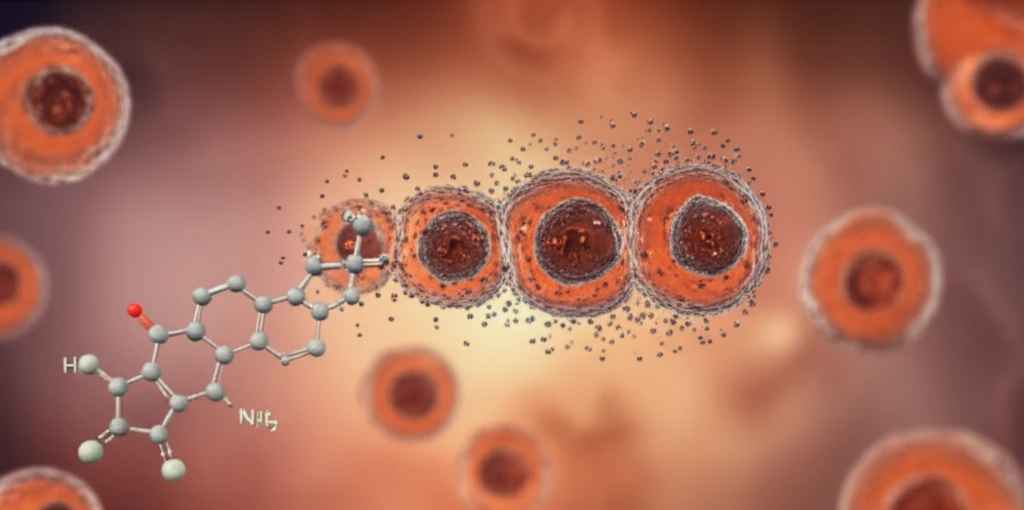
Oxibendazole transforming prostate cancer cells into healthy cells

Can a Common Deworming Drug Hold the Key to Prostate Cancer Treatment?

"New research suggests oxibendazole, an anthelmintic drug, could significantly inhibit prostate cancer cell growth, offering a potential new avenue for treatment."


Prostate cancer is a leading health concern among men worldwide, ranking as one of the most common malignancies and a significant cause of cancer-related deaths in developed nations. Androgen deprivation therapy (ADT) has long been the standard treatment, yet its effectiveness is often undermined as the cancer develops resistance, becoming androgen-independent.

The challenge of recurrent prostate cancer has spurred a search for new therapeutic strategies. Amidst this pursuit, an unexpected contender has emerged: oxibendazole (OBZ). Known primarily as an anthelmintic drug used to combat parasitic infections, OBZ has demonstrated potential in treating various malignancies. This has prompted researchers to investigate its impact on prostate cancer cell growth.

A recent study delved into OBZ's ability to suppress the growth of prostate cancer cells, focusing on androgen-independent cell lines 22Rv1 and PC-3. The findings revealed that OBZ indeed inhibits the growth of these cells. This article breaks down the essential insights from the study, offering an accessible overview for anyone keen to understand the latest advancements in prostate cancer research.

How Oxibendazole Impacts Prostate Cancer Cell Growth

Oxibendazole transforming prostate cancer cells into healthy cells

The study meticulously examined how OBZ affects prostate cancer cells in vitro, using a trypan blue exclusion assay to assess cell growth. The results indicated that OBZ significantly curtails the growth of both 22Rv1 and PC-3 cell lines. Specifically, OBZ inhibited cell growth with half-maximal inhibitory concentration values of 0.25 µM for 22Rv1 cells and 0.64 µM for PC-3 cells. These values indicate the potency of OBZ in suppressing the proliferation of these cancer cells.

To complement the in vitro findings, researchers conducted in vivo experiments using nude mice. The mice, bearing 22Rv1 tumors, were treated with OBZ at a dosage of 25 mg/kg daily. The results were compelling, as the mean size of tumors in the OBZ-treated group was 47.96% smaller than in the control group. This substantial reduction underscores OBZ's potential as an effective anti-cancer agent in a living organism.

  • Increased miR-204 Expression: OBZ treatment led to an increase in microRNA-204 (miR-204) expression, a known tumor suppressor.
  • Elevated p53 Levels: The treatment also increased the levels of p53, a protein that plays a crucial role in preventing cancer development.
  • Reduced Androgen Receptor Expression: OBZ was found to reduce the expression of the androgen receptor (AR), a key factor in prostate cancer progression.
  • Decreased Prostate-Specific Antigen (PSA): The study also noted a reduction in prostate-specific antigen (PSA) levels, a common marker for prostate cancer.
The study further explored the role of miR-204 in OBZ's mechanism of action. When miR-204 expression was knocked down, the inhibitory effect of OBZ was significantly reduced. Conversely, when miR-204 was overexpressed, the inhibitory efficiency of OBZ was markedly enhanced. This indicates that miR-204 plays a crucial role in mediating OBZ's anti-cancer effects.

The Promising Future of Oxibendazole in Cancer Therapy

The findings of this study illuminate the potential of oxibendazole as a therapeutic agent for recurrent prostate cancer. By targeting androgen-independent pathways and enhancing the expression of tumor-suppressing factors, OBZ offers a multi-faceted approach to combating cancer cell growth. While further research is essential to fully understand its effects and optimize its use, oxibendazole represents a promising new direction in the ongoing fight against prostate cancer. It is important to note that this research is still in its early stages, and OBZ is not yet approved for use in prostate cancer treatment.

About this Article -

This article was crafted using a human-AI hybrid and collaborative approach. AI assisted our team with initial drafting, research insights, identifying key questions, and image generation. Our human editors guided topic selection, defined the angle, structured the content, ensured factual accuracy and relevance, refined the tone, and conducted thorough editing to deliver helpful, high-quality information.See our About page for more information.

This article is based on research published under:

DOI-LINK: 10.3892/ol.2017.7579, Alternate LINK

Title: Oxibendazole Inhibits Prostate Cancer Cell Growth

Subject: Cancer Research

Journal: Oncology Letters

Publisher: Spandidos Publications

Authors: Qiaoli Chen, Yuhua Li, Xiaoyu Zhou, Runsheng Li

Published: 2017-12-11

Everything You Need To Know

1

What is oxibendazole and why is it being studied for prostate cancer?

Oxibendazole, commonly used to treat parasitic worm infections, is being investigated for its potential to inhibit the growth of prostate cancer cells, particularly androgen-independent cells. It's significant because prostate cancer often develops resistance to traditional treatments like androgen deprivation therapy (ADT), and oxibendazole offers a new approach by targeting different pathways. The implications could be substantial, potentially providing a new therapeutic avenue for recurrent prostate cancer, although further research is needed to confirm its safety and efficacy in humans.

2

How does oxibendazole affect androgen-independent prostate cancer cells?

The research indicates that oxibendazole suppresses the growth of both 22Rv1 and PC-3 cell lines, which are androgen-independent prostate cancer cell lines. It's important because these cell lines represent a form of prostate cancer that is resistant to standard hormone therapies. The implications are that oxibendazole might be effective against cancers that no longer respond to traditional androgen deprivation therapy. In in-vivo experiments, Oxibendazole notably reduced the tumor size in mice

3

What specific changes occur within prostate cancer cells when treated with oxibendazole?

The study showed that oxibendazole increases the expression of miR-204, elevates p53 levels, reduces androgen receptor expression, and decreases prostate-specific antigen (PSA) levels. Increased miR-204 expression and elevated p53 levels are significant because miR-204 acts as a tumor suppressor, and p53 plays a crucial role in preventing cancer development. Reduced androgen receptor expression is also important since the androgen receptor drives prostate cancer progression, and PSA is a common marker for prostate cancer. The implications are that oxibendazole operates through multiple mechanisms to suppress cancer cell growth.

4

What is androgen deprivation therapy, and why is it important in the context of this research?

Androgen deprivation therapy (ADT) is a standard treatment for prostate cancer aimed at lowering androgen levels in the body. Androgens, like testosterone, can fuel prostate cancer growth. ADT is significant because it can initially control the cancer and improve symptoms. However, its effectiveness is often limited as the cancer can develop resistance and become androgen-independent. This resistance underscores the need for alternative treatments like oxibendazole that can target different pathways.

5

Is oxibendazole currently approved for treating prostate cancer, and what should people know about its availability?

While the research is promising, it's important to remember that oxibendazole is not yet approved for prostate cancer treatment. It is significant to note that this research is still in its early stages, and further studies are needed to fully understand its effects, optimize its use, and assess its safety and efficacy in humans. The implications are that while oxibendazole shows potential, it's not a current treatment option and should not be used outside of clinical trials.

Newsletter Subscribe

Subscribe to get the latest articles and insights directly in your inbox.