
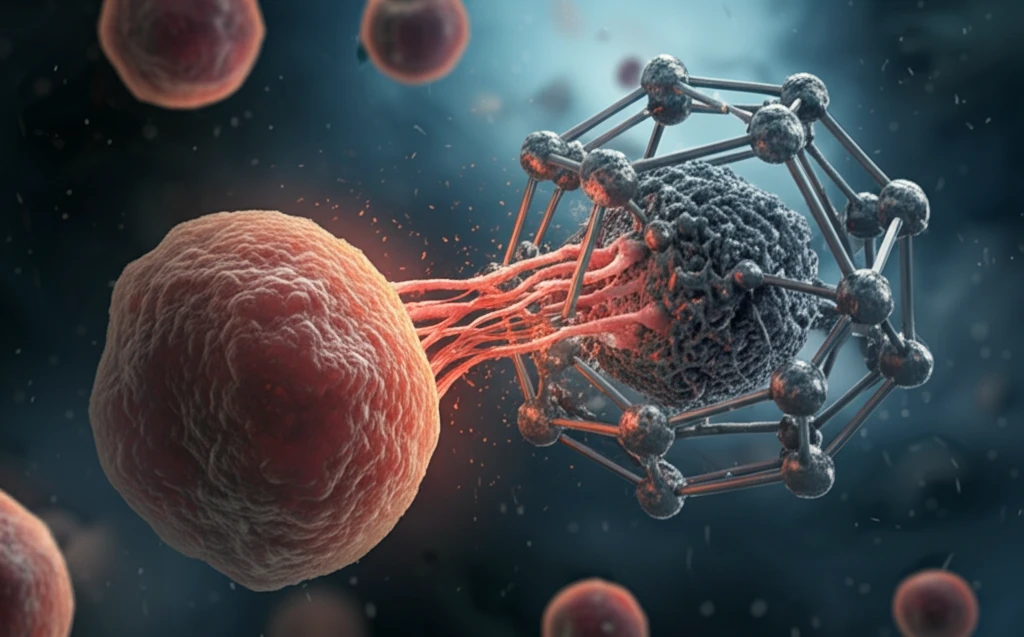
C60 Fullerene: The Tiny Molecule with Huge Potential in Cancer Treatment

"Unlocking the mysteries of how fullerenes and their nanocomplexes can revolutionize cancer therapies."
For decades, the fight against cancer has driven scientists to explore every avenue, from traditional chemotherapy to cutting-edge immunotherapy. Among the most promising recent discoveries are carbon-based nanomaterials, particularly C60 fullerene. This tiny molecule, composed of 60 carbon atoms arranged in a spherical structure, is showing immense potential as a platform for drug development, offering new hope in the quest for more effective cancer treatments.
Previous research has already demonstrated that C60 fullerene, whether used alone or combined with existing chemotherapeutic drugs, exhibits potent anticancer activity. However, the precise mechanisms behind these effects are still being investigated. Understanding how C60 fullerene interacts with the body's immune system and directly impacts cancer cells is crucial to unlocking its full therapeutic potential.
A groundbreaking study delved into the effects of C60 fullerene and its nanocomplexes (combinations with anticancer drugs) on human phagocytes – the immune cells responsible for engulfing and destroying foreign invaders and cellular debris. The research reveals that C60 fullerene dramatically increases the production of reactive oxygen species (ROS) in transformed monocytes, a type of white blood cell. This finding suggests a novel way in which C60 fullerene can target and eliminate cancer cells.
How C60 Fullerene Supercharges Immune Cells to Fight Cancer
The study's methods involved analyzing the metabolic profile of phagocytes exposed to C60 fullerene in vitro. The researchers observed that C60 fullerene not only augmented phagocytic activity (the ability to engulf and destroy) but also downregulated the generation of reactive nitrogen species (RNS) in these cells. This seemingly contradictory effect – boosting one immune function while suppressing another – highlights the complex way in which C60 fullerene interacts with the immune system.
- Dual Action: C60 fullerenes influence phagocyte metabolism, exhibiting both pro-oxidant and antioxidant properties.
- Selective Toxicity: The cytotoxic action of C60 fullerene is more pronounced toward malignant phagocytes.
- Combination Therapy: C60 fullerenes can down-regulate the pro-oxidant effect of cisplatin on normal cells, suggesting a potential role in mitigating side effects in combination therapies.
Implications and Future Directions
The discovery that C60 fullerene can modulate immune cell function and directly target cancer cells has significant implications for future cancer treatment strategies. By understanding the precise mechanisms through which C60 fullerene interacts with the body, researchers can develop more targeted and effective therapies. These findings pave the way for novel drug formulations and combination therapies that harness the unique properties of C60 fullerene to revolutionize cancer treatment.