
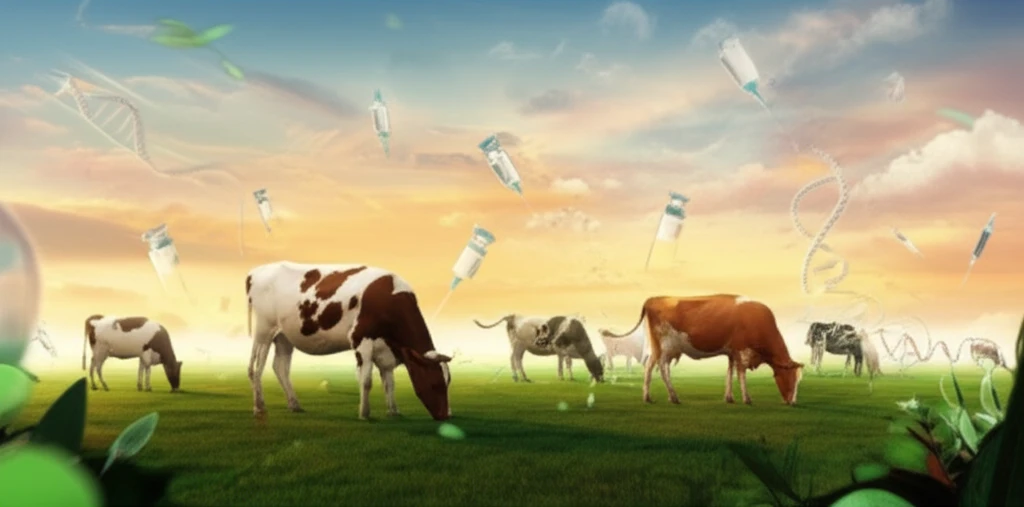
Cattle grazing peacefully in a pasture with a sunset.

Bye-Bye Bullies: How Immunocastration Could Change the Future of Beef

"Could a simple vaccine be the key to calmer cattle, better meat, and a more sustainable farming future? Here's the science behind immunocastration and what it means for you."


For decades, the way we've managed cattle raised for meat has been pretty standard: castration. The traditional method involves physically removing the testicles, which, while effective in reducing aggression and improving meat quality, can cause significant stress and pain to the animals. It's a practice that has raised welfare concerns and prompted the search for gentler alternatives.

Now, imagine a world where we can achieve the same results – calmer, easier-to-manage cattle and high-quality meat – without the stress and pain of traditional castration. That's where immunocastration comes in. This innovative approach uses a vaccine to naturally suppress the hormones that drive aggressive behavior, offering a more humane and sustainable way to raise beef cattle.

This article will explore the science behind immunocastration, its benefits for animal welfare and meat production, and its potential to reshape the future of the beef industry.

What is Immunocastration and How Does it Work?

Cattle grazing peacefully in a pasture with a sunset.

Immunocastration works by using the body's natural immune system to control hormone production. The vaccine contains a substance that prompts the animal's body to produce antibodies that neutralize Gonadotropin-Releasing Hormone (GnRH). GnRH is a key hormone that stimulates the production of testosterone. By neutralizing GnRH, testosterone production decreases, leading to a reduction in aggressive and sexual behaviors.

In a recent study, researchers investigated the effects of immunocastration on Holstein bulls, a breed commonly used for beef production. The study compared a group of bulls that received the Bopriva vaccine (an immunocastration treatment) to a control group that received a placebo. The results offered compelling evidence of the benefits of this approach.

  • Reduced Aggression: Bulls treated with the vaccine displayed significantly less aggressive behavior, including fewer head butts, mounting attempts, and threats.
  • Lower Testosterone: The vaccine effectively reduced testosterone levels in the treated bulls, confirming its impact on hormone production.
  • Comparable Growth: Immunocastration did not negatively impact the growth rate of the animals.
The study also looked at indicators of stress, such as cortisol levels, glucose, and creatine kinase (CK). While there were some differences in these measures, the researchers noted that pre-slaughter handling might have influenced the results. Importantly, the immunocastrated bulls exhibited more docile behavior, which could potentially reduce stress during handling if proper practices are followed.

The Future of Beef: A Calmer, Kinder Industry?

Immunocastration offers a promising path toward a more ethical and sustainable beef industry. By reducing aggression, minimizing stress, and maintaining meat quality, this approach benefits both the animals and the farmers. As research continues and best practices are refined, immunocastration could become a key tool in creating a calmer, kinder future for beef production.

About this Article -

This article was crafted using a human-AI hybrid and collaborative approach. AI assisted our team with initial drafting, research insights, identifying key questions, and image generation. Our human editors guided topic selection, defined the angle, structured the content, ensured factual accuracy and relevance, refined the tone, and conducted thorough editing to deliver helpful, high-quality information.See our About page for more information.

Everything You Need To Know

1

What is immunocastration, and how does it work?

Immunocastration is a method of controlling hormone production in cattle using their own immune system. A vaccine is administered, prompting the animal's body to produce antibodies that neutralize Gonadotropin-Releasing Hormone (GnRH). GnRH is crucial because it stimulates testosterone production. By neutralizing GnRH, testosterone levels decrease, which reduces aggressive and sexual behaviors in the animals. This differs from traditional castration, which involves physical removal of the testicles.

2

Why is immunocastration considered important or significant in beef production?

Immunocastration is significant because it offers a more humane and sustainable way to manage beef cattle. Traditional castration methods can cause significant stress and pain to animals, raising welfare concerns. Immunocastration reduces aggression and stress without the physical trauma of surgery. It also has the potential to improve meat quality and create a calmer, safer environment for both the animals and the farmers. It is a move towards more ethical practices.

3

What is the Bopriva vaccine, and how is it used in immunocastration?

The Bopriva vaccine is an immunocastration treatment used in cattle. It works by stimulating the animal's immune system to produce antibodies that neutralize Gonadotropin-Releasing Hormone (GnRH). This neutralization reduces testosterone production, leading to decreased aggression and sexual behaviors. A recent study showed that bulls treated with Bopriva displayed significantly less aggressive behavior and lower testosterone levels without negatively impacting their growth rate.

4

What is Gonadotropin-Releasing Hormone (GnRH), and why is it important in cattle farming?

Gonadotropin-Releasing Hormone (GnRH) is a key hormone that stimulates the production of testosterone. In the context of cattle farming, GnRH is important because testosterone drives aggressive and sexual behaviors in bulls. Immunocastration targets GnRH by using a vaccine to prompt the animal's body to produce antibodies that neutralize it. By reducing GnRH levels, testosterone production decreases, leading to calmer and easier-to-manage cattle. This is crucial for improving animal welfare and creating a safer environment.

5

How does immunocastration contribute to a more sustainable beef industry?

Immunocastration contributes to a more sustainable beef industry by reducing the need for traditional castration methods, which can be stressful and harmful to animals. By using a vaccine to control hormone production, immunocastration minimizes stress and aggression, leading to healthier and more docile cattle. This approach also has the potential to improve meat quality and create a more ethical and consumer-friendly image for the beef industry. Further research and refinement of best practices could solidify immunocastration as a key element in sustainable beef production.

Newsletter Subscribe

Subscribe to get the latest articles and insights directly in your inbox.