
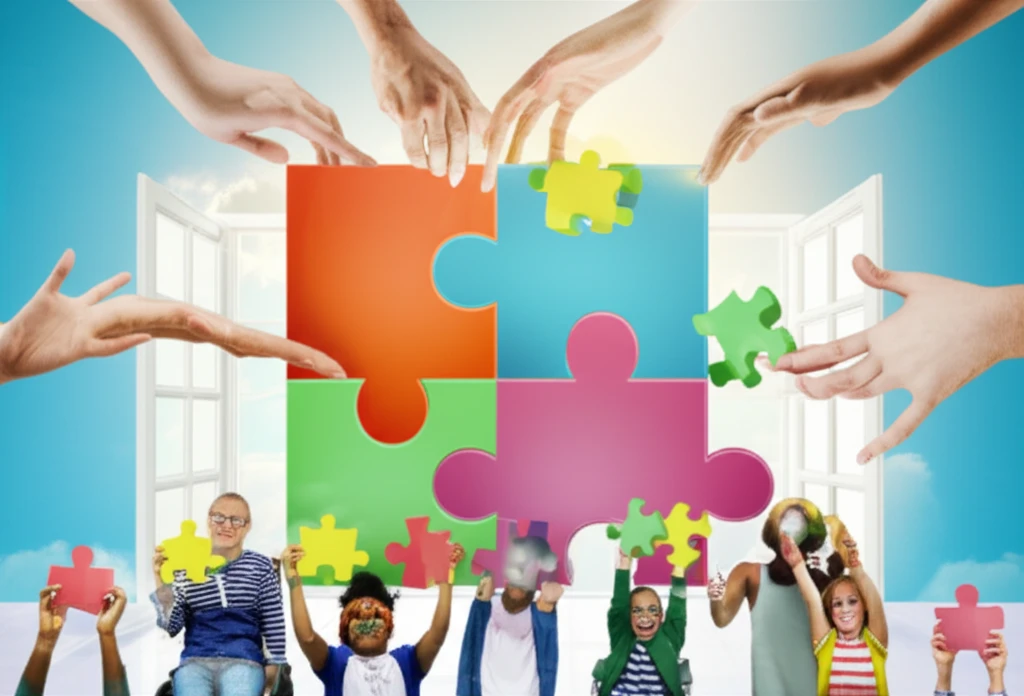
Illustration depicting children with disabilities building resilience together, surrounded by symbols of support and hope.

Building Resilience: A Guide to Empowering Children with Disabilities

"Discover how to foster resilience in children facing disabilities, unlocking their potential for a brighter future."


In the face of adversity, resilience shines as a beacon of hope, particularly for children navigating the unique challenges of disabilities. Resilience isn't merely about 'bouncing back'; it's a dynamic process of adapting, thriving, and finding strength within oneself and the surrounding environment. This article dives deep into the concept of resilience for children with disabilities, offering insights and actionable strategies for parents, educators, and caregivers.

We'll explore the key elements that contribute to resilience, including self-capacities, the power of positive mindsets, and how to cultivate a supportive environment. By understanding these building blocks, we can empower children to overcome challenges, embrace their strengths, and build a future filled with possibilities.

This article draws upon a research article titled 'Building blocks of resiliency: a transactional framework to guide research, service design, and practice in pediatric rehabilitation' by Gillian King, et al. We aim to translate the complex research into an accessible, practical guide for anyone involved in the lives of children with disabilities.

Understanding the Building Blocks of Resilience

Illustration depicting children with disabilities building resilience together, surrounded by symbols of support and hope.

Resilience in children with disabilities is not a fixed trait but a multifaceted process influenced by various factors. It's about recognizing and nurturing specific internal strengths, or 'self-capacities', which empower children to navigate adversity and thrive. These self-capacities work in tandem with supportive external environments, and positive mindsets to foster resilience.

The core self-capacities identified in the research article provide a valuable framework. These include:

  • Activity Self-Efficacy: Confidence in performing daily activities and tasks.
  • Capacity to Marshal Resources: The ability to seek and utilize support systems, both formal and informal.
  • Life Situation Adaptability: The skill to adjust to changing circumstances and transitions.
  • Envisioning a Positive Future: Maintaining hope, optimism, and a sense of agency.
These self-capacities are not developed in isolation. They are intertwined with how children perceive their environment and the challenges they face. Supportive relationships, access to resources, and opportunities for growth all play a crucial role.

Fostering Resilience: A Path to a Brighter Future

Building resilience in children with disabilities is not just a worthy goal; it's an essential investment in their well-being and future success. By understanding the building blocks of resilience and implementing practical strategies, we can empower children to navigate challenges, embrace their strengths, and build fulfilling lives. As we support their self-capacities, promote positive mindsets, and create supportive environments, we pave the way for a generation of resilient, thriving individuals. Start implementing some of the strategies mentioned here today, and witness the transformative power of resilience unfold in the lives of the children you care about.

About this Article -

This article was crafted using a human-AI hybrid and collaborative approach. AI assisted our team with initial drafting, research insights, identifying key questions, and image generation. Our human editors guided topic selection, defined the angle, structured the content, ensured factual accuracy and relevance, refined the tone, and conducted thorough editing to deliver helpful, high-quality information.See our About page for more information.

This article is based on research published under:

DOI-LINK: 10.1080/09638288.2018.1515266, Alternate LINK

Title: Building Blocks Of Resiliency: A Transactional Framework To Guide Research, Service Design, And Practice In Pediatric Rehabilitation

Subject: Rehabilitation

Journal: Disability and Rehabilitation

Publisher: Informa UK Limited

Authors: Gillian King, Yukari Seko, Lisa A. Chiarello, Laura Thompson, Laura Hartman

Published: 2018-11-14

Everything You Need To Know

1

What exactly does resilience mean for children with disabilities?

Resilience, in the context of children with disabilities, is more than just 'bouncing back' from adversity. It's a dynamic process of adapting, thriving, and discovering inner strength while navigating the unique challenges related to their disabilities. It involves cultivating specific 'self-capacities,' embracing positive mindsets, and building a supportive environment to help them overcome obstacles and lead fulfilling lives. While the text focuses on the building blocks of resilience, it stops short of discussing specific interventions or therapies that may further enhance resilience. It doesn't explore the role of assistive technologies or specific educational strategies tailored to different disabilities, which are also very relevant to the broader concept of resilience.

2

What are the core 'self-capacities' that contribute to resilience in children with disabilities, and how do they help?

The core 'self-capacities' are internal strengths that empower children to navigate adversity. These include 'Activity Self-Efficacy,' which is confidence in performing daily activities; 'Capacity to Marshal Resources,' or the ability to seek and use support systems; 'Life Situation Adaptability,' the skill to adjust to changing circumstances; and 'Envisioning a Positive Future,' maintaining hope and optimism. These capacities are interrelated and influenced by a child's environment and relationships. The development of self-capacities is crucial, and this development relies on interactions with their environments and available support systems. The text however, omits concrete examples of activities or interventions that would foster these capacities.

3

How can parents and educators foster resilience in children with disabilities?

Fostering resilience involves creating a supportive environment and helping children develop their 'self-capacities' and maintain a positive mindset. This can be achieved by providing opportunities for success, encouraging them to seek support when needed, teaching them to adapt to change, and helping them maintain hope for the future. The text highlights the importance of fostering these elements but does not delve into the specific strategies educators and parents can employ to accomplish this effectively. Additional resources might be required to develop a full intervention plan.

4

Why is 'Envisioning a Positive Future' important for children with disabilities, and how can we help them cultivate this?

'Envisioning a Positive Future' is crucial because it provides children with hope, optimism, and a sense of agency, motivating them to overcome challenges and strive for their goals. We can help cultivate this by encouraging them to set achievable goals, celebrating their successes, and helping them focus on their strengths and possibilities rather than their limitations. The text doesn't mention strategies to handle setbacks or manage expectations when facing realistic limitations due to their disabilities; it also does not discuss the potential role of role models or mentors in facilitating this 'envisioning'.

5

What role does the 'Capacity to Marshal Resources' play in building resilience, and what resources are most important?

The 'Capacity to Marshal Resources' enables children to seek and utilize support systems, both formal and informal, which is vital for overcoming challenges and building resilience. Important resources can include family, friends, educators, therapists, community organizations, and assistive technologies. The ability to identify, access, and effectively use these resources empowers children to navigate difficulties and achieve their goals. However, the text does not address potential barriers to accessing these resources, such as financial constraints, geographical limitations, or stigma associated with seeking help, nor does it discuss how to advocate for necessary resources when they are not readily available. Furthermore, the text does not address the importance of teaching children self-advocacy skills, so that they may effectively communicate their needs and preferences.

Newsletter Subscribe

Subscribe to get the latest articles and insights directly in your inbox.