
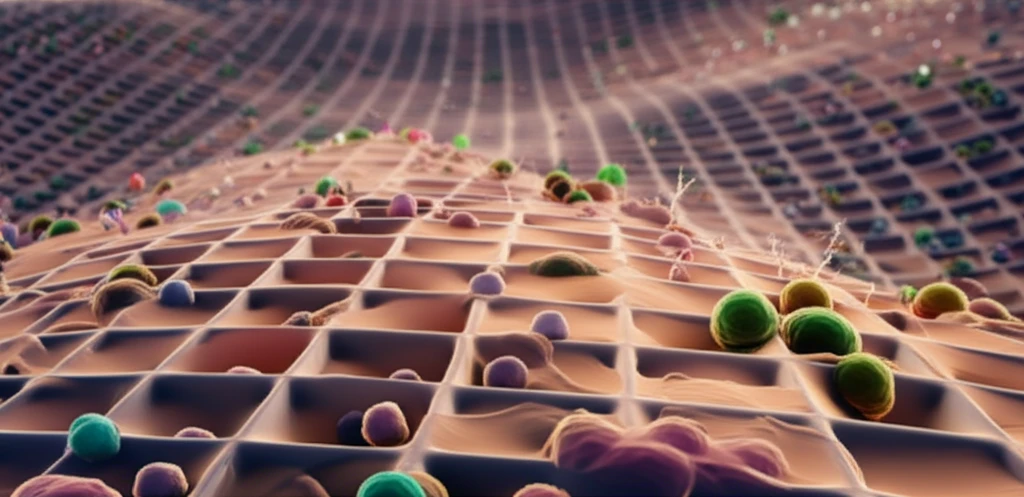
Illustration of a bone scaffold with cells, illustrating the process of bone regeneration.

Building Better Bones: Scientists' Revolutionary Approach to Healing Fractures

"New research explores innovative ways to repair bone injuries using advanced materials and cell-based therapies, offering hope for faster and more effective healing."


Bone fractures, whether from a minor fall or a serious accident, are a common health issue affecting people of all ages. While the body naturally heals these breaks, the process can be slow, painful, and sometimes incomplete. Now, scientists are pushing the boundaries of medical science to accelerate and improve bone healing, focusing on innovative methods that could revolutionize how we treat fractures.

At the forefront of this research is bone tissue engineering, a field that uses a combination of materials, cells, and engineering principles to create biological substitutes for damaged bone. The goal is to develop treatments that not only mend broken bones but also restore the natural function and structure of the bone tissue.

Recent studies have focused on enhancing the properties of 3D-printed scaffolds. These scaffolds, made from biocompatible materials, serve as a framework to support bone regeneration. One such study explores the use of surface modifications and RGD-immobilization to create a better environment for bone-forming cells to thrive.

The Science Behind the Breakthrough: Surface Modifications and Cell Behavior

Illustration of a bone scaffold with cells, illustrating the process of bone regeneration.

The research, published in 'Biomedical Materials', delves into the complex relationship between the surface properties of 3D-printed scaffolds and how they influence the behavior of bone-forming cells. Specifically, the study investigates the impact of modifying the surface of poly(ɛ-caprolactone) (PCL) scaffolds. PCL is a biocompatible polymer widely used in tissue engineering because of its ability to degrade naturally in the body. However, PCL on its own is not ideal for bone regeneration due to its hydrophobic nature and lack of cell-recognition sites.

To overcome these limitations, researchers employed two primary strategies: chemical surface modification and RGD-immobilization. The chemical modification involved treating the PCL scaffolds with sodium hydroxide (NaOH), creating a more hydrophilic surface, and the RGD-immobilization involved attaching a specific peptide sequence (RGD) to the scaffold surface to promote cell attachment.

  • Surface modifications enhance cell attachment, proliferation, and differentiation.
  • Chemical modifications using NaOH create a more hydrophilic environment.
  • RGD-immobilization introduces cell-recognition sites.
The study found that both approaches significantly improved bone cell behavior. The NaOH treatment created a favorable environment for cell attachment, while the RGD-immobilization directly promoted cell adhesion and proliferation. The scientists observed increased collagen deposition and mineralization, key indicators of successful bone regeneration. The results suggest that surface modifications can dramatically influence the healing process, leading to potentially faster and more effective fracture repair. Moreover, the study highlights that chemical treatment of 3D-printed PCL scaffolds by 3 M NaOH for 24 h might be more promising for in vivo bone regeneration than RGD immobilization.

The Future of Fracture Repair: Promising Avenues for Further Research

The research on surface-modified scaffolds represents a significant step forward in bone tissue engineering. By understanding how to manipulate the surface properties of these materials, scientists can create more effective frameworks for bone regeneration. The next steps for this research include further investigations into the long-term effects of these treatments and translating these findings into clinical applications. With continued research and innovation, the future of fracture repair looks promising, offering the potential for faster recovery and improved quality of life for individuals with bone injuries.

About this Article -

This article was crafted using a human-AI hybrid and collaborative approach. AI assisted our team with initial drafting, research insights, identifying key questions, and image generation. Our human editors guided topic selection, defined the angle, structured the content, ensured factual accuracy and relevance, refined the tone, and conducted thorough editing to deliver helpful, high-quality information.See our About page for more information.

This article is based on research published under:

DOI-LINK: 10.1088/1748-605x/aaeb82, Alternate LINK

Title: Enhanced Osteogenic Activity By Mc3T3-E1 Pre-Osteoblasts On Chemically Surface-Modified Poly( Ε -Caprolactone) 3D-Printed Scaffolds Compared To Rgd Immobilized Scaffolds

Subject: Biomedical Engineering

Journal: Biomedical Materials

Publisher: IOP Publishing

Authors: Yasaman Zamani, Javad Mohammadi, Ghassem Amoabediny, Dafydd O Visscher, Marco N Helder, Behrouz Zandieh-Doulabi, Jenneke Klein-Nulend

Published: 2018-11-13

Everything You Need To Know

1

What is bone tissue engineering and how does it aim to improve fracture repair?

Bone tissue engineering is a field that utilizes materials, cells, and engineering principles to create biological substitutes for damaged bone. The primary goal of this approach is to develop treatments that not only mend broken bones but also restore the natural function and structure of the bone tissue. It goes beyond the body's natural healing process, aiming for faster, more complete recovery by creating a supportive environment that actively promotes bone regeneration. This contrasts with traditional methods that may only stabilize the fracture, leaving the body to heal on its own, which can be slow and sometimes incomplete.

2

What are 3D-printed scaffolds and how do surface modifications using NaOH and RGD-immobilization contribute to bone regeneration?

3D-printed scaffolds are frameworks made from biocompatible materials, designed to support bone regeneration. In the context described, these scaffolds are made from poly(ɛ-caprolactone) (PCL). The surface modifications, including the use of sodium hydroxide (NaOH) and RGD-immobilization, play critical roles. NaOH treatment makes the scaffold surface more hydrophilic, creating a favorable environment for bone-forming cells to attach and thrive. RGD-immobilization involves attaching a specific peptide sequence (RGD) to the scaffold surface to promote cell adhesion and proliferation. This dual approach significantly enhances the behavior of bone cells, leading to increased collagen deposition and mineralization, crucial indicators of successful bone regeneration and ultimately, faster fracture repair.

3

What are the specific roles of PCL in bone regeneration and why is surface modification necessary for its effectiveness?

PCL, or poly(ɛ-caprolactone), is a biocompatible polymer used in tissue engineering because it degrades naturally in the body. However, PCL on its own isn't ideal for bone regeneration. It's hydrophobic, meaning it repels water, and lacks cell-recognition sites. These properties limit its ability to effectively support bone cell attachment and proliferation. Surface modifications using NaOH and RGD-immobilization address these limitations. NaOH treatment makes the surface more hydrophilic, improving cell attachment, while RGD-immobilization provides specific sites for cell adhesion, essentially creating a more hospitable environment for bone-forming cells. The surface modification converts PCL from a passive material into an active component of the bone regeneration process.

4

What are the potential implications of the research findings on surface-modified scaffolds for patients with bone fractures?

The research findings suggest significant advancements in fracture repair. The use of surface-modified scaffolds, particularly those treated with NaOH, could lead to faster and more effective healing. For patients, this translates to quicker recovery times, reduced pain, and a potentially lower risk of complications associated with incomplete healing. Furthermore, enhanced bone regeneration could lead to improved restoration of bone function and structure, thereby improving the overall quality of life. This approach represents a move towards more proactive and efficient fracture treatment strategies, offering hope for patients of all ages affected by bone injuries.

5

What are the next steps in the research on surface-modified scaffolds, and what are the long-term implications of this technology?

The next steps in this research involve investigating the long-term effects of these treatments and translating these findings into clinical applications. Researchers will likely conduct further studies to assess the durability and safety of the scaffolds over extended periods. The long-term implications of this technology are substantial. It has the potential to revolutionize fracture repair, offering faster recovery times and improved healing outcomes. Beyond fracture repair, the principles of bone tissue engineering could be applied to treat other bone-related conditions. Ultimately, this research aims to improve the lives of individuals with bone injuries, offering a more effective and efficient means of healing and restoring bone function, leading to better quality of life.

Newsletter Subscribe

Subscribe to get the latest articles and insights directly in your inbox.