
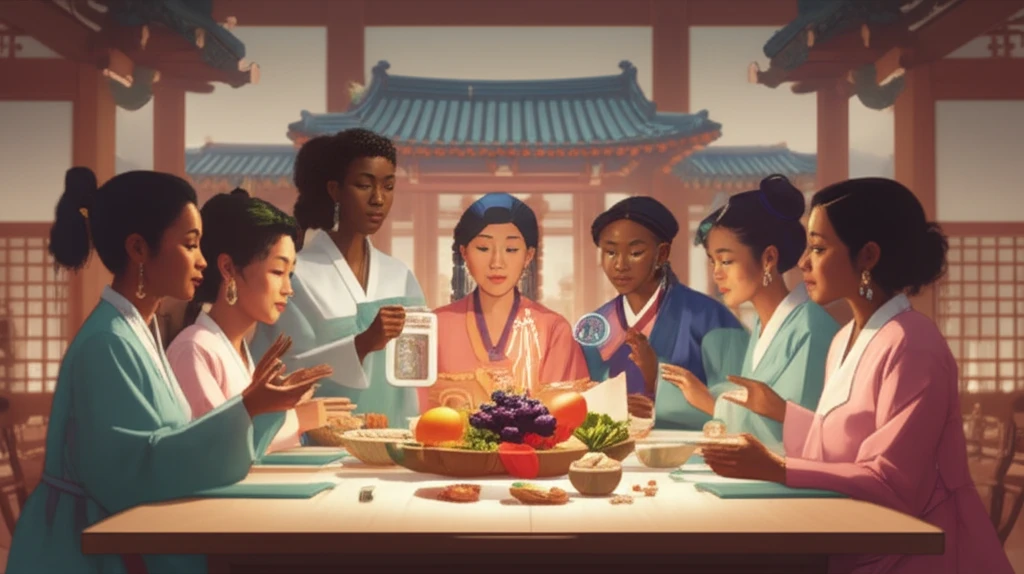
Multicultural women learning about nutrition

Bridging the Gap: How to Improve Nutrition Education for Multicultural Families in Korea

"A guide for program providers to better serve marriage immigrants and promote healthier families."


South Korea is rapidly evolving into a multicultural society, with marriage immigrants forming a significant portion of this demographic shift. These women, often navigating new cultural landscapes and family structures, face unique challenges in maintaining healthy lifestyles and providing adequate nutrition for their families.

Recognizing these challenges, various nutrition education programs have been implemented. However, are these programs truly meeting the needs of multicultural families? A recent study delves into the perspectives of program providers to identify areas for improvement and offer actionable recommendations.

This article will explore the key findings of this qualitative study, highlighting the systemic, practical, environmental, and cultural factors that impact the effectiveness of nutrition education for marriage immigrants in Korea. We'll uncover strategies to bridge these gaps and foster healthier outcomes for multicultural families.

Unveiling the Challenges: A Provider's Perspective

Multicultural women learning about nutrition

The study, involving in-depth interviews with 21 multicultural experts, revealed several key challenges hindering the success of nutrition education programs:

Systemic Issues:

  • Overlapping Programs: Multiple organizations offering similar programs, leading to duplicated efforts and inefficient resource allocation.
  • Lack of Coordination: Insufficient communication and collaboration between related government agencies and support centers.
Practical Hurdles:

Moving Forward: Recommendations for Change

The study emphasizes the need for a multi-faceted approach to improve nutrition education for multicultural families. Key recommendations include:

<b>Establishing a Central Hub:</b> Creating a "control tower" to oversee and coordinate all related programs, ensuring efficient resource allocation and preventing duplicated efforts. This could be a designated agency or a collaborative body involving representatives from relevant ministries and organizations.

By addressing these systemic, practical, environmental, and cultural challenges, nutrition education programs can be more effectively tailored to the unique needs of multicultural families, fostering healthier outcomes and stronger communities within South Korea.

About this Article -

This article was crafted using a human-AI hybrid and collaborative approach. AI assisted our team with initial drafting, research insights, identifying key questions, and image generation. Our human editors guided topic selection, defined the angle, structured the content, ensured factual accuracy and relevance, refined the tone, and conducted thorough editing to deliver helpful, high-quality information.See our About page for more information.

This article is based on research published under:

DOI-LINK: 10.5720/kjcn.2017.22.4.323, Alternate LINK

Title: Qualitative Study On Improvement Of Operating System And Tailored Nutrition Education Program For Marriage Immigrants To Korea: Program Providers' Perspective

Subject: General Medicine

Journal: Korean Journal of Community Nutrition

Publisher: The Korean Society of Community Nutrition

Authors: Mee-Young Joe, Ji-Yun Hwang

Published: 2017-01-01

Everything You Need To Know

1

What are the primary challenges faced by multicultural families in South Korea regarding nutrition?

The challenges for multicultural families in Korea are significant. These families, particularly marriage immigrants, experience difficulties in maintaining healthy lifestyles and providing adequate nutrition. The shift towards a multicultural society in South Korea highlights these issues as they navigate new cultural landscapes and family structures. These challenges underscore the importance of targeted nutrition education programs.

2

What systemic issues are highlighted as obstacles to effective nutrition education?

The systemic issues identified are 'Overlapping Programs', where multiple organizations offer similar nutrition education, leading to duplicated efforts and inefficient resource allocation. 'Lack of Coordination' is another issue, as there's insufficient communication and collaboration among government agencies and support centers involved in these programs. Addressing these issues requires a more streamlined and collaborative approach to nutrition education.

3

What are the practical hurdles encountered in nutrition education programs?

The practical hurdles relate to the implementation of nutrition education programs. However, the specific details are not provided in the given context. Therefore, a detailed answer cannot be provided.

4

What is the main goal of nutrition education programs for multicultural families?

The main goal of nutrition education programs for multicultural families in Korea is to improve their health outcomes. The focus is on marriage immigrants who often face significant challenges in adapting to new cultural environments and providing proper nutrition for their families. These programs aim to address these issues by providing education and support, which fosters healthier communities.

5

What are the key recommendations for improving nutrition education for multicultural families?

The study emphasizes the need for a multi-faceted approach to improve nutrition education for multicultural families. Key recommendations include strategies to bridge gaps and foster healthier outcomes. The exact recommendations are not listed, but the article focuses on actionable solutions. This multi-faceted approach will hopefully lead to healthier outcomes for multicultural families.

Newsletter Subscribe

Subscribe to get the latest articles and insights directly in your inbox.