
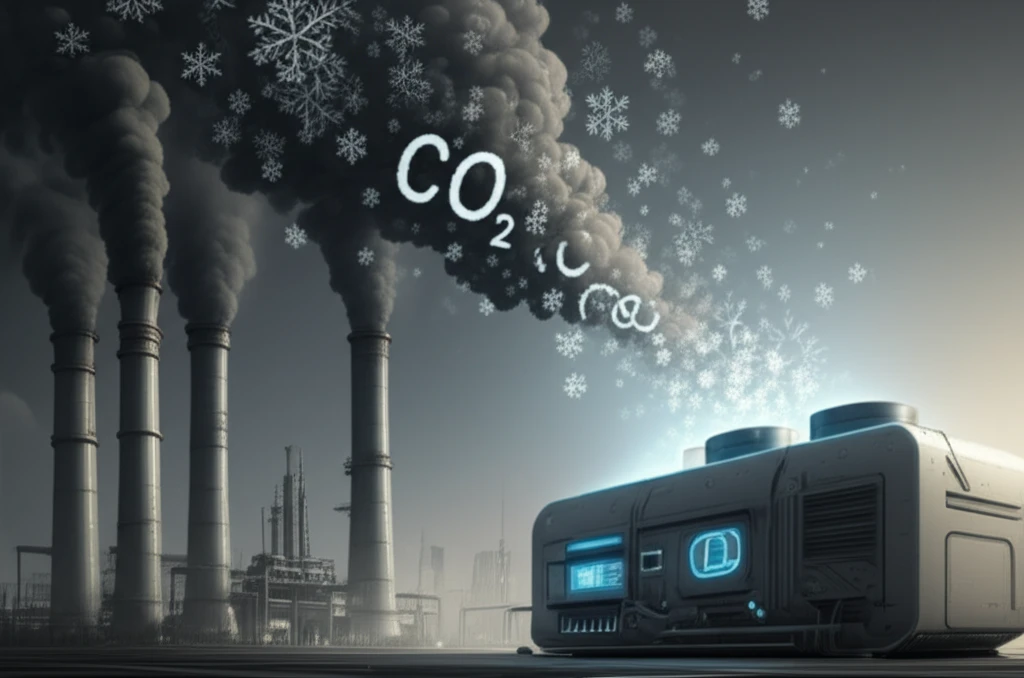
Futuristic carbon capture system transforming CO2 emissions into usable energy.

Breathe Easier: How a New Ammonia-Based System Could Revolutionize CO2 Capture

"Scientists are exploring an innovative approach to carbon capture that combines ammonia absorption with refrigeration, potentially making the process more efficient and eco-friendly."


The urgent need to address climate change has spurred intense research into carbon capture technologies. Among the promising alternatives to traditional methods is ammonia-based CO2 capture, which offers several advantages. Unlike conventional amine absorbents, ammonia is cost-effective, boasts a high CO2 removal capacity, doesn't degrade in the presence of oxygen or sulfur dioxide, requires less energy, and can capture multiple acid gases, potentially producing valuable byproducts.

However, ammonia-based systems have their challenges. The high volatility of ammonia can lead to its escape during absorption and desorption, increasing operational costs, causing secondary pollution, and even blocking pipelines and valves due to ammonia salt crystal formation. Mitigating this ammonia escape is crucial for the widespread adoption of this technology.

Now, researchers are exploring a novel approach: integrating ammonia-based CO2 capture with absorption refrigeration. This innovative combination aims to recover escaped ammonia during desorption and produce cooling, making the entire process more efficient and environmentally sound.

The Innovative Hybrid System: Capturing Carbon and Cooling the Planet

Futuristic carbon capture system transforming CO2 emissions into usable energy.

The proposed system combines CO2 capture with ammonia absorption refrigeration to recover any escaped ammonia during desorption. The process involves several key steps:

Cold flue gas enters the absorber, contacting a CO2-lean ammonia solvent. To ensure more ammonia evaporates in the regenerator, the ammonia concentration in the solvent is typically higher than in conventional ammonia-based CO2 capture.

  • Absorption: Cold flue gas meets an ammonia solvent, capturing CO2.
  • Regeneration: The CO2-rich stream is heated in a generator, releasing CO2 and evaporating ammonia.
  • Separation: The gas stream is condensed, separating water and then using a gas-liquid separator to isolate pure ammonia.
  • Cooling: The separated liquid ammonia is throttled and evaporated, producing a cooling load.
  • Re-absorption: The evaporated ammonia is reabsorbed, and the lean solvent cycles back to the absorber.
A thermodynamic analysis of the system reveals promising results. The regenerator can regenerate CO2 with a 90% ratio, and the process can produce a significant cooling load. Parameter studies suggest this approach is competitive with existing chilled ammonia processes, offering a potential pathway to reduce energy consumption and improve overall efficiency.

The Future of Carbon Capture: A Chillingly Efficient Solution?

This novel ammonia-based CO2 capture process offers a promising route to reduce industrial emissions and generate cooling. By combining CO2 regeneration and ammonia evaporation, the system can effectively control ammonia escape and reduce regeneration energy consumption. Further research into absorption, crystallization, and the integration performance of CO2 regeneration and NH3 evaporation will pave the way for detailed experimental studies and real-world applications.

About this Article -

This article was crafted using a human-AI hybrid and collaborative approach. AI assisted our team with initial drafting, research insights, identifying key questions, and image generation. Our human editors guided topic selection, defined the angle, structured the content, ensured factual accuracy and relevance, refined the tone, and conducted thorough editing to deliver helpful, high-quality information.See our About page for more information.

Everything You Need To Know

1

How does this new ammonia-based system for CO2 capture work?

The innovative system combines CO2 capture with ammonia absorption refrigeration. In the Absorption phase, cold flue gas contacts a CO2-lean ammonia solvent, capturing CO2. In the Regeneration phase, the CO2-rich stream is heated, releasing CO2 and evaporating ammonia. The Separation stage condenses the gas stream to separate water, then uses a gas-liquid separator for pure ammonia. Cooling occurs when the separated liquid ammonia is throttled and evaporated, creating cooling. Finally, the evaporated ammonia is reabsorbed, and the lean solvent returns to the absorber.

2

Why is ammonia-based CO2 capture important in the context of this new system?

Ammonia-based CO2 capture is significant because ammonia is cost-effective, has a high CO2 removal capacity, resists degradation, uses less energy, and captures multiple acid gases. This is a marked improvement over conventional amine absorbents. The innovation lies in combining ammonia capture with absorption refrigeration. This addresses the challenge of ammonia escape, a critical factor for the widespread adoption of this technology. By integrating these processes, the system not only captures CO2 but also recovers escaped ammonia and generates cooling.

3

What are the main challenges associated with ammonia-based systems and how is this addressed?

Ammonia escape poses several challenges. The high volatility of ammonia leads to increased operational costs due to lost ammonia. It causes secondary pollution if released into the environment. Furthermore, escaped ammonia can block pipelines and valves through the formation of ammonia salt crystals. The integration of ammonia-based CO2 capture with absorption refrigeration addresses this by recovering escaped ammonia during the desorption phase, reducing these negative impacts.

4

What are the key benefits of this innovative system?

The proposed system offers several key advantages. It effectively captures CO2, recovers escaped ammonia, and generates cooling. The thermodynamic analysis reveals a 90% CO2 regeneration ratio. This approach is competitive with existing chilled ammonia processes. This can potentially reduce energy consumption and improve overall efficiency of the carbon capture process. It contributes to a more environmentally sound and efficient carbon capture process.

5

What are the next steps in the development of this technology?

The future of this technology involves further research into the core aspects of the system, including absorption, crystallization, and the integration performance of CO2 regeneration and NH3 evaporation. This will pave the way for detailed experimental studies and real-world applications. The goal is to refine the process and make it even more effective in reducing industrial emissions. It will also generate cooling, contributing to a more sustainable and efficient carbon capture solution.

Newsletter Subscribe

Subscribe to get the latest articles and insights directly in your inbox.