
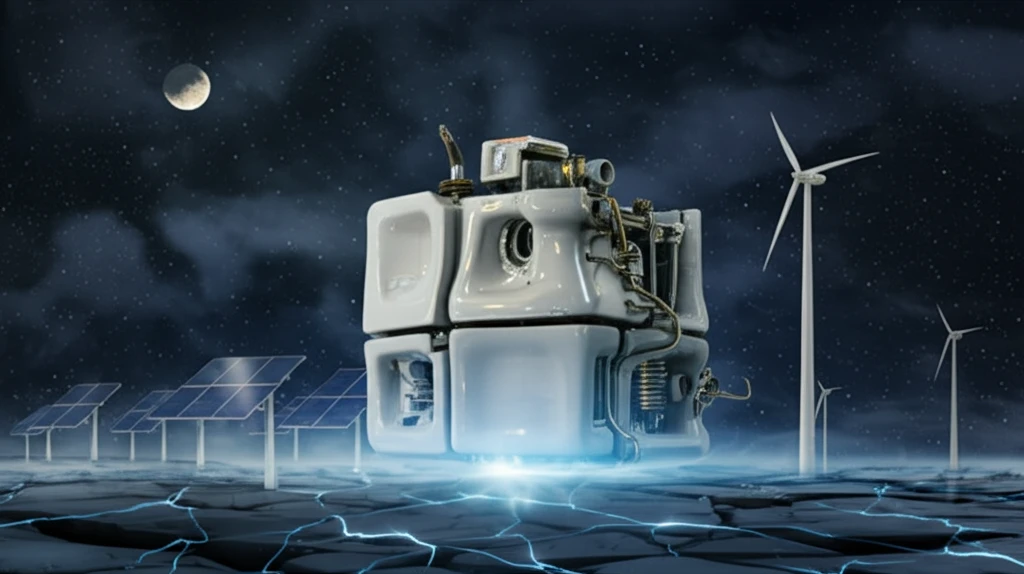
Power Up: How Ceramic Materials are Revolutionizing Energy

"Discover the versatile world of ceramic materials and their innovative applications in hydrogen, carbon capture, and high-efficiency energy technologies, paving the way for a sustainable future."
The growing alarm over fossil fuels and their contribution to climate change has spurred the scientific community to seek new, cleaner energy technologies and improve the efficiency of existing methods to reduce environmental impact. Ceramic-based materials are emerging as key players in this energy revolution, finding applications in a wide range of areas, from energy generation to storage.
Ceramic materials are uniquely positioned to address some of the most pressing challenges in the energy sector. Their thermal stability, chemical inertness, and mechanical strength make them ideal for high-temperature applications and harsh environments. From fuel cells to solar energy systems, ceramics are enhancing efficiency and enabling new possibilities.
However, the widespread adoption of these materials is often limited by the need for specific applications and further research. To accelerate progress, it's essential for academics and industry experts to collaborate, addressing the challenges and opportunities associated with using ceramic materials in energy-related fields.
Ceramics in the Global Materials Landscape
Ceramic materials occupy a defined category in international trade, classified under harmonized codes covering articles of stone, plaster, cement, and ceramic products within the European external trade database. Rigorous testing processes are essential to ensure the quality and reliability of ceramic materials, confirming they meet specific standards for their intended applications. Comprehensive material property databases—sourced from published standards, academic literature, and supplier documentation—allow engineers and researchers to compare ceramics against other materials by searching specific property values. The breadth of ceramic applications is reflected in dedicated academic journals such as Ceramics International, which publishes illustrative content spanning the full scope of ceramic material science.
Characterization Methods and Their Constraints
Surface area determination of porous ceramic materials is commonly performed using the Brunauer-Emmett-Teller (BET) method, a standard technique whose limitations and potential improvements have been actively studied. To address limitations in traditional anode materials, researchers have developed SnO₂/CNTs composites that significantly reduce charge transfer resistance to 5.61 Ω, combining the high theoretical capacity of tin oxide with the three-dimensional conductive network of carbon nanotubes. The BET method, while widely accepted, can struggle with certain porous structures, prompting ongoing efforts to refine measurement accuracy for advanced ceramic composites used in energy storage.
Defining Ceramic Materials
Ceramic materials are a wide-ranging category largely defined by the absence of organic substances—those based around carbon-hydrogen bonds—and metallic elements. In the absence of those components, ceramics may be composed of clay, minerals, oxides, and other inorganic compounds. This foundational definition, drawn from materials science reference literature, underscores the broad chemical diversity encompassed by ceramics, from traditional clay-based products to modern engineered compounds used in advanced technology applications.
Ceramics for Energy: Applications and Perspectives
Ceramic materials play a pivotal role in shaping more environmentally friendly energy sectors. The versatility of these materials allows them to be applied to various solutions, including generating, storing, and saving energy. One area where ceramics are making significant strides is in fuel cells, which convert chemical energy into electrical energy with high efficiency and low emissions. Solid oxide fuel cells (SOFCs), for example, use ceramic electrolytes to facilitate ion transport at high temperatures, resulting in highly efficient energy conversion.
- Fuel Cells: Enhancing efficiency with ceramic electrolytes in SOFCs.
- Hydrogen Production: Ceramic membranes for efficient separation.
- Energy Storage: Advanced ceramics in batteries and supercapacitors.
- Thermal Energy: Ceramics in concentrated solar power plants for high-temperature heat transfer and storage.
Breakthroughs in Ceramic Plasticity and Discovery
A recent breakthrough has demonstrated room-temperature plasticity in ceramics, a property long considered impossible for these inherently brittle materials. Researchers examining oxide ceramics, nitrides, carbides, layered ceramics, nanostructured materials, and architected ceramic systems have documented significant advances over the past several years. In parallel, cellulose nanofiber dispersions have been shown to accelerate the discovery of new ceramic materials, addressing the notoriously slow pace of identifying ceramic compounds with improved performance. These ceramic materials serve as the quiet workhorses of modern technology, powering smartphone capacitors, computer circuits, electric vehicles, and renewable-energy systems. Advanced ceramic materials are valued for their excellent mechanical properties, thermal stability, corrosion resistance, and electrical insulation properties.
Material Limitations and Practical Barriers
While ceramic materials offer compelling advantages, practical limitations persist across related material categories. Traditional dressing materials, for example, suffer from poor biocompatibility, nonbiodegradability, inadequate moisture management, poor breathability, a lack of inherent therapeutic properties, and negative environmental impacts—challenges that ceramic alternatives must overcome. In industrial valve applications, alternatives such as specialty alloys face their own constraints including higher initial raw material investment compared to duplex steels and lower maximum pressure limits at extreme temperatures above 500°C, illustrating the broader trade-offs engineers navigate when selecting materials for demanding energy and chemical processing environments.
Ceramics Versus Conventional Energy Materials
Ceramic materials occupy a unique position in the energy materials landscape, sitting between metals and polymers in terms of properties such as thermal conductivity, electrical behavior, and mechanical resilience. While metals generally offer superior ductility and electrical conductivity, ceramics provide exceptional thermal stability and corrosion resistance that metals cannot match at extreme temperatures. Compared to polymer-based materials, ceramics typically deliver far greater hardness and heat tolerance but at the cost of brittleness and more complex manufacturing processes. The optimal choice among these material classes ultimately depends on the specific operating environment, with ceramics increasingly favored where high-temperature performance and durability are paramount.
The Future of Ceramics in Energy
The "Ceramics for Energy 2017 (CEn2017)" forum in Faenza highlighted the versatility and wide range of applications for ceramic-based materials in the energy sector. It brought together scientists, technologists, and industry experts to discuss the current status and future potential of these materials. This collaborative environment is essential for driving innovation and addressing the challenges that remain. As research continues and new technologies emerge, ceramic materials are poised to play an increasingly important role in creating a sustainable energy future, helping to mitigate climate change and ensure a cleaner environment for generations to come.
Additive Manufacturing and Ceramic Education
Three-dimensional printing has expanded the fabrication possibilities for ceramic materials, with stone-based filaments compatible with FDM/FFF printers emerging as one option. These stone filaments are composed of a mixture of plaster and plastic, offered by manufacturers such as ColorFabb and Formfutura. Beyond fabrication, dedicated educational platforms like the Ceramic Materials Workshop exist to teach ceramicists at all levels how clay and glazes function, reflecting growing demand for accessible expertise in ceramic science.
Market Growth and Emerging Ceramic Technologies
The aluminum nitride ceramic heaters market is expanding, with key industry players including Kyocera, Oasis Materials, Heatron, BACH Resistor Ceramics, and Cactus Materials pointing to growing demand for high-performance ceramic heating elements. International building materials trade shows such as MosBuild continue to showcase the latest ceramic trends, featuring innovative finishes, stylish tiles, and durable solutions for interiors and exteriors. Ceramic glass build plates have also gained attention in additive manufacturing contexts, suggesting crossover applications between ceramics and emerging fabrication technologies.
Systemic Barriers to Ceramic Innovation
Advancing ceramic materials for energy applications requires addressing systemic challenges that span organizational, technical, and societal levels. Intentional strategies are needed at multiple scales—from research institutions to industry adoption pathways—to ensure that promising ceramic innovations move beyond the laboratory. Overcoming entrenched inertia in established material supply chains and manufacturing processes demands coordinated effort across the entire value chain.
Sustainability Demands and Consumer Influence
Consumer demand for sustainable materials is actively shaping ceramic industry practices, with particular momentum in markets such as Germany where eco-friendly and sustainably sourced ceramics are increasingly expected. Brands are being driven to adopt environmentally responsible practices in ceramic production in response to this consumer pressure. This trend illustrates how end-user preferences can catalyze systemic shifts in material sourcing and manufacturing methods across the ceramics sector.