
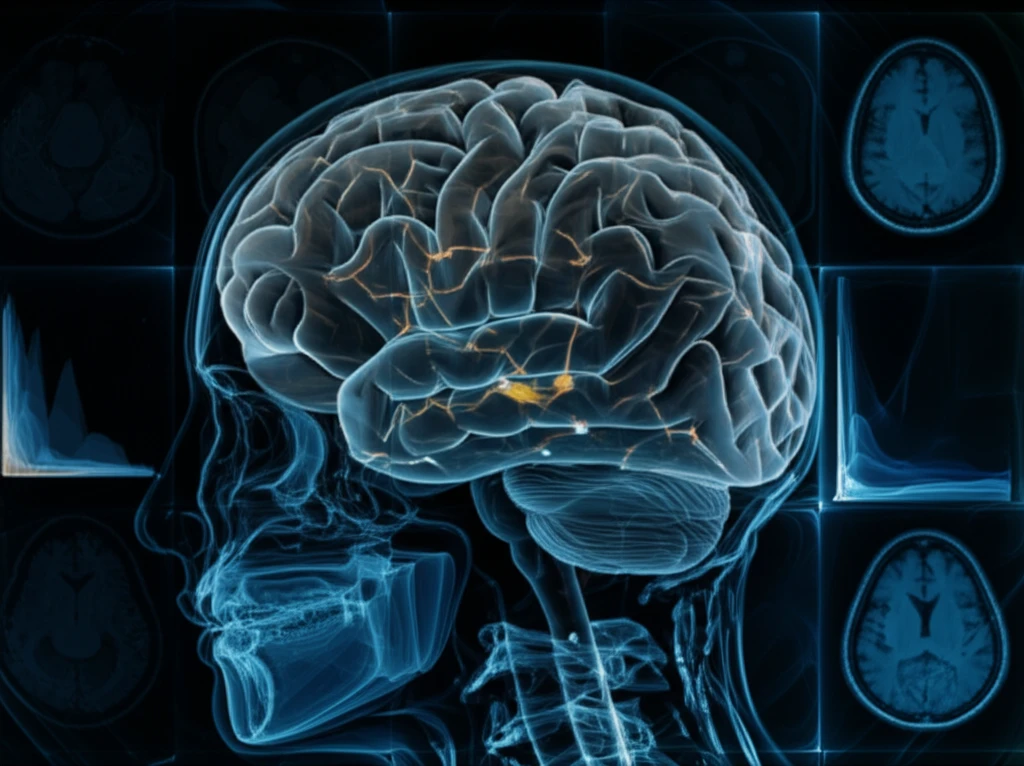
Brain Injury Breakthrough: New MRI Techniques Reveal Hidden Damage

"Advanced Diffusion MRI Uncovers Spatiotemporal Microstructural Changes After Traumatic Brain Injury, Opening New Doors for Diagnosis and Treatment"
Traumatic brain injury (TBI) is a global health concern, leading to significant disability and mortality. TBIs result from external forces, such as accidents, sports injuries, or violence, triggering complex cellular processes that can lead to long-term cognitive and behavioral impairments. While the impact of TBI on white matter has been extensively studied, the effects on gray matter have remained less understood, hindering comprehensive diagnosis and treatment strategies.
Magnetic Resonance Imaging (MRI) has become a crucial tool in diagnosing TBI-related changes in recent years. Traditional MRI scans, such as T1- and T2-weighted images, effectively assess primary lesions and edema. However, more advanced techniques like Diffusion Tensor Imaging (DTI) and Diffusion Kurtosis Imaging (DKI) are now being used to evaluate injury-associated changes at a microscopic level. DTI, based on a Gaussian model of water diffusion, helps examine white matter alterations, including axonal injury, demyelination, and edema.
A recent study published in the Journal of Neurotrauma sheds light on the potential of diffusion MRI to uncover spatiotemporal microstructural changes in gray matter following TBI. By combining DTI and DKI techniques with detailed histological analysis, researchers have provided a comprehensive view of the injury's progression in a rodent model, offering valuable insights for future clinical applications.
Unveiling Hidden Damage: How Diffusion MRI Works
The study employed a controlled cortical impact (CCI) mouse model of TBI to investigate gray matter changes over time. Mice were scanned using T2-weighted structural imaging, DTI, and DKI at various intervals post-injury (5 hours, 1, 3, 7, 14, and 30 days). The MRI data was then validated with cross-sectional histopathology using cresyl violet staining and Glial Fibrillary Acidic Protein (GFAP) immunohistochemistry. This multimodal approach allowed researchers to correlate MRI findings with cellular-level changes, providing a comprehensive picture of TBI progression.
- Lesion Volume: Lesion volume increased significantly up to 3 days post-injury, followed by a gradual decrease over the next month.
- GFAP Signals: GFAP signals, indicating astrogliosis (the proliferation of astrocytes in response to injury), peaked on day 7 and persisted until day 30 in the ipsilateral and contralateral hippocampus, ipsilateral cortex, and thalamic areas.
- Fractional Anisotropy (FA): FA, a measure of white matter integrity, increased in the pericontusional area on day 7 but decreased in the contralateral cortex, hippocampus, and thalamus.
- Mean Diffusivity (MD): MD, reflecting water diffusion, was significantly lower in the pericontusional cortex. Increased MD and decreased mean kurtosis (MK) were limited to the injury site between days 7 and 30 and the contralateral hippocampus and thalamus on days 3 and 7.
Why These Findings Matter
This research offers valuable insights into the complex microstructural changes that occur in the brain following TBI. By demonstrating the sensitivity of diffusion MRI to both ipsilateral and contralateral changes, the study opens new avenues for improved diagnostics and targeted treatments. Understanding the spatiotemporal dynamics of these changes could lead to earlier and more accurate identification of brain damage, ultimately improving patient outcomes. This study also highlights the potential of MRI techniques to track gliosis, a key marker of brain injury, in real time, offering new ways to monitor the effectiveness of therapies and interventions.