
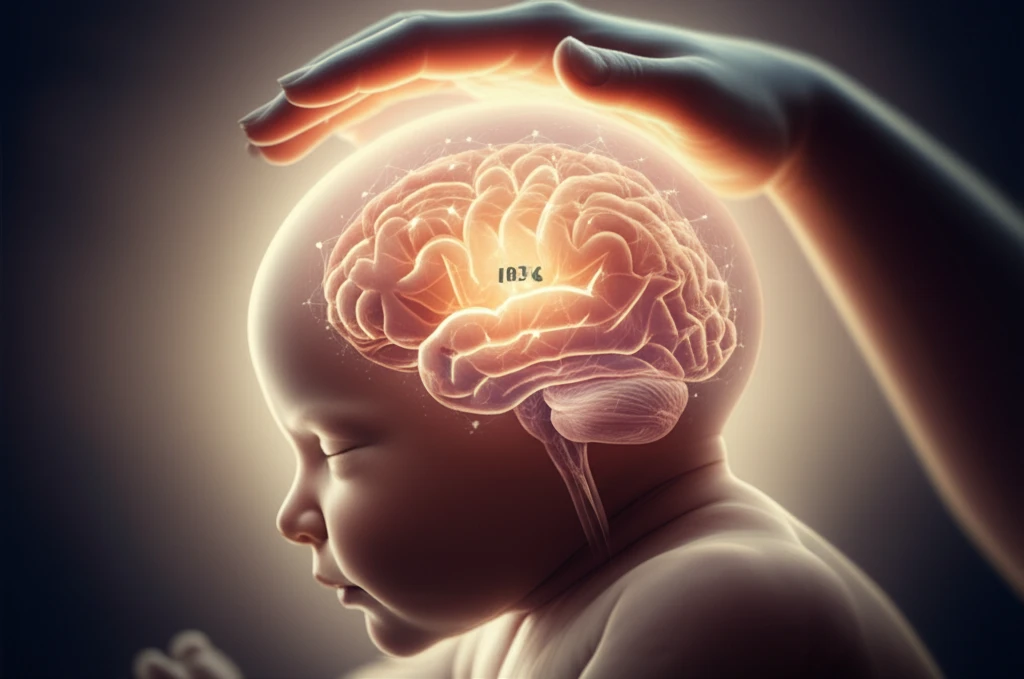
Illustration depicting the IRF4 pathway's protective role in a newborn's brain.  It represents new hopes for Neonatal Health

Brain Breakthrough: How a Key Signaling Pathway Could Revolutionize Neonatal Health

"Scientists uncover a critical pathway that could protect newborns from brain damage caused by oxygen deprivation, offering hope for improved outcomes and a brighter future."


Every year, countless newborns face the terrifying threat of hypoxic-ischemic encephalopathy (HIE), a condition where the brain is deprived of oxygen, leading to potentially severe and lifelong neurological damage. The impact can be devastating, affecting cognitive function, motor skills, and overall quality of life. However, recent groundbreaking research offers a beacon of hope: scientists have identified a critical cellular pathway that could be key to protecting these vulnerable infants.

The study, published in Neurochemistry International, delves into the role of the IRF4 signaling pathway in the brain. This pathway, primarily known for its involvement in immune cell function, has been shown to play a protective role in the neonatal brain. The findings are particularly significant as they open the door to potential new therapies, offering a chance to intervene and mitigate the damage caused by HIE.

This article explores the exciting new research, breaking down the complex science into accessible terms. We’ll examine what HIE is, the critical role of the IRF4 pathway, and the potential implications for the future of neonatal care. Prepare to discover a fascinating journey into the world of neuroscience, filled with hope for the future of our youngest and most vulnerable.

Understanding Hypoxic-Ischemic Encephalopathy (HIE) and Its Impact

Illustration depicting the IRF4 pathway's protective role in a newborn's brain.  It represents new hopes for Neonatal Health

HIE is a severe condition that arises when a baby's brain doesn't receive enough oxygen during the birthing process or shortly after. This can occur due to various complications, such as a difficult delivery, umbilical cord issues, or placental problems. The lack of oxygen triggers a cascade of events that can lead to brain cell damage, resulting in a range of disabilities.

The effects of HIE can vary widely. Some babies may experience mild difficulties, while others may suffer from severe neurological problems, including cerebral palsy, intellectual disabilities, seizures, and developmental delays. The condition places a significant burden on families, requiring extensive care and support. Therefore, understanding HIE and finding effective treatments are of paramount importance.

  • During a difficult birth, umbilical cord problems, or placental complications.
  • This oxygen deprivation initiates a chain reaction that can damage brain cells, causing a spectrum of neurological issues.
  • The consequences of HIE vary significantly, potentially leading to mild learning difficulties or severe disabilities like cerebral palsy, intellectual impairments, seizures, or developmental delays.
  • HIE imposes a substantial burden on families, necessitating extensive care and support systems.
The quest for treatments has been ongoing, with researchers constantly striving to develop interventions that can protect the developing brain from the damaging effects of oxygen deprivation. The latest research on the IRF4 signaling pathway represents a significant step in this direction.

A Brighter Future for Neonatal Health

The research into the IRF4 signaling pathway provides a vital step forward in the fight against HIE. While more studies are needed, these findings offer hope for families and healthcare providers. By unraveling the complexities of brain injury, researchers are paving the way for new therapies and improved outcomes, ultimately leading to a future where more newborns can thrive. The potential to enhance treatment options for these vulnerable infants brings a sense of optimism and underscores the importance of continued dedication to neuroscientific exploration.

About this Article -

This article was crafted using a human-AI hybrid and collaborative approach. AI assisted our team with initial drafting, research insights, identifying key questions, and image generation. Our human editors guided topic selection, defined the angle, structured the content, ensured factual accuracy and relevance, refined the tone, and conducted thorough editing to deliver helpful, high-quality information.See our About page for more information.

This article is based on research published under:

DOI-LINK: 10.1016/j.neuint.2018.12.014, Alternate LINK

Title: Myeloid Cell Irf4 Signaling Protects Neonatal Brains From Hypoxic Ischemic Encephalopathy

Subject: Cell Biology

Journal: Neurochemistry International

Publisher: Elsevier BV

Authors: Abdullah Al Mamun, Haifu Yu, Mehwish A. Mirza, Sharmeen Romana, Louise D. Mccullough, Fudong Liu

Published: 2019-07-01

Everything You Need To Know

1

What is hypoxic-ischemic encephalopathy (HIE) and why is it a concern for newborns?

Hypoxic-ischemic encephalopathy (HIE) is a serious condition that occurs when a newborn's brain does not receive enough oxygen, often due to complications during birth such as umbilical cord or placental issues. This oxygen deprivation can lead to brain cell damage, resulting in various neurological disabilities, including cerebral palsy, intellectual disabilities, seizures, and developmental delays. It's a major concern because it can severely impact a child's cognitive function, motor skills, and overall quality of life, placing a significant burden on families.

2

How does the IRF4 signaling pathway relate to brain damage in newborns?

The IRF4 signaling pathway, primarily known for its role in immune cell function, has been discovered to have a protective function in the neonatal brain. Research indicates that this pathway can shield the brain from damage caused by oxygen deprivation, such as that experienced in HIE. By understanding and harnessing this pathway, scientists hope to develop new therapies to mitigate brain injuries in newborns.

3

What are the potential implications of the research on the IRF4 signaling pathway for treating HIE?

The research on the IRF4 signaling pathway opens the door for developing new therapies aimed at protecting the neonatal brain from the damaging effects of HIE. By targeting this pathway, interventions could potentially reduce the severity of brain damage caused by oxygen deprivation. While further studies are needed, these findings represent a significant step toward improving outcomes for newborns at risk of HIE, potentially leading to a future where these devastating conditions can be better managed.

4

Besides the IRF4 signaling pathway, what other areas of research are being explored to combat HIE, and why is a multifaceted approach necessary?

While the IRF4 signaling pathway shows promise, research into HIE also includes exploring other protective mechanisms, such as therapeutic hypothermia (cooling the baby's brain), antioxidant therapies, and stem cell treatments. A multifaceted approach is crucial because HIE involves a complex cascade of events leading to brain damage. Targeting multiple pathways and mechanisms can provide more comprehensive protection and improve the chances of successful intervention. For example, combining hypothermia with IRF4 pathway modulation could offer synergistic benefits.

5

How might future therapies targeting the IRF4 signaling pathway impact the long-term neurological development and quality of life for children who experience HIE?

Future therapies that effectively target the IRF4 signaling pathway could significantly improve the long-term neurological development and quality of life for children who experience HIE. By mitigating the initial brain damage caused by oxygen deprivation, these therapies could reduce the incidence and severity of long-term disabilities such as cerebral palsy, intellectual impairments, and seizures. This could lead to improved cognitive function, motor skills, and overall independence, enabling affected children to lead more fulfilling and productive lives. Furthermore, reducing the severity of neurological deficits could alleviate the burden on families and healthcare systems, decreasing the need for extensive long-term care and support.

Newsletter Subscribe

Subscribe to get the latest articles and insights directly in your inbox.