
Beyond the Ashworth Scale: A New Tool for Measuring Spasticity After Stroke

"Discover how the Electric Spastic Ankle Measure (E-SAM) offers a more precise way to assess muscle tone and spasticity in stroke patients, potentially revolutionizing rehabilitation strategies."
Spasticity, characterized by a velocity-dependent increase in tonic stretch reflexes, is a common challenge following upper motor neuron injuries such as stroke and spinal cord injury (SCI). While the condition is well-recognized, accurately measuring spasticity and understanding its components has remained elusive. This is crucial because spasticity can either hinder or help recovery, depending on the context.
Current clinical assessments rely heavily on manual tools like the Ashworth Scale and the Modified Ashworth Scale (MAS). These scales are widely used due to their simplicity, but they have significant limitations in reliability and the ability to provide quantifiable results. The need for more precise and reliable measurement tools has driven the development of instruments designed to quantify spasticity, though many are cumbersome and impractical for clinical settings.
This article explores the Electric Spastic Ankle Measure (E-SAM), a newly developed, portable instrument designed to quantitatively assess the spastic and viscoelastic components of muscle tone. By comparing E-SAM measurements with those obtained via the MAS, researchers aim to demonstrate E-SAM's potential as a more specific and quantitative tool for evaluating spasticity in stroke patients.
How Does E-SAM Work?
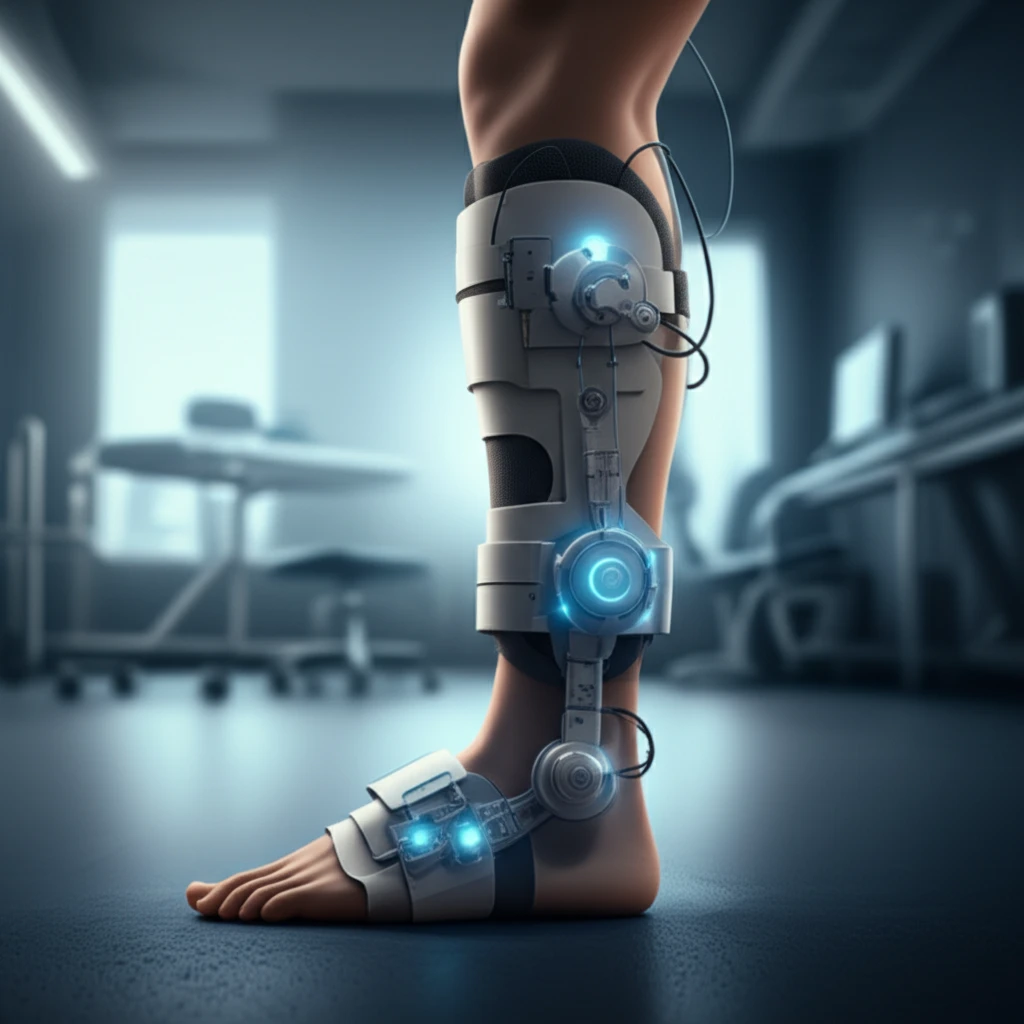
The Electric Spastic Ankle Measure (E-SAM) is designed for ease of use and precise measurement. It incorporates an ankle-foot orthosis (AFO) equipped with torque sensors on an upright bar and a goniometer at the ankle joint. A footplate, pivoting on an anterior hinge, completes the setup.
- Viscoelasticity: The initial drop and resistance encountered reflect the viscoelastic properties of the muscle.
- Reactive Contractions: Subsequent peaks indicate reactive contractions of the plantar flexor muscles, revealing spasticity.
- Data Processing: The recorded data is then analyzed to quantify muscle tone and spasticity, providing a detailed assessment.
The Future of Spasticity Assessment
The E-SAM device offers a promising step forward in the quantitative assessment of spasticity, potentially enhancing treatment strategies and improving outcomes for stroke patients. While further research is needed to validate these initial findings across a broader population, the E-SAM shows significant potential as a practical tool for both clinical and research applications.