
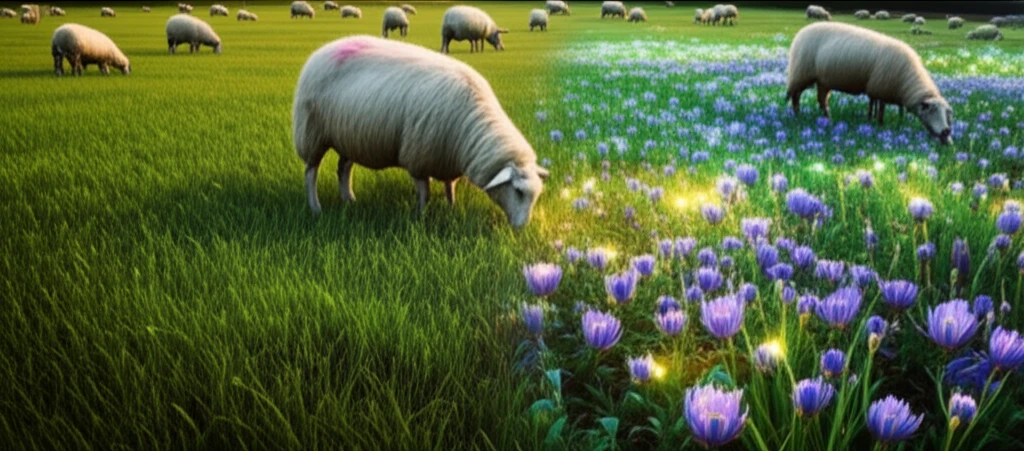
Sheep grazing in a field of plantain and chicory.

Beyond Ryegrass: How Plantain and Chicory Can Boost Your Sheep's Milk Production

"Discover the nutritional power of plantain and chicory mixes for ewes, enhancing milk quality and sustainability in sheep farming."


For sheep farmers in regions with changing climates, maintaining consistent milk production can be a challenge. Traditional grass-based pastures often suffer from seasonal growth limitations, leaving ewes with less-than-ideal nutrition during critical lactation periods. This can negatively impact milk yield, quality, and ultimately, the profitability of a sheep farm.

But what if there was a way to supplement these traditional pastures with something that not only survives but thrives in less-than-ideal conditions? Research suggests plantain and chicory, two resilient and nutritionally-rich forages, might be the answer. These plants offer unique benefits that can complement grass-based systems and improve overall sheep performance.

This article will dive into a study that investigated the effects of grazing ewes on plantain-chicory mixtures compared to traditional grass-based swards. We'll explore how these alternative forages impact milk production, milk quality, and the overall efficiency of nitrogen utilization in sheep, providing practical insights for farmers looking to enhance their flock's productivity and sustainability.

Plantain and Chicory: A Nutritional Goldmine for Ewes?

Sheep grazing in a field of plantain and chicory.

A recent study published in "Small Ruminant Research" sheds light on the potential of plantain and chicory as valuable components of ewe diets. Researchers compared milk production and quality in ewes grazing a plantain-chicory mixture (PCH) versus those grazing a traditional grass-based sward (GBS). The results offer compelling insights into the benefits of these alternative forages.

The study revealed that plantain-chicory swards possess a high nutritional quality, which translates into several advantages for ewes. Compared to grass-based swards, plantain and chicory can:

  • Maintain consistent sheep milk production.
  • Reduce fat content and increase protein levels in ewe's milk.
  • Improve the efficiency of protein utilization.
These findings suggest that incorporating plantain and chicory into ewe diets can lead to a more balanced milk composition, potentially enhancing the nutritional value for lambs. The improved protein utilization also has implications for reducing nitrogen waste, contributing to more sustainable farming practices. When examining the forage, the study found plantain and chicory to have a higher total ash content, which is indicative of the mineral content, and lower NDF, which translates into higher digestibility.

The Future of Sheep Farming: Embracing Diversity in Forage

The results of this study highlight the potential of plantain and chicory as valuable alternatives to traditional grass-based pastures for ewes. By incorporating these forages into their grazing systems, farmers can potentially improve milk production, enhance milk quality, and promote more sustainable nitrogen utilization.

While this research offers promising insights, further studies are needed to fully understand the long-term effects of plantain-chicory mixtures on ewe health, lamb growth, and overall farm profitability. However, the initial findings suggest that embracing diversity in forage selection could be a key strategy for sheep farmers adapting to changing environmental conditions and seeking to optimize their production practices.

For farmers looking to take the next step, consider consulting with a local agricultural extension agent or forage specialist to determine the best way to integrate plantain and chicory into your existing grazing system. With careful planning and implementation, these resilient and nutritious forages could play a vital role in shaping a more sustainable and productive future for sheep farming.

About this Article -

This article was crafted using a human-AI hybrid and collaborative approach. AI assisted our team with initial drafting, research insights, identifying key questions, and image generation. Our human editors guided topic selection, defined the angle, structured the content, ensured factual accuracy and relevance, refined the tone, and conducted thorough editing to deliver helpful, high-quality information.See our About page for more information.

This article is based on research published under:

DOI-LINK: 10.1016/j.smallrumres.2018.11.022, Alternate LINK

Title: Milk Production And Quality From Ewes Grazing A Plantain-Chicory Mixture Or A Grass-Based Permanent Sward

Subject: Animal Science and Zoology

Journal: Small Ruminant Research

Publisher: Elsevier BV

Authors: Romina Rodríguez, Camila Suazo, Oscar Balocchi, Daniel Alomar

Published: 2019-01-01

Everything You Need To Know

1

What are the primary benefits of using plantain and chicory for ewes?

Plantain and chicory are beneficial for ewes, offering a high nutritional quality compared to traditional grass-based swards. They help maintain consistent sheep milk production. They can reduce the fat content and increase protein levels in the ewe's milk. They also improve the efficiency of protein utilization. This leads to a more balanced milk composition, potentially enhancing the nutritional value for lambs and contributing to more sustainable farming practices. The higher ash content in plantain and chicory indicates a better mineral profile, and the lower NDF means higher digestibility, both supporting ewe health and milk production.

2

Why are plantain and chicory considered important in sheep farming?

Plantain and chicory are significant because they offer an alternative to traditional grass-based pastures, especially in regions with challenging climates or seasonal growth limitations. By using plantain and chicory, farmers can ensure ewes receive consistent nutrition during critical lactation periods. This helps maintain milk production, quality, and profitability. The use of plantain and chicory also improves nitrogen utilization, which promotes more sustainable farming practices by reducing waste.

3

What did the study compare when examining plantain and chicory?

The study investigated the impact of plantain-chicory mixtures (PCH) versus traditional grass-based swards (GBS). The results showed several advantages for ewes grazing on plantain and chicory. Compared to grass, PCH helps to maintain consistent milk production, reduces fat content while increasing protein levels in the milk, and improves the efficiency of protein utilization. This research provides practical insights, supporting farmers looking to boost productivity and sustainability in their flocks.

4

How does using plantain and chicory impact protein utilization?

The use of plantain and chicory can improve the efficiency of protein utilization by ewes. The incorporation of plantain and chicory into the ewe's diet leads to more efficient protein use. This improved protein utilization helps reduce nitrogen waste, contributing to more sustainable farming practices. This is a key factor in the environmental impact of sheep farming.

5

How can farmers specifically benefit from using plantain and chicory?

Farmers can benefit from using plantain and chicory by enhancing milk production and milk quality. The switch to plantain and chicory also promotes more sustainable nitrogen utilization. This offers a way to enhance the overall productivity and sustainability of their sheep farming operations, contributing to both economic and environmental benefits. The higher mineral content and digestibility of plantain and chicory contribute to overall ewe health.

Newsletter Subscribe

Subscribe to get the latest articles and insights directly in your inbox.