
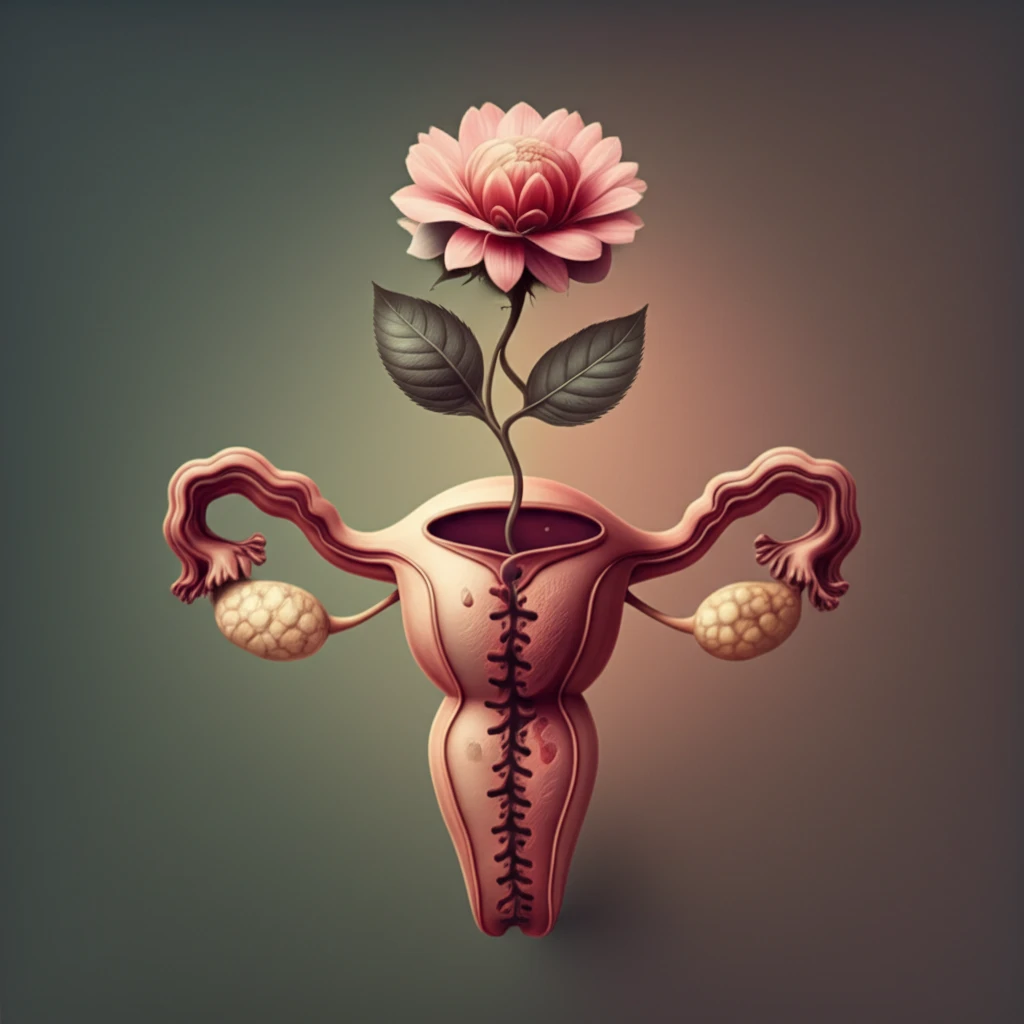
Illustration of a uterus with sutures, representing the Nausicaa technique, and a flower symbolizing hope and healing.

Beyond Hysterectomy: How a 'Nausicaa' Suture Revolutionizes Postpartum Hemorrhage Treatment

"A Novel Surgical Technique Offers Hope for Women Facing Severe Bleeding After Childbirth"


Postpartum hemorrhage (PPH), or excessive bleeding after childbirth, remains a significant concern in maternal healthcare worldwide. While advances in medical care have improved outcomes, severe PPH can still lead to life-threatening situations for mothers. One of the most challenging scenarios is when PPH is linked to conditions like placenta accreta spectrum (PAS), where the placenta abnormally attaches to the uterine wall.

In the face of major PPH, especially when caused by PAS or other complications, the traditional treatment has often been hysterectomy—the surgical removal of the uterus. While life-saving, hysterectomy can have profound physical and emotional consequences, including the inability to have future pregnancies. But now, a novel surgical technique is offering a different approach, providing hope for women facing these difficult circumstances.

This article explores the 'Nausicaa' compression suture, a groundbreaking surgical technique that offers a simpler and more effective alternative to hysterectomy in cases of severe PPH. We'll dive into the science behind this innovative method, its success rates, and its potential to change the landscape of maternal care, offering a path to recovery while preserving the possibility of future pregnancies.

The 'Nausicaa' Suture: A Closer Look at This Revolutionary Technique

Illustration of a uterus with sutures, representing the Nausicaa technique, and a flower symbolizing hope and healing.

The 'Nausicaa' compression suture is a uterine-preserving technique developed to control bleeding in women experiencing severe PPH. The procedure involves strategically placed sutures around the bleeding site in the uterus. These sutures are designed to compress the area, creating a mechanical pressure that helps to stop the bleeding and allows the uterus to heal.

The technique, which takes its name from the Japanese animated film 'Nausicaä of the Valley of the Wind,' is performed by experienced surgeons during a cesarean section. It is particularly helpful for women who have complications such as placenta accreta spectrum (PAS) and placenta praevia. The procedure can be completed in a relatively short time—often within minutes—offering a rapid and effective solution.

  • Minimally Invasive: The procedure is less invasive than a hysterectomy, which helps to reduce complications and recovery time.
  • Uterus Preservation: The primary goal of the Nausicaa suture is to preserve the uterus, allowing women to have the option of future pregnancies.
  • Effective Hemostasis: The technique effectively controls bleeding, preventing the need for further interventions in many cases.
  • Rapid Procedure: The procedure can be completed quickly, which is crucial in emergency situations.
The success of the 'Nausicaa' suture highlights a shift towards patient-centered care in obstetrics, focusing on preserving both the life and the reproductive potential of the mother. It represents a significant step forward in treating PPH and offers a promising alternative for women in challenging situations.

Embracing Innovation in Maternal Care

The 'Nausicaa' suture technique is an excellent example of how innovation can lead to significant improvements in healthcare. It provides a new approach to a long-standing challenge, offering a safer, less invasive, and more patient-centered solution. As research continues and this technique becomes more widely adopted, more women facing severe PPH will have the opportunity to preserve their health and their ability to have children in the future.

About this Article -

This article was crafted using a human-AI hybrid and collaborative approach. AI assisted our team with initial drafting, research insights, identifying key questions, and image generation. Our human editors guided topic selection, defined the angle, structured the content, ensured factual accuracy and relevance, refined the tone, and conducted thorough editing to deliver helpful, high-quality information.See our About page for more information.

This article is based on research published under:

DOI-LINK: 10.1111/1471-0528.15410, Alternate LINK

Title: ‘Nausicaa’ Compression Suture: A Simple And Effective Alternative To Hysterectomy In Placenta Accreta Spectrum And Other Causes Of Severe Postpartum Haemorrhage

Subject: Obstetrics and Gynecology

Journal: BJOG: An International Journal of Obstetrics & Gynaecology

Publisher: Wiley

Authors: J-C Shih, K-L Liu, J Kang, J-H Yang, M-W Lin, C-U Yu

Published: 2018-08-20

Everything You Need To Know

1

What is postpartum hemorrhage (PPH), and why is it a significant concern?

Postpartum hemorrhage (PPH) refers to excessive bleeding after childbirth. It remains a significant concern in maternal healthcare worldwide because, despite medical advancements, severe PPH can lead to life-threatening situations for mothers. Particularly challenging is when PPH is linked to conditions like placenta accreta spectrum (PAS), where the placenta abnormally attaches to the uterine wall. Understanding PPH and its associated risks is crucial for improving maternal outcomes globally. The 'Nausicaa' compression suture provides a less invasive technique to address PPH which results from PAS and placenta previa which are serious complications of childbirth.

2

What is the 'Nausicaa' compression suture, and how does it work to treat severe postpartum hemorrhage?

The 'Nausicaa' compression suture is a uterine-preserving surgical technique designed to control bleeding in women experiencing severe postpartum hemorrhage (PPH). The procedure involves strategically placing sutures around the bleeding site in the uterus. These sutures compress the area, creating mechanical pressure that helps stop the bleeding and allows the uterus to heal. It is named after the Japanese animated film 'Nausicaä of the Valley of the Wind'. The 'Nausicaa' compression suture allows women to retain the option of future pregnancies, and is less invasive than a hysterectomy.

3

How does the 'Nausicaa' suture compare to a hysterectomy in the treatment of severe PPH?

In the face of major postpartum hemorrhage (PPH), especially when caused by placenta accreta spectrum (PAS) or other complications, the traditional treatment has often been hysterectomy—the surgical removal of the uterus. While life-saving, hysterectomy has physical and emotional consequences, including the inability to have future pregnancies. The 'Nausicaa' compression suture is a simpler and more effective alternative to hysterectomy in cases of severe PPH, offering a path to recovery while preserving the possibility of future pregnancies. In addition, the 'Nausicaa' compression suture procedure can be completed quickly, which is crucial in emergency situations.

4

What are the key benefits of the 'Nausicaa' suture technique in managing severe PPH?

The 'Nausicaa' compression suture offers several key benefits in managing severe postpartum hemorrhage (PPH): it is minimally invasive, reducing complications and recovery time compared to a hysterectomy; it preserves the uterus, allowing women to have the option of future pregnancies; it effectively controls bleeding, preventing the need for further interventions in many cases; and it is a rapid procedure, which is crucial in emergency situations. The success of the 'Nausicaa' suture highlights a shift towards patient-centered care in obstetrics, focusing on preserving both the life and the reproductive potential of the mother. The 'Nausicaa' compression suture is particularly helpful for women who have complications such as placenta accreta spectrum (PAS) and placenta praevia.

5

What is placenta accreta spectrum (PAS) and how does the 'Nausicaa' suture address complications arising from it during childbirth?

Placenta accreta spectrum (PAS) is a condition where the placenta abnormally attaches to the uterine wall, often leading to severe postpartum hemorrhage (PPH). The 'Nausicaa' compression suture is particularly helpful for women who have complications such as PAS. By strategically placing sutures around the bleeding site in the uterus, the procedure compresses the area, creating mechanical pressure that helps stop the bleeding. In the past, the only option for this condition was often a hysterectomy, but the 'Nausicaa' compression suture offers a solution that preserves the uterus, allowing women to retain the option of future pregnancies. This innovative approach is a shift toward patient-centered care in obstetrics, focusing on preserving both the life and the reproductive potential of the mother.

Newsletter Subscribe

Subscribe to get the latest articles and insights directly in your inbox.