
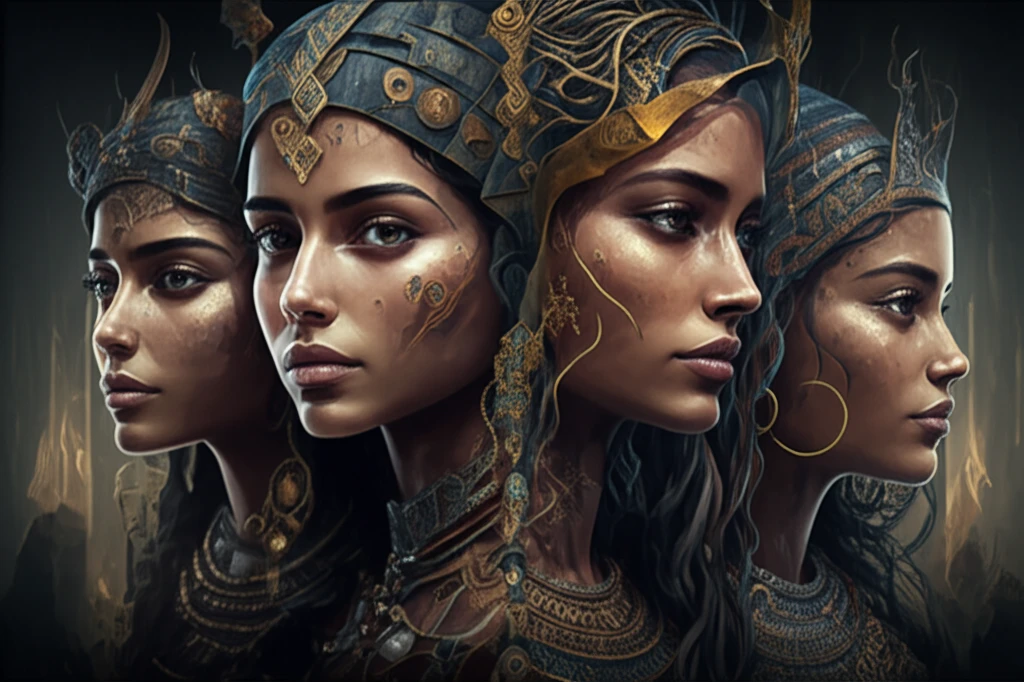
Beyond Homer: Uncovering the Real Lives of Women in the Ancient World

"A groundbreaking study challenges traditional views, revealing the diverse roles and realities of women in Near Eastern and Classical societies."
For centuries, our understanding of women in the ancient world has been largely shaped by the epic tales of Homer and other classical writers. These stories, while captivating, often present a narrow and idealized view, focusing on goddesses and mythical heroines rather than the everyday lives of real women.
However, a new wave of historical research is challenging these traditional perspectives. By examining a wealth of non-literary sources – from archaeological findings and economic records to personal letters and legal documents – historians are beginning to paint a more nuanced and comprehensive picture of women's experiences in antiquity.
A recent study, "Women in Antiquity: Real Women Across the Ancient World," exemplifies this shift. Edited by Stephanie Lynn Budin and Jean Macintosh Turfa, this collection of essays brings together the work of numerous scholars to explore the diverse roles and realities of women in Near Eastern and Classical societies, spanning from Mesopotamia to Italy and from 3000 B.C. to A.D. 500.
The State of Scholarship on Women in Antiquity
Studies of archaeology publishing reveal a persistent gender imbalance, with analyses showing a recurrent ratio of one female author for every two male authors in leading journals. The field of Women in Antiquity has grown into an international collaborative effort, with interactive resources created by students across North American universities. Women's lives in the ancient world varied significantly across cultures, yet shared common themes related to social status, family roles, and religious significance, complicating historical documentation due to the dominance of written traditions favoring patriarchal societies.
Methodological Challenges in Studying Ancient Women
One of the most difficult challenges in studying ancient Greek societies is navigating the relationship between literary representations and actual social realities. This difficulty is especially acute in the study of ancient women, given that most literary source material was authored by men. Recent scholarship reflects and expands on existing debates about the status and representation of women, focusing on methodology and suggesting areas for research improvement.
Recognizing Women's Struggles Across Antiquity
In many ancient cultures, women had to battle disadvantages imposed by rules and conventions created by men who dominated government, public life, and society. Despite these constraints, women played significant roles in ancient religions and communities. Scholarly resources have increasingly sought to document and restore the voices of women across the ancient world, from the classical period through diverse civilizations.
Moving Beyond Myths: What Sources Reveal
The challenge in understanding women's lives in antiquity lies in the limited and often biased nature of the available sources. Literary works, such as the "Iliad," primarily reflect the perspectives and agendas of male authors, offering stylized or idealized representations of women. This is where the shift towards non-literary sources becomes essential.
- Seals and Economic Activity: In Mesopotamia, the use of personal seals by businesswomen on transport containers and tablets suggests their active participation in the economic system beyond household chores.
- Grave Goods in Nubia: Analysis of grave goods in ancient Nubia provides clues about the roles and status of ordinary women, indicating a potentially high degree of independence compared to other cultures.
- Women in Cyprus: A burial site in Cyprus containing the remains of young women and an infant suggests the economic value attached to women of marriageable age, with a signet ring indicating their capacity to own property.
Recent Advances in Women's History Research
A 2024 publication on the public lives of ancient women from 500 BCE to 650 CE brings to the fore the extensive legacy of scholarship on women in antiquity. Gender analysis of submissions to Antiquity, a leading world archaeology journal, reveals persistent imbalances in authorship between 2015 and 2020. Oxford University Press continues to publish the Women in Antiquity series, reflecting ongoing scholarly engagement with the topic.
Gaps and Limitations in Current Research
Scholarship on women in the ancient world faces inherent limitations due to the fragmentary nature of surviving evidence and the biases of predominantly male-authored sources. The transition from matriarchal to patriarchal systems in many societies complicates the historical record, as documentation tends to favor cultures with written traditions. Despite growing academic interest, significant gaps remain in understanding the full diversity of women's experiences across different regions and time periods.
Cross-Cultural Perspectives on Women's Status
In the ancient world, the status of women varied significantly across cultures, regions, and time periods, making any comprehensive discussion of gender in antiquity fraught with complicating factors. Understanding the nature of womanhood requires identifying both similarities and differences among women of ancient, diverse societies. Comparative approaches reveal that while shared themes emerge, women's experiences were far from monolithic across the ancient world.
Rewriting the Narrative: A More Inclusive History
By moving beyond traditional literary sources and embracing a wider range of evidence, historians are painting a more complete and nuanced picture of women's lives in the ancient world. This research not only challenges existing assumptions but also highlights the diversity of women's experiences across different cultures and time periods, paving the way for a more inclusive and accurate understanding of history.
Bridging Representation and Reality
The study of women in the ancient world encompasses examining their roles, statuses, and experiences across various ancient civilizations, including contributions and societal positions shaped by cultural, legal, and economic factors. A key challenge remains distinguishing between literary representations of women and the actual lives of real people, particularly given the predominantly male authorship of surviving sources. Academic research continues to expand our understanding of how gender influenced identities throughout ancient history.
Toward a Feminist Economic History of Antiquity
Women's relative invisibility in research on the ancient economy persists despite five decades of work on women and gender in other fields of ancient history. The last fifty years have seen significant progress in studying women in various areas of ancient history, yet economic analyses from Moses Finley to New Institutionalism routinely exclude women's experiences. Developing a feminist economic history of the ancient Greek world represents an important frontier for future scholarship.
Structural Barriers to Inclusive Scholarship
The study of women in antiquity continues to contend with structural challenges, including underrepresentation of female scholars in academic publishing and the enduring influence of patriarchal frameworks in historical analysis. Surviving evidence remains fragmentary and biased, limiting comprehensive understanding of women's diverse experiences. These systemic issues underscore the need for continued methodological innovation and inclusive approaches in ancient history research.
Restoring Real Women to the Historical Record
Scholarship on women in antiquity has a clear purpose: to be a book about 'real women' rather than mythological or idealized figures. Edited collections by experts in the field serve as invaluable resources for students of the ancient world, gender studies, and women's roles throughout history. These works aim to restore the humanity and individuality of women who lived in ancient civilizations, moving beyond abstract discussions to document their actual lived experiences.