
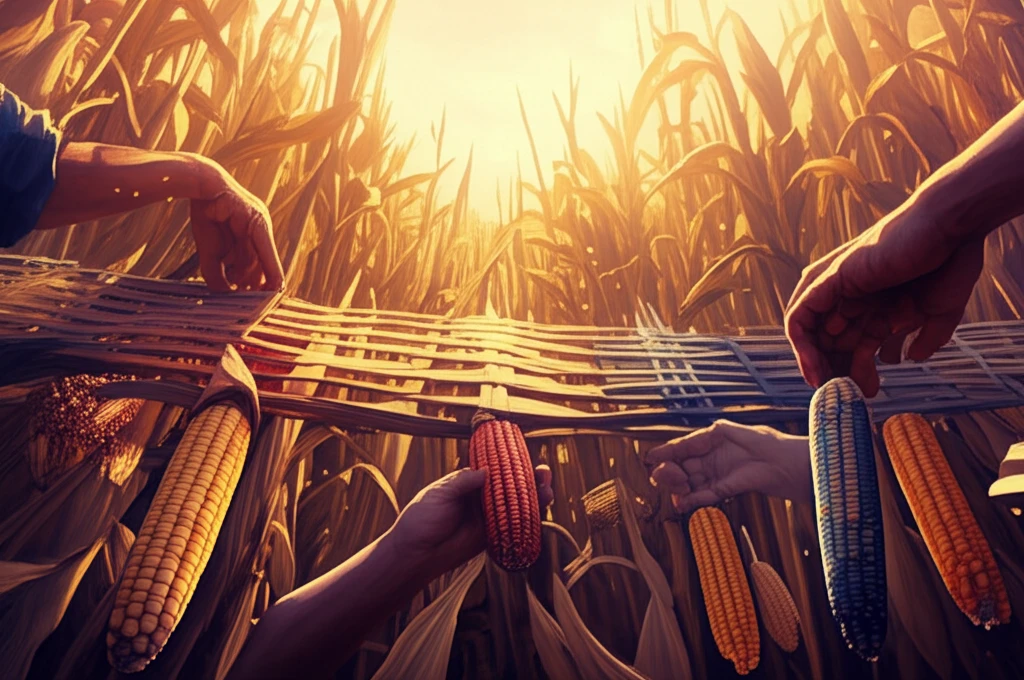
Diverse hands weaving colorful maize husks into intricate crafts in a sunlit field.

Beyond Food: How Heirloom Corn Varieties are Weaving a Sustainable Future

"Discover how the BRS Cipotânea and BRS Diamantina maize varieties are revitalizing traditional crafts and empowering farming communities."


In a world increasingly focused on mass production and efficiency, the story of BRS Cipotânea and BRS Diamantina maize varieties offers a refreshing perspective. These aren't your typical high-yield crops destined solely for food production. Instead, they represent a deliberate effort to support traditional crafts, empower local communities, and promote sustainable agriculture in Brazil.

The journey of these maize varieties began in the germplasm bank of Embrapa Maize and Sorghum, where researchers sought to identify accessions with unique characteristics suitable for corn-husk crafts. This initiative recognized that for some communities, the value of corn extends far beyond its nutritional content. The long, colorful husks of specific maize varieties are essential for creating intricate handicrafts, providing a vital source of income and cultural identity.

This article explores the development of BRS Cipotânea and BRS Diamantina, highlighting the participatory approach that involved both scientists and end-users – the farmers and artisans who would ultimately benefit from these varieties. By understanding the specific needs and preferences of these communities, researchers were able to develop maize varieties that not only thrive in local conditions but also provide the raw materials for beautiful and sustainable crafts.

Why Crafting Matters: The Untapped Potential of Corn Husks

Diverse hands weaving colorful maize husks into intricate crafts in a sunlit field.

For many farming families in Brazil, corn isn't just a staple crop; it's a versatile resource that sustains their livelihoods in multiple ways. While high-yielding maize cultivars dominate the agricultural landscape, these varieties often fall short in meeting the specific needs of artisans who rely on corn husks for their craft.

These artisans require husks that are long, pliable, and come in a range of colors and textures to create a diverse array of products. From decorative items to functional objects, corn-husk crafts represent a valuable source of income and a tangible link to cultural heritage. Recognizing this unmet need, researchers at Embrapa embarked on a mission to develop maize varieties tailored to the needs of these artisans.

  • Economic Empowerment: Provides artisans with a sustainable source of income.
  • Cultural Preservation: Supports the continuation of traditional crafts.
  • Sustainable Resource: Utilizes a readily available agricultural byproduct.
  • Community Building: Fosters collaboration between farmers and artisans.
The development of BRS Cipotânea and BRS Diamantina involved a participatory selection process, where researchers collaborated directly with farmers and artisans to identify the most desirable traits. This collaborative approach ensured that the resulting maize varieties not only met the agronomic requirements for successful cultivation but also possessed the specific husk characteristics prized by craftspeople.

Planting Seeds of Change: A Vision for the Future

The story of BRS Cipotânea and BRS Diamantina is more than just a tale of two maize varieties; it's a testament to the power of participatory research and the importance of recognizing the diverse needs of farming communities. By prioritizing sustainability, cultural preservation, and economic empowerment, these maize varieties are helping to weave a brighter future for artisans and farmers alike, proving that agriculture can be both productive and purposeful.

About this Article -

This article was crafted using a human-AI hybrid and collaborative approach. AI assisted our team with initial drafting, research insights, identifying key questions, and image generation. Our human editors guided topic selection, defined the angle, structured the content, ensured factual accuracy and relevance, refined the tone, and conducted thorough editing to deliver helpful, high-quality information.See our About page for more information.

This article is based on research published under:

DOI-LINK: 10.1590/s1984-70332011000200013, Alternate LINK

Title: Brs Cipotânea And Brs Diamantina: Maize Varieties

Subject: General Medicine

Journal: Crop Breeding and Applied Biotechnology

Publisher: FapUNIFESP (SciELO)

Authors: Flavia França Teixeira, José Heitor De Vasconcellos, Ramiro Vilela De Andrade, Manoel Xavier Dos Santos, Carlos Eduardo Prado Leite, Paulo Evaristo De Oliveira Guimarães, Sidney Netto Parentoni, Walter Fernandes Meirelles, Cleso Antonio Patto Pacheco, Gessi Ceccon

Published: 2011-06-01

Everything You Need To Know

1

What are BRS Cipotânea and BRS Diamantina, and why are they important?

BRS Cipotânea and BRS Diamantina are maize varieties developed by Embrapa Maize and Sorghum. Their significance lies in their dual purpose: supporting sustainable agriculture and providing the raw materials for corn-husk crafts. Unlike high-yield crops focused solely on food production, these varieties cater to the needs of artisans, offering long, colorful husks essential for creating handicrafts. This approach empowers local communities and preserves cultural heritage, making them crucial for a more sustainable future in Brazil.

2

How did researchers develop BRS Cipotânea and BRS Diamantina, and what made the process unique?

The development of BRS Cipotânea and BRS Diamantina started in the germplasm bank of Embrapa Maize and Sorghum. Researchers identified maize accessions with specific traits suitable for corn-husk crafts. What set this process apart was its participatory approach. Researchers collaborated directly with farmers and artisans. This collaboration ensured the varieties met both the agricultural needs and the specific husk characteristics desired by craftspeople, fostering a sustainable and community-focused development.

3

Why are corn-husk crafts important, and how do BRS Cipotânea and BRS Diamantina contribute to their significance?

Corn-husk crafts are vital because they provide farming families in Brazil with a sustainable source of income and a tangible connection to their cultural heritage. These crafts utilize a readily available agricultural byproduct. BRS Cipotânea and BRS Diamantina are crucial because they were specifically developed to provide the long, pliable, and colorful husks needed by artisans. This directly supports economic empowerment, cultural preservation, and community building within these farming communities.

4

What are the main benefits of cultivating BRS Cipotânea and BRS Diamantina, beyond food production?

The primary benefits extend beyond food production and include Economic Empowerment, providing artisans with a sustainable income source. Cultural Preservation supports the continuation of traditional crafts. Sustainable Resource utilizes an agricultural byproduct effectively. Community Building fosters collaboration between farmers and artisans. These benefits highlight the maize varieties' role in promoting sustainable agriculture and community well-being in Brazil.

5

How do BRS Cipotânea and BRS Diamantina represent a vision for the future of agriculture?

BRS Cipotânea and BRS Diamantina exemplify a vision for the future of agriculture that prioritizes sustainability, cultural preservation, and community empowerment. They demonstrate that agriculture can be both productive and purposeful, supporting the livelihoods of farmers and artisans. By focusing on the diverse needs of farming communities and recognizing the value of traditional crafts, these maize varieties pave the way for a more inclusive and sustainable agricultural model, ensuring a brighter future for all involved.

Newsletter Subscribe

Subscribe to get the latest articles and insights directly in your inbox.