
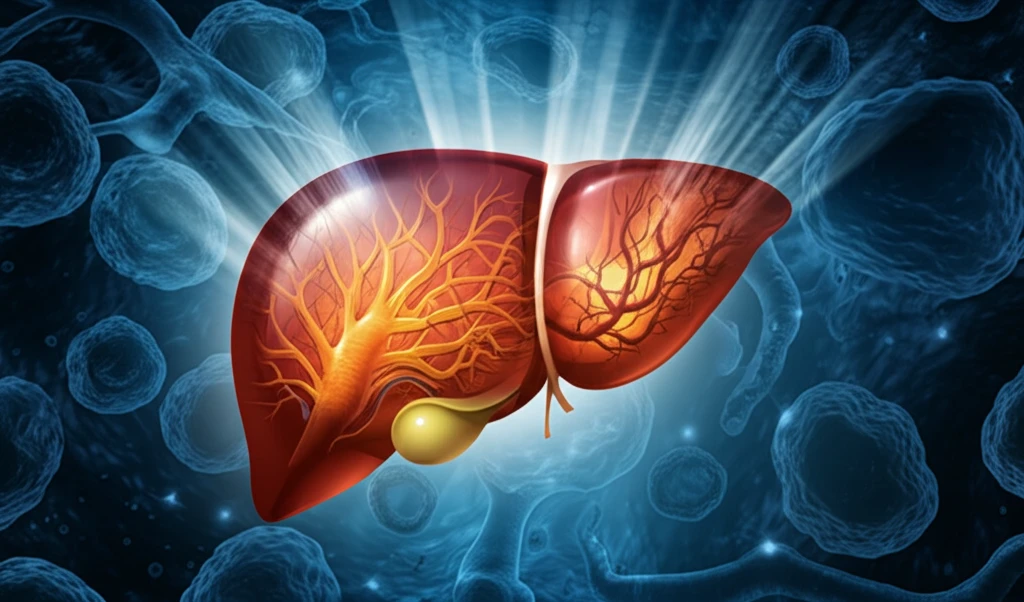
Beating the Odds: How Photodynamic Therapy is Changing the Game for Cholangiocarcinoma

"Discover how photodynamic therapy (PDT) offers new hope and improved quality of life for patients battling cholangiocarcinoma, a challenging and often unresectable cancer."
Cholangiocarcinoma, a cancer of the bile ducts, often presents as an insurmountable challenge. Many patients find themselves facing unresectable tumors, requiring palliative measures like biliary stenting to ease their symptoms. While traditional treatments like chemotherapy and radiotherapy have shown limited success, a promising alternative has emerged: photodynamic therapy, or PDT. This innovative approach is gaining traction for its potential to enhance the quality of life and possibly extend survival for those affected by this disease.
What sets PDT apart is its unique ability to work within the biliary tree. PDT relies on the transmission of light through the bile ducts to target and destroy cancer cells. This distinctive feature makes it a valuable tool when conventional surgical options are not viable. As we delve deeper, we'll explore the clinical implications of endoscopic biliary drainage, analyze findings from past and present PDT studies for cholangiocarcinoma, and introduce pioneering techniques that allow for direct visualization during treatment.
Michel Kahaleh, MD, Chief of Endoscopy at Weill Cornell Medical College, emphasizes that bile duct transmission is the cornerstone of PDT, making it uniquely suited to the gastrointestinal tract. Its capacity to reach lesions that are otherwise inaccessible positions it as an attractive option for managing cholangiocarcinoma. Given that most cholangiocarcinomas are unresectable, the primary goal becomes effective biliary decompression. Accumulating evidence from numerous studies suggests that PDT can significantly improve the quality of life for patients, and ongoing randomized controlled trials aim to solidify its role in prolonging survival.
A Rare Cancer With an Uncertain Prognosis
Cholangiocarcinoma is a rare cancer, with about 8,000 people in the United States diagnosed each year, including both intrahepatic and extrahepatic bile duct cancers. Reported 5-year survival rates range from 5% to 30%, with an average of roughly 10% to 15%. The disease is much more common in Asia, largely because of a common parasitic infection of the bile duct, and almost two out of three people are age 65 or older when it is found. The average age at diagnosis for intrahepatic bile duct cancers is 70. These statistics may not yet reflect recent treatment advances or individual patient outcomes.
The Limits of the Standard of Care
The standard first-line treatment for advanced biliary tract cancers, including cholangiocarcinoma, is gemcitabine and cisplatin combination chemotherapy. Historically, radiation has been difficult to use with cholangiocarcinoma because the treatment margins required by older methods were largely prohibitive. The data around surgical resection, by contrast, is relatively rich considering the disease's limited patient population. Some emerging approaches target the metabolic vulnerabilities of cancer cells, particularly their reliance on glucose, glutamine, and lipid synthesis.
A Disease Slowly Mapped Over Time
Cholangiocarcinoma is a cancer of the bile duct system, originating in the liver or the extrahepatic bile ducts that end at the ampulla of Vater. It occurs in three main areas: intrahepatic, extrahepatic (perihilar), and distal extrahepatic. Historical and educational resources trace the disease's discovery and the research milestones since, including evolving treatment landscapes and patient biomarker stories. The 'natural history' of unresected cholangiocarcinoma has also been examined to understand patient outcomes after non-curative intervention.
Clinical Implications of Endoscopic Biliary Drainage
From an endoscopic viewpoint, a comprehensive understanding of the liver's various segments is essential for effective biliary decompression. As Dr. Kahaleh points out, treatment strategies are guided by both symptoms and imaging results. Advanced imaging techniques like MRI and MR cholangiopancreatography (MRCP) are invaluable in pinpointing the precise areas of the liver that require drainage. The fundamental goal of biliary stenting is to alleviate jaundice, which subsequently enhances both symptoms and overall quality of life.
- Segment Knowledge: Understanding liver segments for targeted decompression.
- Imaging Guidance: Utilizing MRI and MRCP for accurate planning.
- Jaundice Relief: Aiming to alleviate jaundice and improve quality of life.
- Selective Treatment: Targeting 25-30% drainage to relieve symptoms.
Unpacking New Drivers and New Targets
Researchers have identified a number of metabolic disorders that can contribute to the development of cholangiocarcinoma, and this remains a focus of future research. The medical community continues to explore novel approaches to treating advanced-stage cholangiocarcinoma. The cancer is classified by anatomical location within the bile duct system, and intrahepatic cholangiocarcinoma arises from the small bile ducts located within the liver. Ongoing coverage also continues to surface factors that cholangiocarcinoma shares with other aggressive cancers.
Late Diagnosis and Therapy Resistance
Cholangiocarcinoma is frequently diagnosed at advanced stages, with a consequent poor prognosis; in Europe, it commonly presents as a sporadic cancer in patients without defined risk factors. It is a heterogeneous biliary malignancy characterized by late diagnosis, stromal desmoplasia, and immune exclusion. These features contribute to frequent resistance to chemotherapy, immunotherapy, and molecularly targeted therapy. Unmet needs and priorities for the disease remain an active topic of ongoing review.
Bile Duct Versus Gallbladder Cancer
Gallbladder cancer and cholangiocarcinoma are both biliary cancers, but gallbladder cancer originates in the gallbladder while cholangiocarcinoma forms in the bile ducts. The two can cause the same symptoms, such as abdominal pain, yellowish skin, weight loss, generalized itching, and fever, as well as light-colored stool or dark urine. Causes and treatments, however, can differ between the two diseases. For intrahepatic cholangiocarcinoma specifically, imaging comparisons of dynamic CT and dynamic MRI have been studied to aid diagnosis.
Looking Ahead
Photodynamic therapy, with its distinctive capability to access peripheral lesions in the biliary tree, has become a robust platform for palliative care in patients with inoperable cholangiocarcinoma. Numerous past and current studies affirm that PDT effectively improves symptoms and potentially extends survival in these patients. While more randomized controlled trials are essential to validate these findings, the successful implementation of PDT necessitates a dedicated team of experienced professionals. Adequate patient education is also critical to prevent adverse effects from photosensitivity, ensuring a comprehensive and effective approach to care.
Expert Consensus on Where Progress Stands
Expert opinion holds that gemcitabine-based chemotherapy has improved overall survival in advanced cholangiocarcinoma in recent years, and the gemcitabine-cisplatin combination remains the largely accepted standard for biliary cancers. Advanced cholangiocarcinoma still carries a dismal prognosis. Improved understanding of molecular pathogenesis and advances in targeted therapy, including the identification of actionable mutations, offer hope that outcomes may improve. However, several challenges remain in managing intrahepatic cholangiocarcinoma with these targeted therapies.
Markets, Pipelines, and Emerging Trends
The cholangiocarcinoma treatment market is projected to reach USD 1.86 billion by 2035, growing at a 5.48% compound annual growth rate. More than 55 companies are reported to be developing breakthrough therapies that are shaping the future treatment landscape. Emerging trends include personalized medicine, immunotherapy, and increasing research on novel treatment approaches. Clinical trials and pipeline development continue to be tracked for EMA, PDMA, and FDA activity.
Precision Medicine in a Difficult Environment
Cholangiocarcinoma has become an unexpected test of whether precision oncology can deliver on its central promise of matching the right treatment to the right molecular abnormality at the right moment. In a notable regulatory milestone, tinengotinib was approved in China for adults with advanced, metastatic, or unresectable cholangiocarcinoma with FGFR2 fusions or rearrangements who have previously received systemic therapy and an FGFR inhibitor. Patient and caregiver navigation remains part of the broader challenge, with resources such as the Cholangiocarcinoma Foundation's CholangioPath app providing trusted guidance along one of life's most difficult journeys.
What Real-World Data Show
Real-world studies are documenting how cholangiocarcinoma therapies perform beyond clinical trial settings. A Canadian case series evaluated the real-world use of pemigatinib in patients diagnosed with locally advanced or metastatic cholangiocarcinoma. Real-world data from 262 patients across 80 sites in 15 countries confirmed the efficacy profile of ivosidenib established in the pivotal ClarIDHy trial that led to FDA approval. Observational studies continue to track outcomes with additional agents, including a Phase 4 real-world study of regorafenib.