
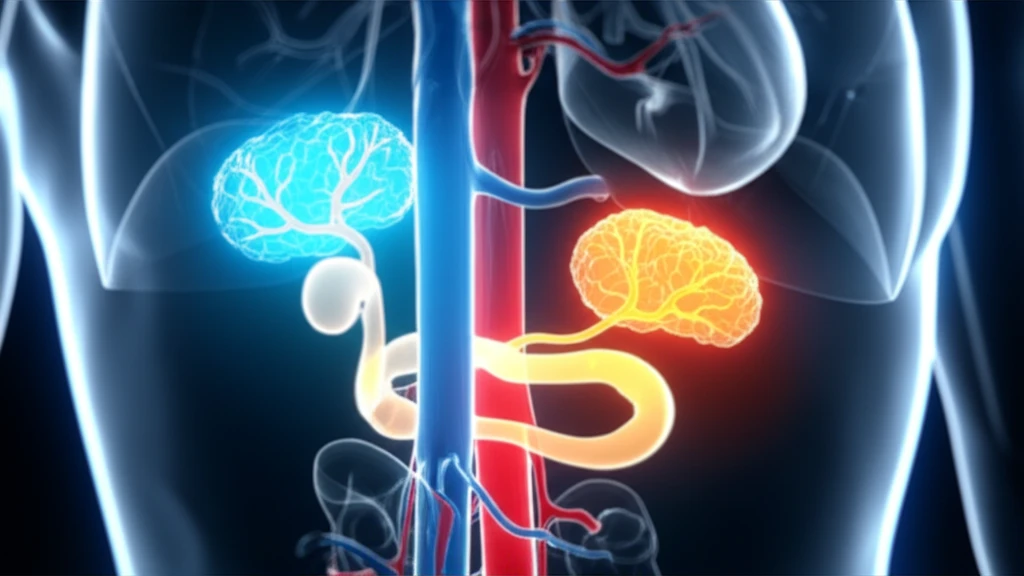
EUS vs. ERCP: Which Biliary Drainage Method Is Right for You?

"A closer look at the efficacy and safety of EUS-guided and ERCP-guided biliary drainage for malignant biliary obstruction."
Biliary obstruction, especially when caused by malignancy, poses a significant challenge in gastroenterology. Effective drainage is crucial to alleviate symptoms and improve patient outcomes. Endoscopic techniques have revolutionized the management of biliary obstructions, with endoscopic ultrasound-guided biliary drainage (EUS-BD) and endoscopic retrograde cholangiopancreatography-guided biliary drainage (ERCP-BD) emerging as primary modalities.
EUS-BD and ERCP-BD each offer unique advantages and challenges. ERCP has been the traditional approach, but EUS-BD has gained traction as a viable alternative, especially when ERCP fails or is not feasible. Recent research has focused on directly comparing the efficacy and safety of these two methods to determine the optimal approach for different clinical scenarios.
This article delves into a critical analysis of a recent study comparing EUS-BD and ERCP-BD, explores the factors influencing stent patency and dysfunction, and discusses the broader implications for managing malignant biliary obstruction. We will provide a clear, accessible overview of the current landscape, helping patients and caregivers better understand the options available.
EUS-BD’s Expanding Role
EUS-guided biliary drainage (EUS-BD) has emerged as an alternative to conventional ERCP in recent years. A meta-analysis of randomized controlled trials reported comparable efficacy and safety between EUS and ERCP for biliary drainage. Research has also examined EUS-BD success and adverse-event rates across extrahepatic and intrahepatic approaches, although results have varied between studies. Specialized hospitals have reported high success rates for EUS-BD in patients with bile duct stenosis.
From ERCP to Therapeutic EUS
EUS-guided biliary drainage was introduced as an alternative for patients in whom ERCP had failed. EUS itself was developed in the early 1980s to address limitations of abdominal ultrasonography and computed tomography for pancreatic imaging. More recent work emphasizes that EUS-BD still requires acceptable adverse-event rates, simpler procedures, and dedicated devices before it can become a standard primary drainage method. Meta-analyses have evaluated adverse events across different EUS-BD techniques, while international consensus work continues to call for standardized terminology and further trials.
EUS-BD vs. ERCP-BD: A Closer Look at Stent Patency
One of the primary considerations in biliary drainage is the long-term patency of the stents used to maintain bile flow. Stent patency refers to the duration a stent remains functional without blockage or dysfunction. Traditionally, this has been evaluated using methods like the Kaplan-Meier analysis or Cox proportional hazard models, which are statistical techniques designed to assess time-to-event data. A key study highlighted in the original article directly addresses these concerns.
- Sample Size: Ensuring an adequate number of participants is essential to detect meaningful differences between the two methods.
- Statistical Methods: Kaplan-Meier and Cox models are preferred for time-to-event data, providing a more accurate assessment of stent patency.
- Hazard Ratio: The hazard ratio helps quantify the difference in the rate of stent dysfunction between the EUS-BD and ERCP-BD groups.
When ERCP Is Not Enough
ERCP remains widely used as a first-line therapy for biliary drainage. Despite high reported success rates, ERCP can occasionally fail because of anatomical or technical problems. EUS-guided biliary drainage has therefore been developed as an alternative approach when conventional access is unsuccessful. The review identifies ERCP failure as a key setting in which EUS-BD may provide another route to biliary drainage.
Choosing Between EUS and ERCP
EUS was originally developed as a diagnostic technique for malignancy staging and tissue acquisition before expanding into therapeutic applications. EUS-BD is now being evaluated as a potential alternative to ERCP-guided drainage, particularly for malignant biliary obstruction. A 2024 systematic review and meta-analysis specifically compared the efficacy and safety of EUS-BD and ERCP-BD as initial approaches for malignant biliary obstruction. In practice, the choice may depend on the obstruction’s location and nature, as well as the patient’s overall health.
Navigating Biliary Drainage Options
The management of malignant biliary obstruction requires careful consideration of various factors, including the patient's overall health, the location and nature of the obstruction, and the expertise available at the treatment center. While EUS-BD holds promise as a valuable alternative to ERCP-BD, further research is needed to fully elucidate its advantages and limitations. By staying informed about the latest evidence and consulting with experienced gastroenterologists, patients and caregivers can make well-informed decisions that optimize outcomes and improve quality of life.
Evidence-Based Positioning
The American Society for Gastrointestinal Endoscopy has issued a clinical practice guideline on the role of therapeutic EUS in managing biliary tract disorders. The guideline uses the Grading of Recommendations Assessment, Development and Evaluation framework to provide an evidence-based approach. Separately, international consensus statements propose unified terminology for interventional EUS, including distinctions between anastomosis, drainage, and trans-ESCR procedures. The consensus authors state that further trials are needed to define the optimal role of EUS-BD for biliary diseases.
Developing Techniques and Training
EUS-BD is described as an alternative to ERCP, with randomized-trial evidence summarized in the provided sources suggesting comparable efficacy and safety between the approaches. The learning curve remains an important area of study as the technique expands. EUS-guided hepaticogastrostomy currently retains a role in high-volume centers and in patients with combined biliary and duodenal obstruction. Other approaches, including EUS-guided gallbladder drainage, antegrade stenting, and rendezvous procedures, are being applied selectively because of limited evidence or narrower applicability.
Access Beyond Conventional ERCP
EUS-BD was developed as an alternative means of drainage for malignant biliary obstruction and can provide access when conventional ERCP is unsuccessful. Compared with percutaneous transhepatic biliary drainage, the provided source describes EUS-BD as offering effective internal drainage in a single session after failed ERCP. EUS-BD routes are categorized as intrahepatic or extrahepatic, while stenting approaches include rendezvous and antegrade placement. These classifications reflect the technical complexity and expanding scope of the procedure.
A Less Burdensome Alternative
Percutaneous biliary drainage approaches are catheter-based, and the provided source describes their drainage tubes as unpopular with and unpleasant for patients. Patient and provider preferences for a less invasive second-line option have helped support interest in EUS-BD after ERCP failure. EUS-BD is presented as a developing approach that may provide biliary access without relying on external drainage tubes. Another source reports that EUS-BD could eventually become a first-line treatment instead of ERCP if clinical-study outcomes are positive and the technology becomes simpler.