
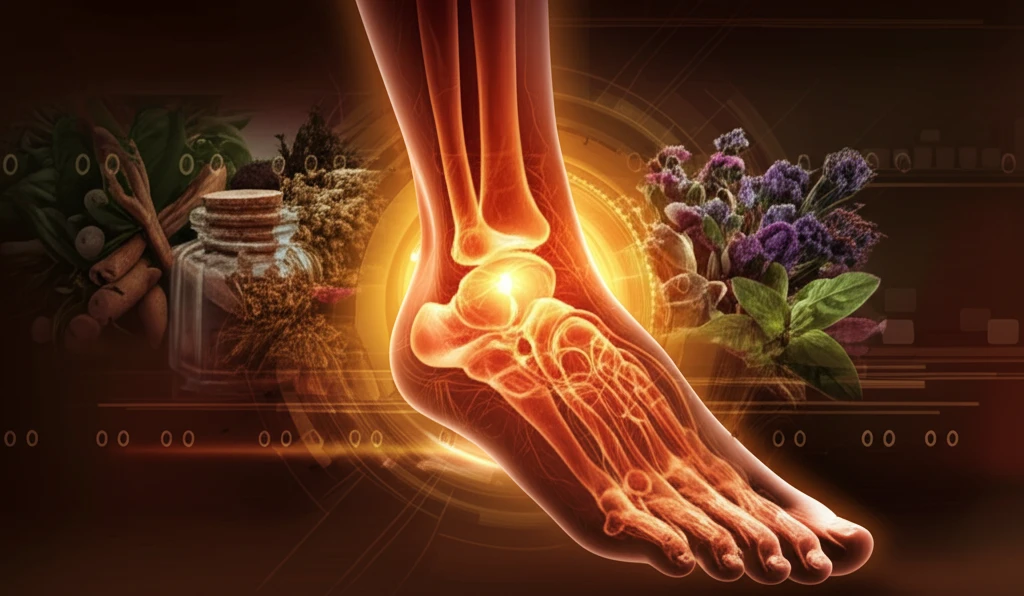
Roots intertwining around a human leg, symbolizing restored nerve function and strength

Beating Diabetic Amyotrophy: An Ayurvedic Approach to Restoring Strength and Sensation

"Explore how traditional Ayurvedic treatments, including medicated enemas and herbal remedies, offer a promising path to recovery from diabetic amyotrophy."


Diabetes mellitus is often viewed as a condition primarily affecting blood sugar, but its impact extends far beyond. One of the more challenging complications is diabetic amyotrophy, a condition characterized by muscle weakness, wasting, and nerve damage, particularly in the lower limbs. This can significantly impair mobility and quality of life.

In the realm of conventional medicine, treatments for diabetic amyotrophy typically focus on managing blood sugar levels, pain relief, and physical therapy. However, many individuals seek complementary approaches to enhance their recovery and overall well-being. This is where Ayurveda, the ancient Indian system of medicine, offers a holistic perspective.

Ayurveda views health as a balance of mind, body, and spirit, and its treatments aim to restore this equilibrium. In the context of diabetic amyotrophy, Ayurvedic therapies focus on addressing the underlying imbalances that contribute to muscle weakness and nerve damage, offering a personalized approach to healing.

Understanding Diabetic Amyotrophy Through an Ayurvedic Lens

Roots intertwining around a human leg, symbolizing restored nerve function and strength

Diabetic amyotrophy, while recognized in modern medicine, finds a parallel in Ayurvedic concepts, particularly Ekangvata (~Mononeuropathy), which describes unilateral weakness. However, Ayurveda goes deeper, considering the involvement of Medadhatu (~fat tissue) in the disease process, especially in the context of Prameha (~Diabetes). This understanding shifts the treatment paradigm.

Unlike conventional approaches that might directly target nerve function, Ayurveda recognizes that simply addressing Vata (the dosha associated with movement and nerve function) isn't enough. The involvement of Medas requires a strategy that addresses both Vata and Kapha (the dosha associated with structure and stability), preventing aggravation of the condition.

  • Amanashak: Detoxification to reduce toxins
  • Pramehanashak: Anti-diabetic herbs to manage blood sugar
  • Vatanashak: Herbs and therapies to balance Vata
  • Medonashak Chikitsa: Treatments to reduce excess fat tissue
This multi-faceted approach often includes a combination of therapies. The original research article highlights a case study where Madhu-tailik type of Niruha basti, along with other oral medications were used for treating diabetic amyotrophy. All these oral medications were used for their Vata-Kapha reducing property.

A Path to Restoring Balance and Strength

While this case study offers a promising glimpse into the potential of Ayurveda in managing diabetic amyotrophy, it's crucial to remember that individual results may vary. Consulting with both a conventional medical doctor and a qualified Ayurvedic practitioner is essential to create a well-rounded, personalized treatment plan. Ayurveda offers a unique lens through which to understand and address diabetic amyotrophy, focusing on restoring balance and strength from within.

About this Article -

This article was crafted using a human-AI hybrid and collaborative approach. AI assisted our team with initial drafting, research insights, identifying key questions, and image generation. Our human editors guided topic selection, defined the angle, structured the content, ensured factual accuracy and relevance, refined the tone, and conducted thorough editing to deliver helpful, high-quality information.See our About page for more information.

This article is based on research published under:

DOI-LINK: 10.7897/2277-4343.06113, Alternate LINK

Title: Treating Diabetic Amyotrophy Through Ayurvedic Management: A Case Study

Subject: Drug Discovery

Journal: International Journal of Research in Ayurveda & Pharmacy

Publisher: Moksha Publishing House

Authors: Pragya Singhal, Arun Gupta

Published: 2015-02-27

Everything You Need To Know

1

What is diabetic amyotrophy and how does it impact those affected?

Diabetic amyotrophy is a challenging complication of diabetes mellitus, characterized by muscle weakness, wasting, and nerve damage, particularly in the lower limbs. This condition significantly impairs mobility and reduces the quality of life for those affected. It stems from the underlying metabolic imbalances associated with diabetes, extending beyond just blood sugar management.

2

How does Ayurveda approach diabetic amyotrophy differently from conventional medicine?

Conventional medicine primarily focuses on blood sugar management, pain relief, and physical therapy. In contrast, Ayurveda offers a holistic perspective by aiming to restore the balance of mind, body, and spirit. Ayurvedic therapies for diabetic amyotrophy address the underlying imbalances contributing to muscle weakness and nerve damage, providing a personalized approach to healing. Ayurveda considers the involvement of both Vata and Kapha in the condition, which is a departure from directly targeting nerve function alone.

3

What Ayurvedic concepts are relevant to understanding diabetic amyotrophy?

Within Ayurveda, diabetic amyotrophy finds a parallel with Ekangvata (~Mononeuropathy), which describes unilateral weakness. However, Ayurveda goes further by considering the involvement of Medadhatu (~fat tissue) in the disease process, particularly in the context of Prameha (~Diabetes). This understanding helps shift the treatment paradigm to address both Vata and Kapha, preventing aggravation of the condition. The Ayurvedic approach sees the need to balance multiple elements to heal.

4

What types of Ayurvedic treatments are used to manage diabetic amyotrophy?

Ayurvedic treatments for diabetic amyotrophy often involve a multi-faceted approach that includes Amanashak (detoxification), Pramehanashak (anti-diabetic herbs), Vatanashak (herbs and therapies to balance Vata), and Medonashak Chikitsa (treatments to reduce excess fat tissue). A case study mentioned the use of Madhu-tailik type of Niruha basti, alongside oral medications to reduce Vata-Kapha, showcasing the application of these principles in practice.

5

Is Ayurveda a standalone solution for diabetic amyotrophy, and what are the key considerations for treatment?

Ayurveda is a complementary approach to diabetic amyotrophy, but it's not necessarily a standalone solution. It's essential to consult both a conventional medical doctor and a qualified Ayurvedic practitioner to create a well-rounded, personalized treatment plan. This approach allows for a comprehensive strategy that integrates the best of both worlds, offering a unique lens through which to understand and address the condition by focusing on restoring balance and strength from within, tailored to the individual's specific needs and conditions.

Newsletter Subscribe

Subscribe to get the latest articles and insights directly in your inbox.