
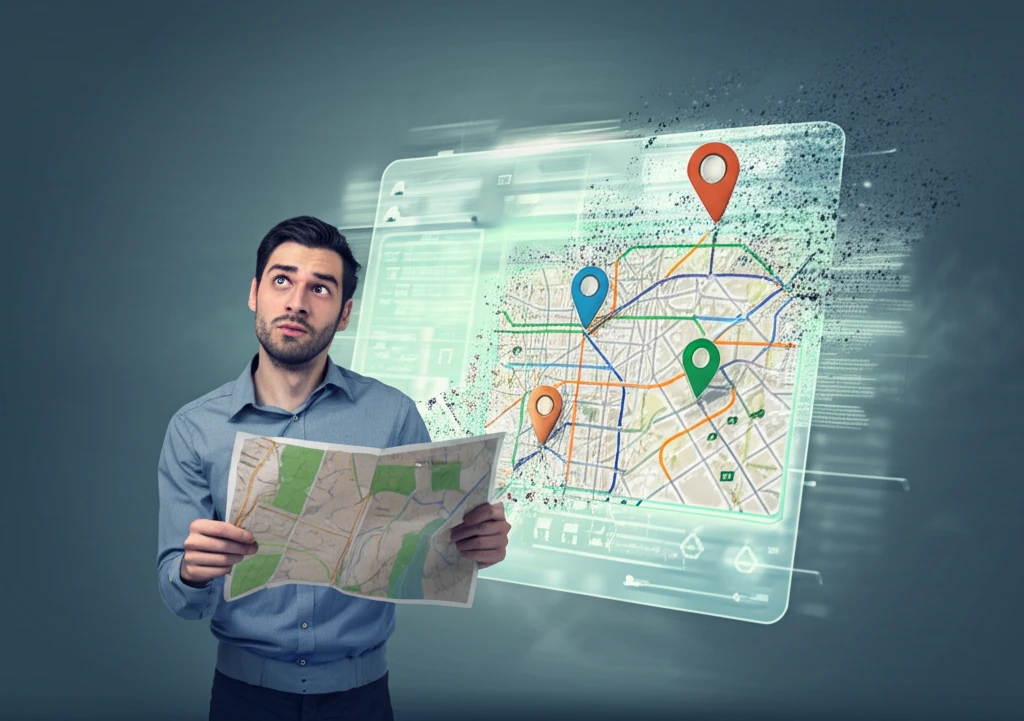
Digital illustration showing transition from paper map dissolving into a digital screen showcasing real-time public transit data.

Are You Sure About That Trip? Uncovering Travel Survey Errors and How They Skew Our Understanding of Commuting

"Dive into the surprising inaccuracies in travel surveys and how researchers are using smart card data to correct the record, ensuring our transportation planning is based on reality, not just reported perceptions."


For decades, urban planners and policymakers have relied on household travel surveys to understand how people move through cities. These surveys inform decisions about public transportation, road construction, and urban development. But what if the data we're using isn't as accurate as we think?

Self-reported travel surveys are prone to 'recall bias,' where individuals struggle to accurately remember and report the details of their journeys. This can lead to significant errors in understanding travel patterns, impacting the effectiveness of transportation strategies. Recent research is shedding light on just how big this problem is and offering innovative solutions to improve the accuracy of our data.

A groundbreaking study analyzing data from the Danish National Travel Survey and the Danish Smart Card system (Rejsekort) has revealed surprising discrepancies in how people report their travel times. By comparing survey responses with actual smart card usage, researchers have quantified the extent of these errors and identified factors that contribute to them.

The Smart Card Solution: Can Technology Fix Travel Survey Fails?

Digital illustration showing transition from paper map dissolving into a digital screen showcasing real-time public transit data.

The Danish study matched five consecutive years of travel survey data with smart card data, focusing on public transport users. Approximately 70% of survey respondents were successfully matched with their Rejsekort travel cards based on their declared travel behavior. The key was to compare the times people said they traveled with the times recorded by the smart card system.

The results were eye-opening. The median time reporting error was 11.34 minutes, with some individuals off by as much as 28.14 minutes. This might seem small, but these inaccuracies can significantly skew transportation models and planning decisions.

  • The use of smart card data is becoming a key component in travel pattern analysis due to its accuracy.
  • The data-driven approach helps to correct traditional survey methods, enhancing the reliability of transportation planning.
  • Smart card systems provide a continuous stream of real-world data, unlike periodic surveys, which might not reflect changing conditions.
These discrepancies aren't random. Statistical analysis revealed a correlation between reporting errors and socio-economic factors. For example, women and individuals with fixed schedules tended to report their travel times more accurately than men and those with flexible schedules. Trips reported during weekdays or via the internet also showed higher accuracy than those reported during weekends/holidays or via telephone interviews.

Rethinking How We Collect and Use Travel Data: A Call to Action

This research underscores the need for a more nuanced approach to travel surveys. By understanding the factors that contribute to reporting errors, we can design better surveys, improve data collection techniques, and develop correction models to account for these biases. The integration of smart card data and other passively-generated data sources offers a promising path towards more accurate and reliable transportation planning, ensuring that our cities are built and managed based on facts, not just perceptions.

About this Article -

This article was crafted using a human-AI hybrid and collaborative approach. AI assisted our team with initial drafting, research insights, identifying key questions, and image generation. Our human editors guided topic selection, defined the angle, structured the content, ensured factual accuracy and relevance, refined the tone, and conducted thorough editing to deliver helpful, high-quality information.See our About page for more information.

This article is based on research published under:

DOI-LINK: 10.1007/s11116-024-10535-z,

Title: Analyzing The Reporting Error Of Public Transport Trips In The Danish National Travel Survey Using Smart Card Data

Subject: stat.ap econ.em stat.ot

Authors: Georges Sfeir, Filipe Rodrigues, Maya Abou Zeid, Francisco Camara Pereira

Published: 02-08-2023

Everything You Need To Know

1

What is the primary issue with traditional travel surveys that affects transportation planning?

The main problem with household travel surveys is 'recall bias.' This occurs when individuals struggle to accurately remember and report the details of their journeys. This leads to significant errors in understanding travel patterns, which in turn impacts the effectiveness of transportation strategies. These surveys are used by urban planners and policymakers to make decisions about public transportation, road construction, and urban development, making the accuracy of the data crucial.

2

How does the Danish study use smart card data (Rejsekort) to improve the accuracy of travel time reporting?

The Danish study, by analyzing both the Danish National Travel Survey data and the Danish Smart Card system (Rejsekort), compared what people *said* they traveled (survey responses) with what the smart card system *recorded*. Researchers matched survey responses with actual smart card usage, focusing on public transport users. The Rejsekort data allowed them to identify and quantify discrepancies in travel time reporting by comparing the times reported in the survey with the times recorded by the smart card.

3

What are the key findings regarding travel time reporting errors and their impact?

The study revealed a significant 'median time reporting error' of 11.34 minutes, with some individuals off by as much as 28.14 minutes. These inaccuracies can skew transportation models and planning decisions. For example, if travel times are consistently underestimated, it could lead to underestimation of congestion or the need for public transport improvements. This means that the decisions on public transportation, road construction, and urban development can be based on inaccurate data, leading to less effective strategies.

4

What socio-economic factors and reporting methods influence the accuracy of travel surveys?

The study identified a correlation between reporting errors and socio-economic factors. Women and individuals with fixed schedules tended to report their travel times more accurately than men and those with flexible schedules. Furthermore, trips reported during weekdays or via the internet showed higher accuracy than those reported during weekends/holidays or via telephone interviews. These insights are crucial for designing better surveys and developing correction models to account for biases.

5

How can the integration of smart card data and other passively-generated data improve transportation planning?

The integration of smart card data, like the Rejsekort, and other passively-generated data sources offers a promising path towards more accurate and reliable transportation planning. Smart card systems provide a continuous stream of real-world data, unlike periodic surveys. By understanding the factors that contribute to reporting errors and using real-time data, urban planners and policymakers can make better-informed decisions about public transportation, road construction, and urban development. This ensures that cities are built and managed based on facts rather than perceptions, leading to more effective and efficient transportation systems.

Newsletter Subscribe

Subscribe to get the latest articles and insights directly in your inbox.