
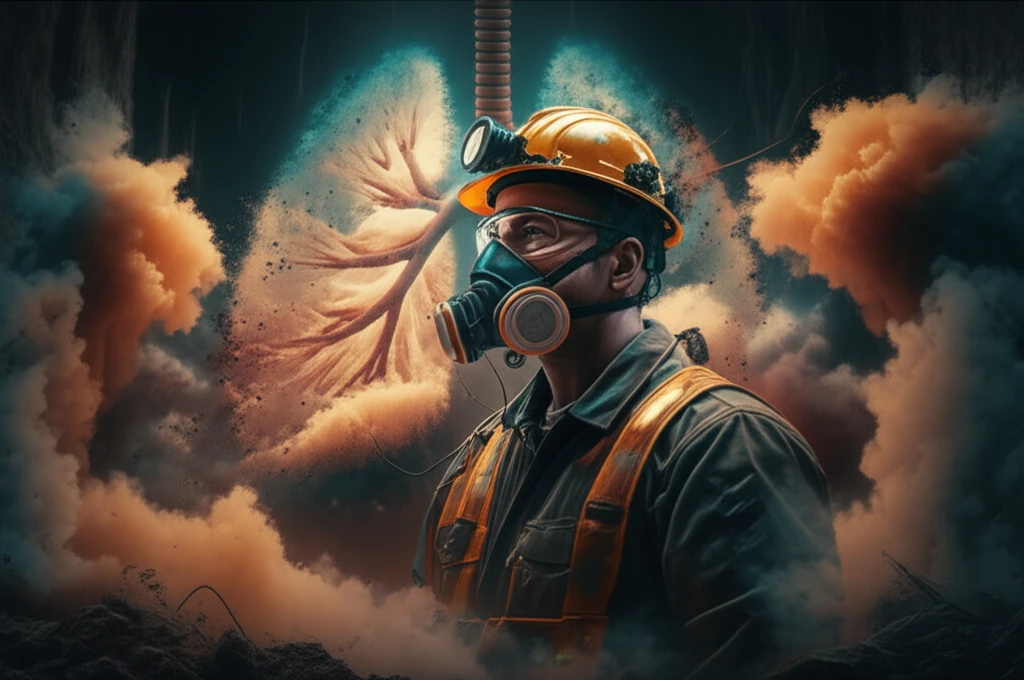
Quarry worker wearing respirator amidst swirling dust.

Are You at Risk? Quarry Dust, Respiratory Health, and How to Protect Yourself

"Uncover the alarming link between quarry work and lung health issues, and learn practical steps to safeguard your respiratory system."


Quarrying, an age-old economic activity extracting valuable resources like marble and limestone, presents hidden dangers to its workers. The inhalation of airborne particulates in quarry environments poses significant health risks, particularly to the respiratory system. These particulates can lead to a range of issues, from simple irritation to severe, irreversible lung diseases.

Chronic exposure to quarry dust is known to impair lung function and trigger respiratory and non-respiratory symptoms. One of the most concerning risks is silicosis, an incurable lung disease caused by inhaling silica-containing dust. Silicosis results in lung inflammation and breathing difficulties, even after exposure has ceased. Reports from various countries highlight the devastating impact of silicosis, leading to numerous deaths, especially among older workers.

Despite the known risks, many developing countries, including Nigeria, lack well-established health and safety practices to protect quarry workers. This article will explore the prevalence of respiratory symptoms and impaired ventilatory functions among quarry workers in Edo State, Nigeria, shedding light on the urgent need for better protective measures.

What are the Risks of Quarry Dust Exposure?

Quarry worker wearing respirator amidst swirling dust.

A study conducted in Edo State, Nigeria, examined the respiratory health of 113 quarry workers, divided into an exposure group (site workers) and a control group (office workers). The results revealed significant differences in the occurrence of respiratory symptoms between the two groups.

Workers exposed to quarry dust experienced a higher incidence of:

  • Chest tightness (35.5% compared to 16.2% in controls)
  • Cough (23.7% versus 13.5%)
  • Sputum production (21.1% versus 16.2%)
  • Dyspnea, or shortness of breath (7.9% versus 5.4%)
Furthermore, the study found that the exposure group had significantly lower mean values for FEV1 (Forced Expiratory Volume in one second) and FVC (Forced Vital Capacity), key indicators of lung function. This suggests that chronic exposure to quarry dust leads to reduced lung function capacity.

Protecting Your Lungs: Simple Steps for Quarry Workers

The study's conclusion underscores the importance of protecting quarry workers from the harmful effects of dust exposure. Chronic exposure is associated with both respiratory symptoms and reduced lung function. To mitigate these risks, the following measures are essential:

About this Article -

This article was crafted using a human-AI hybrid and collaborative approach. AI assisted our team with initial drafting, research insights, identifying key questions, and image generation. Our human editors guided topic selection, defined the angle, structured the content, ensured factual accuracy and relevance, refined the tone, and conducted thorough editing to deliver helpful, high-quality information.See our About page for more information.

Everything You Need To Know

1

What are the primary respiratory health risks associated with working in quarries?

The primary respiratory health risks associated with quarry work stem from the inhalation of airborne particulates, or quarry dust. This exposure can lead to various issues, including chest tightness, cough, sputum production, and dyspnea (shortness of breath). A particularly concerning risk is silicosis, an incurable lung disease caused by inhaling silica-containing dust, leading to lung inflammation and breathing difficulties. Chronic exposure to quarry dust impairs lung function, reducing Forced Expiratory Volume in one second (FEV1) and Forced Vital Capacity (FVC).

2

What is silicosis, and why is it a significant concern for quarry workers?

Silicosis is an incurable lung disease caused by the inhalation of silica-containing dust, a common component of quarry dust. This dust leads to inflammation and scarring of the lung tissue, causing breathing difficulties that can persist even after exposure has ceased. Silicosis is a significant concern because it progressively impairs lung function and can be fatal. The disease is more prevalent in areas lacking stringent health and safety practices, like in some developing countries, leading to numerous deaths, especially among older workers exposed over long periods.

3

What specific respiratory symptoms are more prevalent among quarry workers compared to those not exposed to quarry dust?

Quarry workers exposed to quarry dust exhibit a higher incidence of several respiratory symptoms compared to control groups. These include chest tightness (35.5% compared to 16.2%), cough (23.7% versus 13.5%), sputum production (21.1% versus 16.2%), and dyspnea or shortness of breath (7.9% versus 5.4%). These symptoms collectively indicate a significant impact on respiratory health due to dust exposure.

4

How does chronic exposure to quarry dust affect lung function, as measured by FEV1 and FVC?

Chronic exposure to quarry dust leads to reduced lung function, which is reflected in lower mean values for Forced Expiratory Volume in one second (FEV1) and Forced Vital Capacity (FVC). FEV1 measures the amount of air a person can exhale in one second, while FVC measures the total amount of air a person can forcibly exhale after taking a deep breath. Lower values in quarry workers suggest that their lungs have a reduced capacity to expel air, indicating impaired lung function due to long-term dust exposure.

5

Beyond the respiratory symptoms and lung function decline, what are the broader implications of quarry dust exposure, particularly in regions with less stringent health and safety regulations?

The broader implications of quarry dust exposure extend beyond immediate respiratory symptoms and lung function decline, particularly in regions with less stringent health and safety regulations. The lack of adequate protective measures increases the risk of developing chronic and irreversible conditions like silicosis. This can lead to a diminished quality of life, reduced workforce participation due to disability, and increased healthcare costs. Furthermore, the absence of proper regulations disproportionately affects older workers, who have accumulated more years of exposure, and contributes to a cycle of poverty and health disparities within quarrying communities. The combination of respiratory issues and silicosis increases the mortality rate and reduces the overall lifespan of quarry workers.

Newsletter Subscribe

Subscribe to get the latest articles and insights directly in your inbox.