
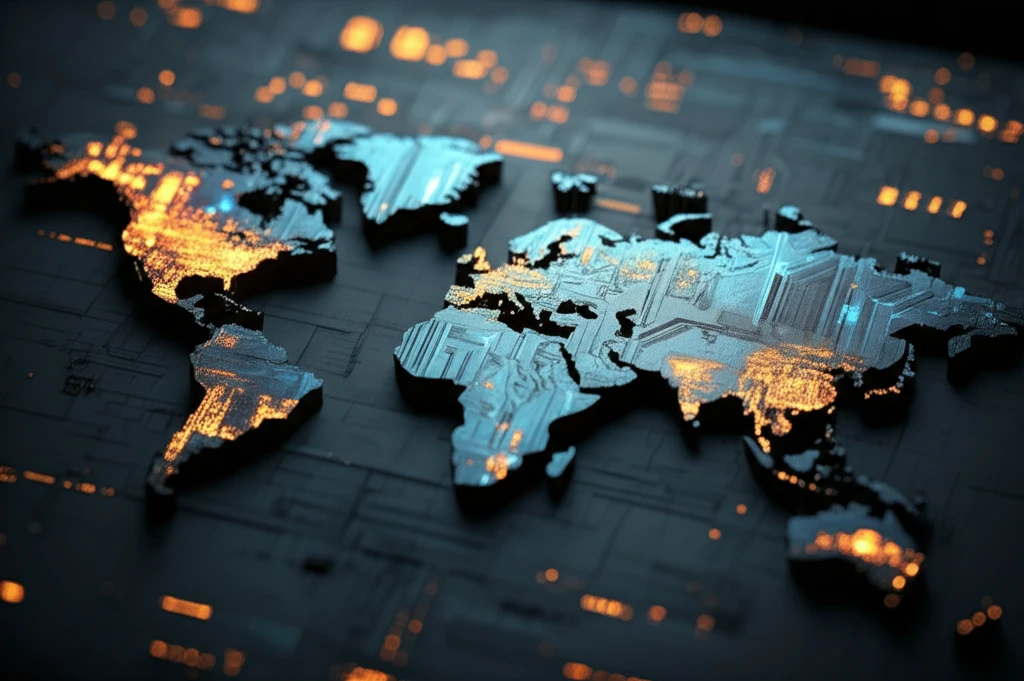
AI's Economic Tsunami: How it Will Reshape Global Trade and Leave Some Nations Behind

"A deep dive into the transformative effects of artificial intelligence on international economics, revealing potential winners and losers in the global marketplace."
Artificial intelligence (AI) is no longer a futuristic fantasy; it's rapidly becoming an economic reality. As AI adoption accelerates across industries, its impact on international economics is becoming impossible to ignore. This technological wave promises to reshape global trade, boost efficiency, and create unprecedented wealth. But the crucial question is: will this wealth be shared equitably, or will it further widen the gap between the world’s richest and poorest nations?
The potential of AI to revolutionize sectors like manufacturing, logistics, and finance is immense. AI-powered systems can optimize supply chains, personalize customer experiences, and even translate languages in real-time, breaking down barriers to international commerce. However, this transformation isn't without its challenges. The rise of AI also raises concerns about job displacement, the concentration of economic power, and the potential for increased protectionism.
This article examines the transformative effects of AI on international economics, diving deep into the potential benefits and risks. We'll explore how AI is reshaping global value chains, which sectors are likely to be most affected, and what strategies developing countries can adopt to navigate this changing landscape. Prepare to understand the complex forces at play and how they could impact the future of global trade.
How AI is Rewriting the Rules of Global Trade
AI's influence on international trade is multifaceted, impacting everything from production processes to consumer behavior. One of the most significant changes is the optimization of global value chains. AI algorithms can analyze vast amounts of data to predict demand, optimize logistics, and identify the most efficient routes for goods to travel. This leads to reduced costs, faster delivery times, and increased competitiveness for businesses that embrace AI.
- Reduced Trade Frictions: AI-driven logistics and translation tools streamline international transactions.
- Enhanced Supply Chains: AI optimizes routes and predicts demand, reducing costs and delays.
- Personalized Customer Experiences: AI enables businesses to tailor products and services to individual customer needs, regardless of location.
- New Market Access: AI-powered tools empower SMEs to compete in the global marketplace.
Navigating the AI Revolution: A Call for Calculated Adoption
The rise of AI presents both tremendous opportunities and potential risks for the global economy. To ensure that the benefits of AI are shared more equitably, governments and businesses must adopt a calculated approach to AI adoption. This includes investing in education and training programs to prepare workers for the jobs of the future, promoting policies that encourage innovation and competition, and addressing the ethical concerns surrounding AI.