
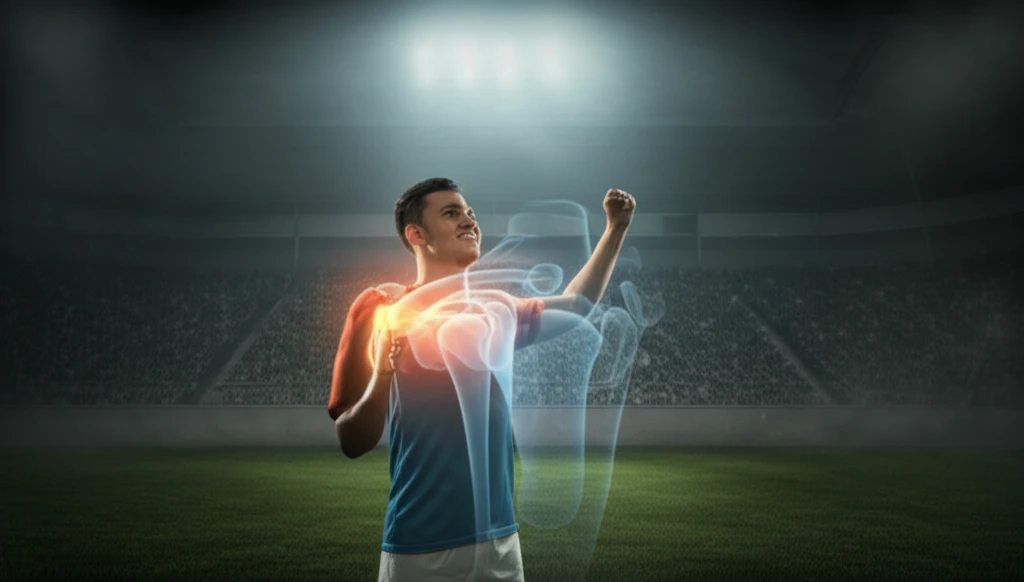
Adolescent Athletes & Shoulder Instability: Getting Back in the Game

"A New Study Reveals High Return-to-Sport Rates After Shoulder Stabilization"
For young athletes, a shoulder dislocation can be a major setback. Anterior shoulder instability, where the shoulder joint becomes prone to slipping out of place, is a common issue, especially in sports. This can impact not just their athletic performance but also their overall quality of life.
Many young athletes and their parents are keen to understand what happens after surgery to fix this instability. Will they be able to return to their previous level of play? What are the chances of re-injury? A recent systematic review dives into these questions, offering valuable insights for adolescent athletes, their families, and healthcare providers.
This article breaks down the findings of this review, focusing on return-to-sport (RTS) rates, the timetable for getting back in the game, the risk of recurrent instability, and the need for further surgery. We'll also explore the unique challenges faced by athletes in contact sports and what this research means for their recovery journey.
Instability in Adolescent Athletes
Anterior shoulder instability is common among teenagers, particularly those who participate in contact or overhead sports. Sources describe a rise in adolescent sports participation alongside an increase in shoulder instability. Adolescents ages 14–20 are reported to have especially high recurrence risk, while another source highlights ages 14–17 among adolescents in contact sports. Shoulder instability can also be an important underlying cause of shoulder pain in adolescent athletes.
Understanding the Natural History
A 2017 review describes first-time anterior shoulder dislocation as occurring more often in young males who play contact sports, and identifies recurrence as a typical problem in young people. Later work focused specifically on adolescent athletes has examined epidemiology, natural history, recurrence risk, bone-loss development, and treatment options. A review published in 2017 also set out to describe the natural history of anterior instability and clinical practices for nonoperative management.
High Hopes: Return-to-Sport Success After Bankart Repair
The systematic review, encompassing 11 studies and 461 adolescent athletes, highlights a promising trend: a high rate of return to sport following Bankart repair. This surgical procedure addresses anterior shoulder instability by repairing the torn ligaments that keep the shoulder joint stable.
- 81.5% of athletes returned to their pre-injury level of competition after undergoing Bankart repair.
- On average, athletes were able to return to their sport approximately 5 months after surgery.
- Arthroscopic Bankart repair, a minimally invasive technique, showed an 89.2% return-to-any-level-of-play rate, with 79.8% achieving their pre-injury level.
Recent Evidence on Recurrence and Rehabilitation
A systematic review of risk factors for recurrent instability after arthroscopic Bankart repair in pediatric and adolescent patients searched PubMed, Embase, and Ovid (MEDLINE) through July 5, 2023, and included data for patients up to age 19. A 2025 review reports that adolescents ages 14–20 have the highest recurrence risk, while patients younger than 14 tend to have lower recurrence rates. Research on rehabilitation after Bankart repair notes that the ASSET recommendations offer guidance, but protocols vary and evidence that the recommendations improve outcomes over standard care remains limited; one nonrandomized controlled study found no difference in shoulder-related physical function or quality of life between postoperative therapies.
Instability Has More Than One Potential Cause
Shoulder instability can affect children and teens who participate in sports. The source highlights repetitive overhead movements—including throwing, serving, and swimming—as activities associated with instability. This emphasizes that the concern is not limited to a single sport or movement pattern.
Treatment Choice Remains Contested
A systematic review of youth athletes with shoulder instability examined recurrence and return to play after surgical versus nonsurgical management. Its background notes controversy over which approach is most effective for this population. The source material identifies the comparison and outcomes studied but does not provide results that would support declaring either approach superior.
Navigating the Risks: Recurrence and Revision Surgery
While the return-to-sport rates are encouraging, it's important to consider the potential risks associated with Bankart repair. The review revealed an overall recurrent instability rate of 18.5% in the adolescent population. This means that some athletes experienced further dislocations or subluxations after the initial surgery.
Complex Assessment in Contact Athletes
Shoulder instability is described as a complex impairment, and identifying biomarkers that distinguish patient subgroups is challenging. Children and adolescents with instability, regardless of cause, have movement and muscle-activity profiles that differ from age- and sex-matched controls. For contact athletes, anterior shoulder instability presents specific management challenges because of high activity demands and repeated trauma during sport.
A Clinician’s Case-Based Perspective
A case-study article presents Ellie’s clinical approach to chronic shoulder instability, describing it as one of the more challenging problems in physiotherapy. A separate article reports that instability may follow repetitive overhead loading, a sudden traumatic injury, and/or hypermobility. It also notes that active people across different backgrounds can experience shoulder instability, with athletes particularly notable among those affected.
Furthermore, the mean incidence of revision surgery, where a second surgery is needed to address recurrent instability, was 12.1%. These numbers highlight the importance of careful patient selection, appropriate surgical technique, and adherence to a structured rehabilitation program to minimize the risk of complications.
For contact athletes, higher recurrent instability (31.1%) and revision rates (13%) suggest the need for tailored prevention and rehabilitation strategies. More research is needed on managing anterior shoulder instability in adolescent patients and strategies to reduce rates.