
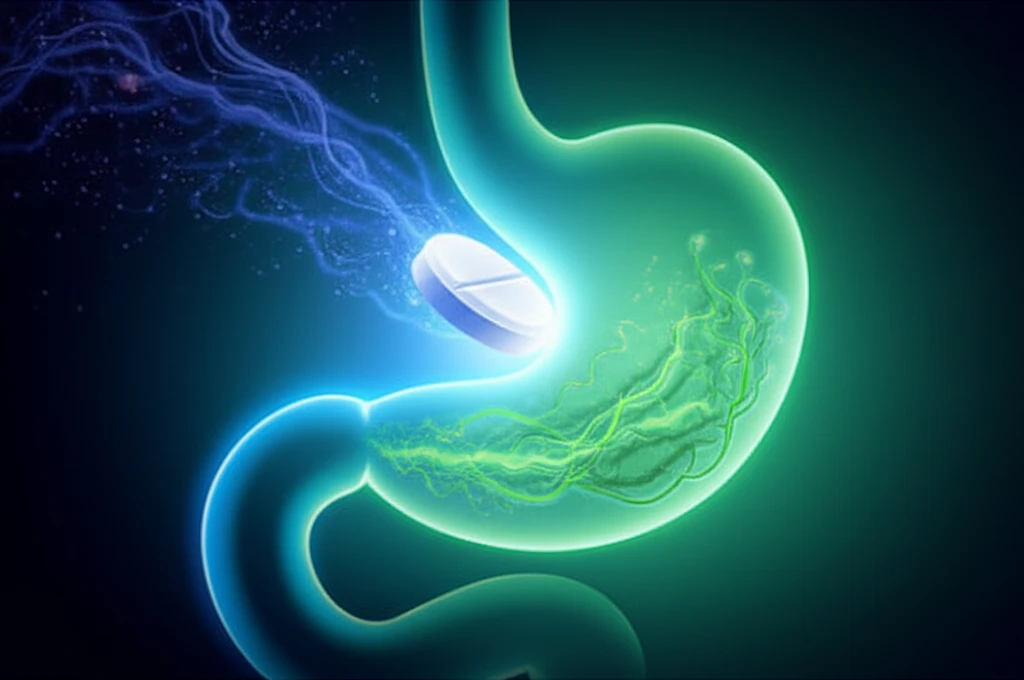
Acid Reflux Breakthrough: New Drug Delivery System Offers Hope

"Could This Innovative Combination Tablet Be the Answer to Your GERD Symptoms?"
Millions suffer from the discomfort and disruption of gastroesophageal reflux disease (GERD). Characterized by heartburn, regurgitation, and a host of other unpleasant symptoms, GERD can significantly impact quality of life. While various treatments exist, a new approach combining two common medications into a single, innovative drug delivery system offers fresh hope for those seeking relief.
Traditional GERD management often involves multiple medications taken at different times, which can be cumbersome and lead to poor patient compliance. This new system, detailed in a research paper from the Department of Pharmaceutics, AISSMS College of Pharmacy, India, seeks to simplify treatment by combining ranitidine and domperidone into one tablet utilizing ion exchange resins.
Ranitidine, known for its ability to lower acid secretion, is paired with domperidone, which enhances gastric motility, potentially addressing two key aspects of GERD in a single dose. The following explores how this novel drug delivery system works, its potential benefits, and what the research reveals about its effectiveness.
How Does This Combination Tablet Work?
The key to this innovative treatment lies in its unique drug delivery system. The tablet is designed with two distinct release mechanisms: immediate release for ranitidine and sustained release for domperidone. This is achieved through the use of ion exchange resins, which are insoluble polymers that can bind to drugs and control their release rate.
- Ranitidine (Immediate Release): Bound to a weak cation exchange resin (Indion 294), ranitidine is quickly released into the stomach to provide rapid acid suppression.
- Domperidone (Sustained Release): Bound to a strong cation exchange resin (Indion 244), domperidone is released gradually over an extended period, promoting gastric motility and preventing reflux.
- The Combination Advantage: By addressing both acid production and gastric motility, the tablet aims to provide more comprehensive relief from GERD symptoms.
A Promising Step Forward in GERD Management
This research presents a compelling case for the potential of ion exchange resin-based combination drug delivery systems in treating GERD. By combining ranitidine and domperidone into a single tablet with controlled release mechanisms, this innovative approach offers the possibility of improved patient compliance, enhanced therapeutic benefits, and a better quality of life for those struggling with this common condition. While further clinical trials are needed to fully validate these findings, this study represents a significant step forward in the ongoing quest for more effective and convenient GERD treatments.