
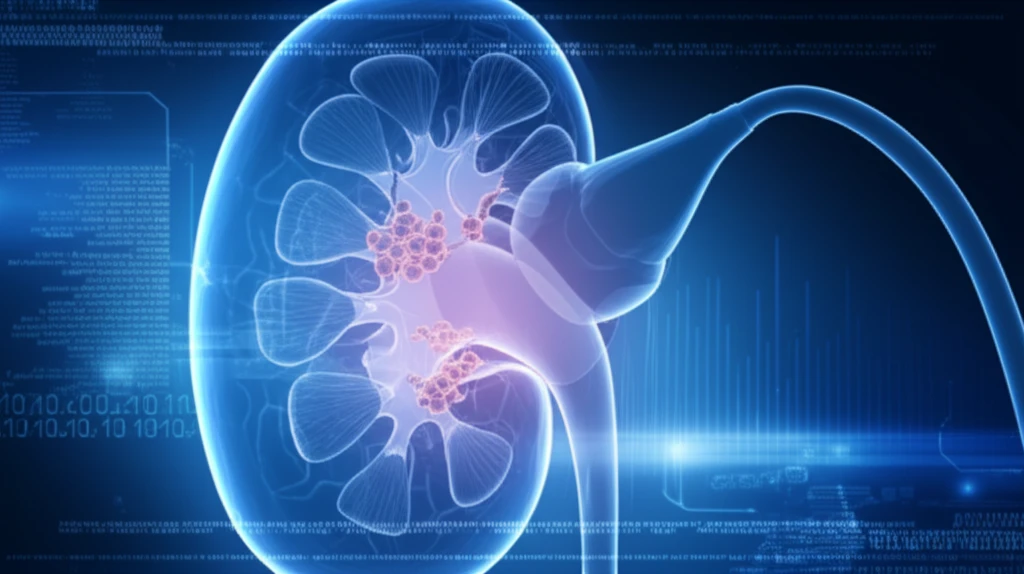
A New Way to Monitor Kidney Cancer After Ablation: Is Ultrasound the Answer?

"Contrast-enhanced ultrasound (CEUS) offers a promising alternative to traditional methods for monitoring kidney cancer recurrence after ablation, reducing risks and costs. But is it ready for widespread use?"
Kidney cancer, or renal cell carcinoma (RCC), affects a significant number of people. While surgery is a standard treatment, percutaneous ablation is another accepted option. After ablation, it's crucial to monitor patients for any signs of the cancer returning. Traditionally, this involves regular CT or MRI scans using contrast agents.
However, these contrast agents aren't without risks. They can be harmful to the kidneys and, in some cases, lead to a condition called nephrogenic systemic fibrosis. This is where contrast-enhanced ultrasound (CEUS) comes in as a potentially safer alternative.
A recent study has explored how effective CEUS is for monitoring RCC recurrence after ablation. The study aimed to identify specific imaging patterns that could indicate whether the cancer has returned. This article breaks down the findings, explaining what they could mean for patients and the future of kidney cancer surveillance.
CEUS: A Safer Way to Watch for Cancer Recurrence
The study involved 53 patients who had previously undergone RCC ablation. They were monitored using both 2D and 3D CEUS. Three radiologists with different levels of CEUS experience reviewed the ultrasound images, looking for specific signs of cancer recurrence and noting how confident they were in their diagnoses.
- Recurrence: If the cancer had returned, the entire ablation cavity would show enhancement during the CEUS, with the contrast agent appearing at the same time and intensity as in the healthy kidney tissue.
- No Recurrence: If there was no recurrence, the ablation cavity would either show no enhancement at all or a delayed enhancement starting from the edges of the cavity.
- Accuracy: CEUS was highly accurate in detecting recurrence, with a sensitivity of 100% among all the readers. Specificity, or the ability to correctly identify when cancer had not returned, ranged from 90% to 94%.
- Reader Agreement: The radiologists largely agreed in their assessments, with agreement rates between 88% and 96%.
- 3D CEUS: Adding 3D CEUS didn't significantly improve the results and, in some cases, reduced the radiologists' confidence.
The Future of Kidney Cancer Monitoring: A Safer, More Accessible Option?
This study adds to the growing evidence that CEUS is a valuable tool for monitoring RCC recurrence after ablation. It offers a safer alternative to CT and MRI scans, especially for patients with kidney problems. The ability to accurately detect recurrence while avoiding potentially harmful contrast agents is a significant advantage.
While the study has some limitations, such as the relatively small number of recurrence cases, the results are promising. Further research with larger groups of patients is needed to confirm these findings and better define the role of CEUS in RCC surveillance.
If further studies continue to support CEUS as a safe and effective monitoring tool, it could become a standard practice, improving the quality of life for many kidney cancer patients.