
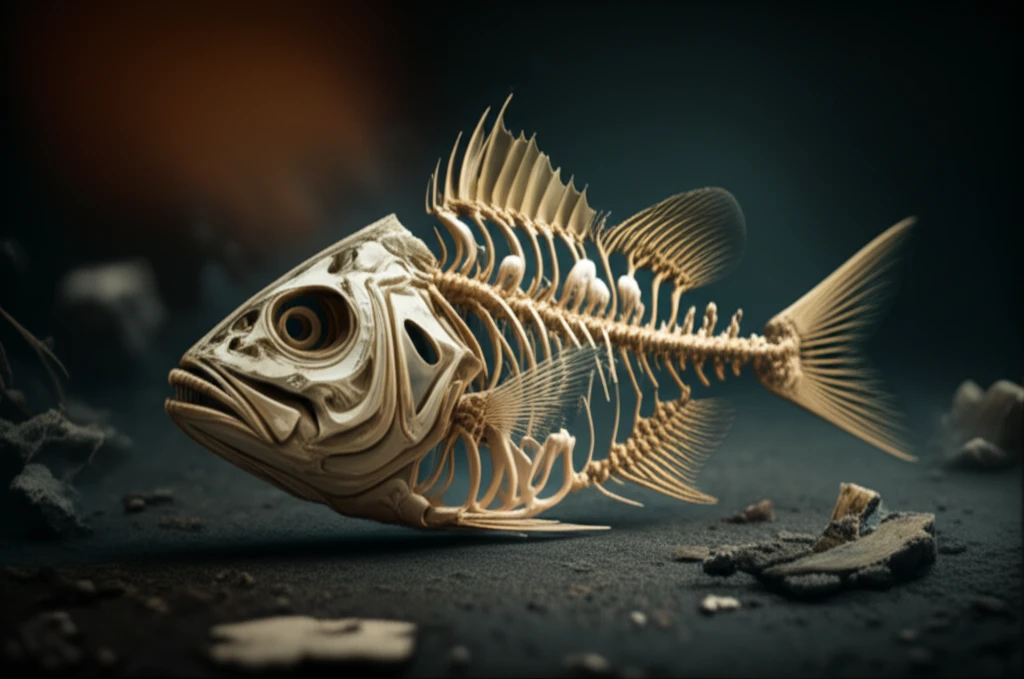
3D-printed bone scaffold emerging from a fish skeleton.

3D-Printed Bone Scaffolds: A Sustainable Solution for Bone Regeneration?

"Could fish bone waste unlock the future of bone tissue engineering? Discover how scientists are transforming discarded resources into innovative medical solutions."


Bone, remarkably resilient, constantly renews itself, a testament to the body's inherent healing capacity. Yet, when faced with substantial injuries, this natural repair mechanism often falls short, leaving a gap that requires medical intervention. The need for effective bone regeneration strategies is ever growing.

Enter the realm of bone tissue engineering, where scientists are crafting innovative solutions using materials like poly-lactic acid (PLA), poly-lactic-glycolic acid (PLGA), and polycaprolactone (PCL). These thermoplastics, known for their biocompatibility and biodegradability, have become cornerstones in creating scaffolds that support new bone growth. Their versatility allows for the creation of structures that mimic the natural bone environment, paving the way for more effective and natural healing processes.

Researchers are exploring the potential of transforming discarded fish bones into a valuable resource for medical applications. This article delves into a pioneering study focused on creating 3D-printed scaffolds using polycaprolactone (PCL) and fish bone extract (FBE). This innovative approach not only addresses the critical need for bone regeneration but also offers a sustainable solution by repurposing waste materials.

Turning Fish Waste into Medical Gold: How it Works

3D-printed bone scaffold emerging from a fish skeleton.

The process begins with sourcing fish bones, specifically from Johnius belengerii, a type of croaker. These bones, rich in essential minerals and bioactive compounds, undergo a meticulous extraction process to isolate a trioligopeptide (FBP-KSA). This peptide has demonstrated remarkable osteogenic activities, meaning it can stimulate bone cell growth and differentiation.

With the FBE in hand, the next step involves fabricating the 3D scaffold. Polycaprolactone (PCL), a biocompatible polymer, is used as the base material. A 3D printing system precisely lays down PCL struts, creating a porous structure that mimics the architecture of natural bone. This interconnected network provides a framework for cells to attach, proliferate, and eventually form new bone tissue.

  • 3D Printing: PCL is melted and extruded through a fine nozzle, layer by layer, to build the scaffold.
  • FBE Coating: The PCL scaffold is then immersed in a solution containing the fish bone extract (FBE), allowing the bioactive peptides to coat the surface.
  • Self-Assembly: A self-assembly process ensures the FBE adheres to the PCL, creating a bioactive surface that promotes cell attachment and growth.
  • Sterilization: The final scaffold undergoes sterilization to ensure it is safe for medical applications.
The result is a 3D-printed scaffold with a unique combination of structural integrity and biological activity. The PCL provides the necessary mechanical support, while the FBE stimulates bone regeneration.

The Future of Bone Regeneration: Sustainable and Effective?

This research paves the way for a new generation of bone regeneration materials that are both effective and sustainable. By transforming fish bone waste into a valuable medical resource, scientists are not only addressing the critical need for bone repair but also contributing to a more circular economy.

The FBE-coated PCL scaffolds demonstrated promising results in stimulating cell proliferation, calcium deposition, and the expression of key osteogenic markers. These findings suggest that these scaffolds have the potential to significantly enhance bone regeneration in clinical applications.

As research continues and clinical trials get underway, the prospect of using 3D-printed fish bone scaffolds to heal bone defects becomes ever more promising. This approach offers a sustainable, biocompatible, and effective solution for bone tissue engineering, marking a significant step forward in regenerative medicine.

About this Article -

This article was crafted using a human-AI hybrid and collaborative approach. AI assisted our team with initial drafting, research insights, identifying key questions, and image generation. Our human editors guided topic selection, defined the angle, structured the content, ensured factual accuracy and relevance, refined the tone, and conducted thorough editing to deliver helpful, high-quality information.See our About page for more information.

This article is based on research published under:

DOI-LINK: 10.1002/jbm.b.34286, Alternate LINK

Title: Fabrication And Characterization Of The 3D‐Printed Polycaprolactone/Fish Bone Extract Scaffolds For Bone Tissue Regeneration

Subject: Biomedical Engineering

Journal: Journal of Biomedical Materials Research Part B: Applied Biomaterials

Publisher: Wiley

Authors: Seong‐Yeong Heo, Seok‐Chun Ko, Gun‐Woo Oh, Namwon Kim, Il‐Whan Choi, Won Sun Park, Won‐Kyo Jung

Published: 2018-12-03

Everything You Need To Know

1

What is bone regeneration and why is it needed?

Bone regeneration is the process of the body repairing or replacing damaged or lost bone tissue. It's a natural function, but sometimes the body needs help, especially after significant injuries. The research explores innovative ways to assist this process using 3D-printed scaffolds made from fish bone extract (FBE). These scaffolds offer a promising and sustainable approach to bone regeneration.

2

How are 3D-printed bone scaffolds made?

Scientists are using 3D printing to create bone scaffolds, primarily using polycaprolactone (PCL). PCL is a biocompatible polymer, meaning it's safe for use in the body and can be broken down over time. They also use fish bone extract (FBE), which is a trioligopeptide (FBP-KSA) extracted from fish bones, known to stimulate bone cell growth. The 3D printer lays down PCL struts, creating a porous structure. The scaffold is then coated with FBE, creating a bioactive surface that encourages new bone tissue formation.

3

What is the role of fish bone extract (FBE) in this process?

Fish bone extract (FBE) plays a crucial role. The research focuses on extracting a specific trioligopeptide (FBP-KSA) from the bones of Johnius belengerii, a type of croaker. This extract is then incorporated into the 3D-printed scaffolds made from polycaprolactone (PCL). The FBE contains bioactive compounds that actively stimulate bone cell growth and differentiation, enhancing the effectiveness of the scaffold.

4

Why is the use of fish bone extract (FBE) and 3D printing of polycaprolactone (PCL) scaffolds significant?

The use of fish bone extract (FBE) and 3D printing of polycaprolactone (PCL) scaffolds is significant because it provides a sustainable solution for bone regeneration. It utilizes a waste product (fish bones) to create a valuable medical resource, contributing to a circular economy. These materials are biocompatible. The FBE promotes bone cell growth and the PCL provides structural support, offering a more effective and natural healing process compared to traditional methods, and potentially reducing the need for synthetic materials.

5

What are the potential implications of this research?

The implications of this research are far-reaching. It demonstrates a pathway to create effective and sustainable bone regeneration materials. The use of fish bone extract (FBE) and 3D-printed polycaprolactone (PCL) scaffolds could revolutionize bone tissue engineering by providing innovative and cost-effective solutions. This approach could lead to improved patient outcomes, and also opens the door to similar applications in other areas of medicine and tissue engineering.

Newsletter Subscribe

Subscribe to get the latest articles and insights directly in your inbox.