
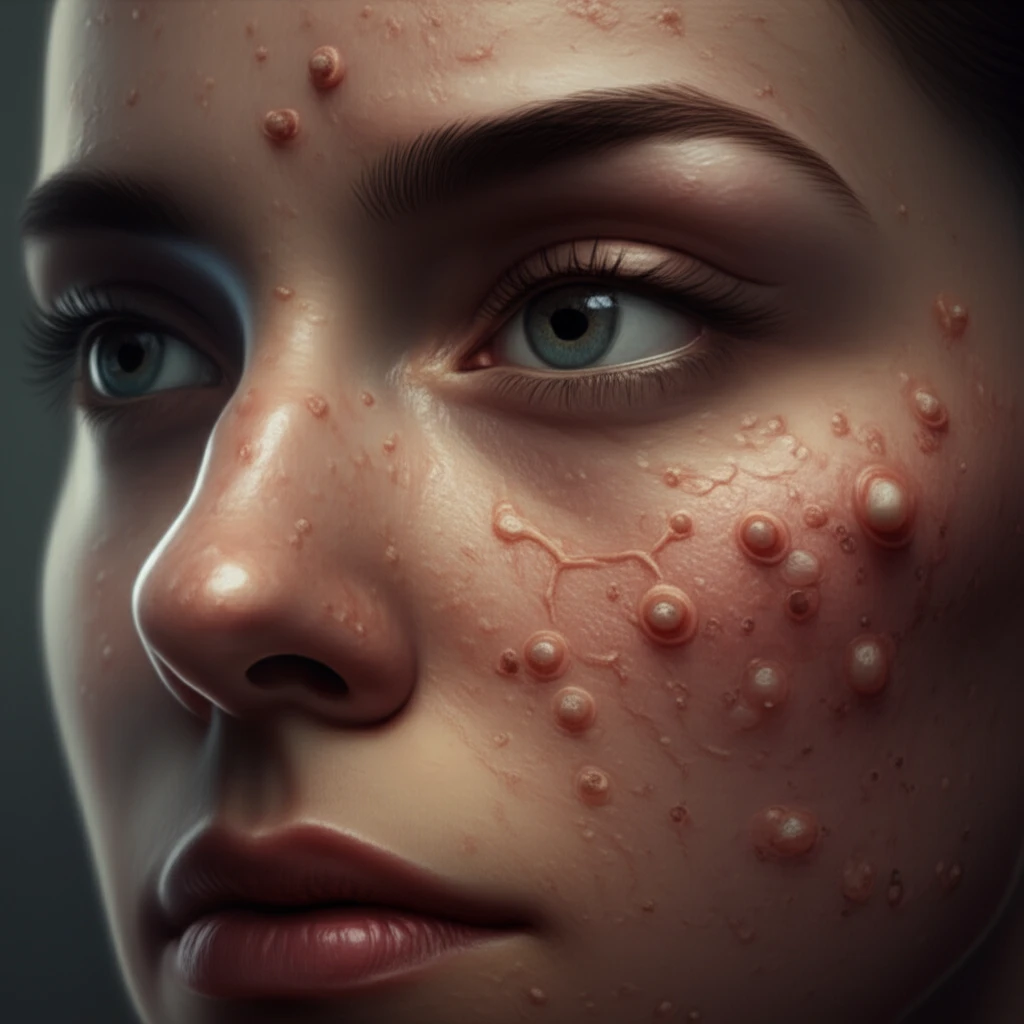
Illustration of postherpetic comedones on a person's face.

Zits After Zoster? Unmasking Postherpetic Comedones

"A Deep Dive into the Rare Skin Condition Linking Shingles and Unexpected Breakouts"


Shingles, caused by the varicella-zoster virus (VZV), can leave behind more than just lingering nerve pain. In some rare cases, it can trigger a skin phenomenon known as Wolf's postherpetic isotopic response (PHIR), leading to the development of new skin lesions in the area previously affected by the herpes zoster infection. While PHIR can manifest in various ways, one of the less common presentations is the appearance of comedones – better known as pimples or blackheads.

Although the link between VZV and subsequent skin conditions has been recognized, the occurrence of comedones following a shingles outbreak remains relatively rare. A review of medical literature reveals only a handful of reported cases. This makes each new case important for understanding the complexities of how our skin responds to viral infections and heals afterward.

This article delves into two unusual cases of postherpetic comedones observed in Chinese Han patients. By exploring these cases, we'll shed light on the possible mechanisms behind this phenomenon and offer insights into managing this unexpected dermatological twist.

Decoding Postherpetic Comedones: What's Happening?

Illustration of postherpetic comedones on a person's face.

Postherpetic comedones are thought to arise from a disruption in the skin's local environment following a shingles infection. Here's a breakdown of the key factors:

Nerve Damage: Shingles can damage nerve fibers in the affected area. These nerves play a crucial role in regulating various skin functions, including immune responses and cell turnover.

  • Immune System Imbalance: Viral infections can temporarily alter the balance of the skin's immune system. Some research suggests that the number of Langerhans cells, which help regulate immune responses in the skin, may be reduced after a shingles infection.
  • Disrupted Homeostasis: The combination of nerve damage and immune system changes can disrupt the skin's natural equilibrium, potentially leading to abnormal follicular function and the formation of comedones.
  • Other Factors: Age, genetics, and individual skin characteristics may also play a role in the development of postherpetic comedones.
While the exact molecular mechanisms are still being investigated, scientists believe that understanding these factors is key to unlocking more effective treatments for this unusual condition.

The Takeaway: Shingles Doesn't Have to Mean Surprise Zits

While postherpetic comedones are an uncommon consequence of shingles, understanding the potential link can help individuals and healthcare providers be more vigilant. If you've had shingles and notice unusual breakouts in the affected area, it's worth exploring the possibility of postherpetic comedones with a dermatologist.

Diagnosis typically involves a clinical examination. A doctor will assess the lesions and consider your medical history, especially any prior shingles infections. They'll also rule out other conditions that can cause comedones, such as acne or Favre-Racouchot syndrome.

While research is ongoing to fully understand the mechanisms behind postherpetic comedones, current treatments focus on managing the symptoms. These may include topical retinoids, comedone extraction, and other acne-fighting therapies. A dermatologist can recommend the most appropriate approach for your specific case.

About this Article -

This article was crafted using a human-AI hybrid and collaborative approach. AI assisted our team with initial drafting, research insights, identifying key questions, and image generation. Our human editors guided topic selection, defined the angle, structured the content, ensured factual accuracy and relevance, refined the tone, and conducted thorough editing to deliver helpful, high-quality information.See our About page for more information.

This article is based on research published under:

DOI-LINK: 10.4103/0366-6999.208244, Alternate LINK

Title: Postherpetic Comedones In Two Chinese Han Patients

Subject: General Medicine

Journal: Chinese Medical Journal

Publisher: Ovid Technologies (Wolters Kluwer Health)

Authors: Bo Wang, Jie Zheng, Hong-Wei Wang

Published: 2017-07-05

Everything You Need To Know

1

What exactly are postherpetic comedones?

Postherpetic comedones are essentially pimples, or blackheads, that appear on the skin after a shingles outbreak. They are a rare skin condition where the varicella-zoster virus (VZV), which causes shingles, triggers the development of comedones in the area previously affected by the herpes zoster infection. This is an example of Wolf's postherpetic isotopic response (PHIR).

2

Why are postherpetic comedones important?

The significance lies in the understanding of how viral infections like shingles, caused by VZV, can impact the skin's healing process and lead to unexpected dermatological conditions. While not common, each case of postherpetic comedones offers valuable insights into the complex interplay between the virus, the immune system, and skin functions. The rare occurrence of postherpetic comedones emphasizes the need for healthcare providers to be aware of such possibilities and for individuals to seek dermatological consultation if unusual breakouts occur after shingles.

3

What causes postherpetic comedones to develop?

Several factors contribute to the development of postherpetic comedones. Nerve damage caused by the shingles infection can disrupt the skin's normal functions, including immune responses and cell turnover. Immune system imbalances, such as a possible reduction in Langerhans cells, can also play a role. Furthermore, the combination of nerve damage and altered immune responses disrupts the skin's natural balance, potentially leading to abnormal follicular function and the formation of comedones. Other factors like age, genetics, and individual skin characteristics may also influence the condition.

4

How are postherpetic comedones treated?

While there aren't specific treatments mentioned, the ability to recognize postherpetic comedones as a potential consequence of shingles is crucial. Consulting a dermatologist is the key step. Understanding the connection between shingles and subsequent skin conditions can lead to more vigilant monitoring and appropriate care. Although the exact molecular mechanisms are still being investigated, the current research focuses on understanding these factors to develop more effective treatments.

5

What is the significance of knowing about postherpetic comedones?

Postherpetic comedones are important because they highlight the complex effects of the varicella-zoster virus (VZV) on skin health and recovery. Because postherpetic comedones are rare, each occurrence provides additional knowledge about how the skin reacts to viral infections. This knowledge is important for doctors and patients to recognize the possible link between shingles and unexpected skin issues. It also stresses the need for further investigation into the disease's underlying mechanisms and the development of effective therapies.

Newsletter Subscribe

Subscribe to get the latest articles and insights directly in your inbox.