
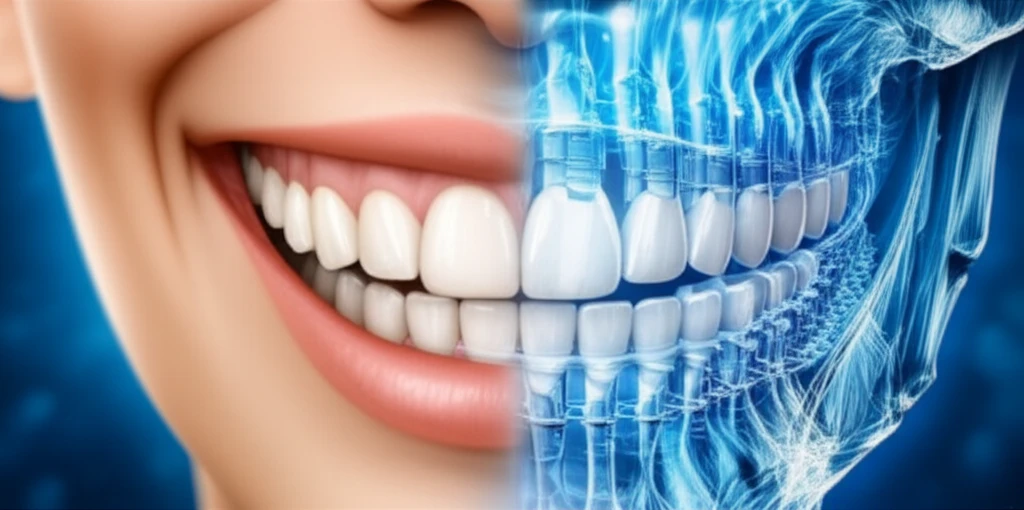
Zirconia Crowns: A Fusion of Beauty and Technology for Your Smile

Zirconia Crowns: Are They the Right Choice for Your Smile?

"Explore the pros and cons of high-strength ceramics in dental restorations and understand if zirconia crowns are the answer to your dental needs."


In the early 21st century, high-strength zirconia (ZrO2) ceramics emerged as a revolutionary alternative to traditional metal-supported dental restorations. Zirconia quickly gained popularity due to its exceptional strength and versatility, allowing dentists to use it without the limitations of other materials. Today, we're already seeing the third generation of high-strength ceramics make its way into dental practices.

The journey of zirconia in dentistry is marked by continuous innovation. Early efforts by companies like DCS in Switzerland were pivotal. Their work in hot isostatic pressing (HIP) to create yttrium-stabilized tetragonal zirconia polycrystals (Y-TZP) laid the foundation for the zirconia restorations we know today. This was made possible by the creation of specialized machinery and CAD/CAM workflows for creating customized dental pieces.

The evolution continued as computer technology rapidly advanced, enhancing the precision and efficiency of CAD/CAM technology. This progress broadened the acceptance and use of zirconia in both dental labs and clinics, which allowed for faster processing of large datasets to improve turnaround times.

What Makes Zirconia So Strong?

Zirconia Crowns: A Fusion of Beauty and Technology for Your Smile

Zirconia's strength comes from a unique property called transformation toughening. Unlike other ceramics, zirconia can stop cracks from spreading. This happens because when a crack starts, the zirconia crystals change from a tetragonal to a monoclinic phase, which expands the volume by about 4%.

This expansion puts pressure on the crack tip, effectively squeezing it shut and preventing it from growing further. This process, known as martensitic transformation, is a key reason why zirconia is so resistant to fracture.

  • Powder Processing: Zirconia starts as a fine powder with particles ranging from 150-300 nanometers. Depending on the manufacturer, these powders are pressed into shapes (like pucks or blocks) using uniaxial, biaxial, or isostatic pressing.
  • Sintering: Next, the pressed zirconia is sintered, a process where it’s heated to high temperatures to fuse the particles together. Parameters such as heating rate, temperature, and duration are crucial for achieving the final product's quality.
  • Grain Growth: Higher sintering temperatures promote grain growth, which affects the material's properties. While larger grains can decrease the elastic modulus (making the material more flexible), they also increase the critical stress intensity factor (improving crack resistance).
Different manufacturers use varying sintering temperatures, typically ranging from 1350°C to 1600°C. The resulting material exhibits a high elastic modulus, similar to dental alloys, which means zirconia restorations can be designed with comparable dimensions to traditional metal-based restorations.

Looking Ahead: The Future of Zirconia in Dentistry

The field of zirconia ceramics is constantly evolving. Future research aims to further enhance strength, minimize low-temperature degradation, and improve translucency for more lifelike esthetics. These advancements promise to make zirconia an even more versatile and reliable material for dental restorations. The trend towards nano-sized powders and user-friendly testing protocols will likely shape the future of high-strength ceramics in dentistry.

About this Article -

This article was crafted using a human-AI hybrid and collaborative approach. AI assisted our team with initial drafting, research insights, identifying key questions, and image generation. Our human editors guided topic selection, defined the angle, structured the content, ensured factual accuracy and relevance, refined the tone, and conducted thorough editing to deliver helpful, high-quality information.See our About page for more information.

Everything You Need To Know

1

What is Zirconia and why is it used in dentistry?

Zirconia (ZrO2) is a high-strength ceramic material that has revolutionized dental restorations since the early 21st century. It is used as an alternative to traditional metal-supported restorations because of its exceptional strength and versatility. Its popularity stems from its ability to withstand significant forces in the mouth, making it ideal for crowns and other dental applications. The early efforts by companies like DCS, Switzerland, in hot isostatic pressing (HIP) to create yttrium-stabilized tetragonal zirconia polycrystals (Y-TZP), laid the foundation for the zirconia restorations we know today.

2

How does Zirconia's strength compare to other materials?

Zirconia's remarkable strength comes from a unique property called transformation toughening. Unlike other ceramics, it can prevent cracks from spreading. When a crack forms, the zirconia crystals change from a tetragonal to a monoclinic phase, expanding the volume and putting pressure on the crack tip. This martensitic transformation effectively prevents the crack from growing further, making zirconia highly resistant to fracture. The material's high elastic modulus, similar to dental alloys, means zirconia restorations can be designed with comparable dimensions to traditional metal-based restorations.

3

What are the key steps in the manufacturing process of a Zirconia crown?

The manufacturing of a zirconia crown involves several crucial steps. It starts with powder processing, where zirconia is a fine powder with particles ranging from 150-300 nanometers. These powders are pressed into shapes using uniaxial, biaxial, or isostatic pressing. Next, sintering occurs, which is a process where the pressed zirconia is heated to high temperatures to fuse the particles together. This process is followed by grain growth. Higher sintering temperatures promote grain growth, which affects the material's properties. Different manufacturers use varying sintering temperatures, typically ranging from 1350°C to 1600°C.

4

What role does CAD/CAM technology play in the use of Zirconia?

CAD/CAM (Computer-Aided Design/Computer-Aided Manufacturing) technology has significantly advanced the use of Zirconia in dentistry. The evolution of computer technology has enhanced the precision and efficiency of CAD/CAM technology. This progress broadened the acceptance and use of zirconia in both dental labs and clinics, which allowed for faster processing of large datasets to improve turnaround times. CAD/CAM workflows are essential for creating customized dental pieces from Zirconia, which allows for precise fitting and optimal performance of the restorations.

5

What does the future hold for Zirconia in dentistry?

The future of zirconia ceramics in dentistry is bright, with ongoing research focusing on enhancing strength, minimizing low-temperature degradation, and improving translucency for more lifelike esthetics. The trend toward nano-sized powders and user-friendly testing protocols will likely shape the future of high-strength ceramics in dentistry. These advancements will make zirconia an even more versatile and reliable material for dental restorations, improving patient outcomes and expanding its applications.

Newsletter Subscribe

Subscribe to get the latest articles and insights directly in your inbox.