
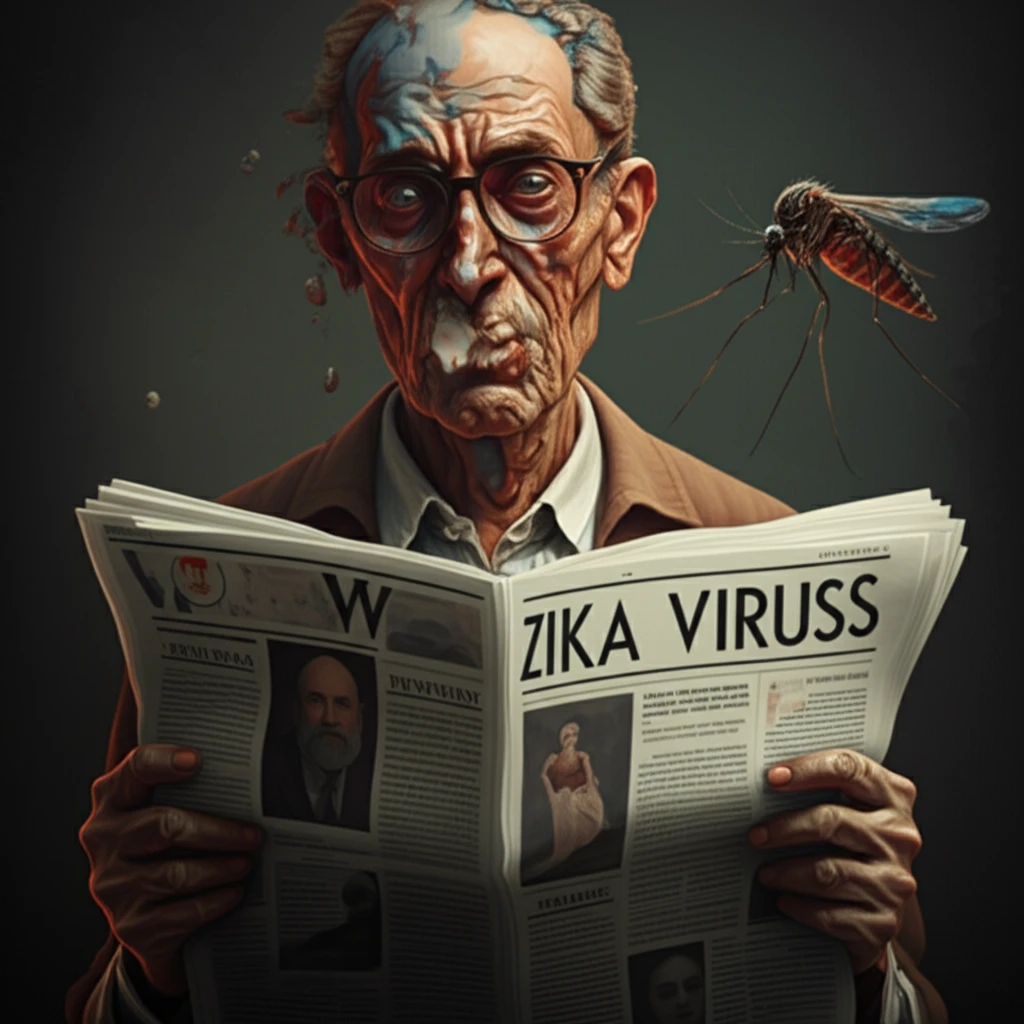
Zika Virus Coverage: Are You Getting the Right Information?

"National vs. Local News: How Media Outlets Differ in Reporting Health Threats"
In an age where viral epidemics and pandemics are becoming increasingly frequent, accessing reliable and relevant health information is more critical than ever. When an infectious disease outbreak occurs, people rely on media outlets to learn about the disease and understand the necessary precautions to protect themselves. However, not all news sources are created equal. A key question is whether national and local media report on health threats in the same way.
While there's extensive research on measuring the quality of health reporting, little attention has been paid to the role of audience considerations. To address this gap, a recent study compared coverage of the 2016 Zika outbreak in the New York Times, a prestigious national newspaper, and the Tampa Bay Times, a well-regarded Florida newspaper. Florida was significantly affected by the Zika virus, making this comparison particularly insightful.
This article dives into the findings of that study, revealing how audience considerations influence the quality of health coverage. We'll explore which type of media provides better information on avoiding infection, and where both national and local sources fall short when it comes to accurately portraying risk. Understanding these differences can empower you to make informed decisions about your health and safety.
Local News vs. National News: Key Differences in Zika Coverage
The study's original content analysis revealed that audience considerations led to higher quality coverage in the local paper, the Tampa Bay Times, particularly in terms of information on avoiding infection. Because the local audience was more directly at risk, the Tampa Bay Times provided more information on self-protection, symptoms, and transmission methods.
- Self-Protection Information: The Tampa Bay Times included significantly more advice on how to protect oneself from the Zika virus, such as using insect repellent, wearing long sleeves, and removing standing water.
- Individual Efficacy Information: The Tampa Bay Times provided more information on symptoms and transmission of Zika virus, empowering readers to take informed action.
- Sensationalist Language: Both the New York Times and the Tampa Bay Times were equally likely to use sensationalist language and highlight worst-case scenarios, such as birth defects or Guillain-Barré syndrome.
What This Means for You
The way health threats are covered by national and local media is not uniform. This study underscores the importance of being discerning about your news sources, especially during a health crisis. While local news may offer more tailored advice on self-protection, both national and local outlets can fall prey to sensationalism or imprecise risk communication.
Given the heavy reliance on qualitative risk information, consumers should actively seek quantitative data and contextualize raw numbers with appropriate denominators to gain a more accurate understanding of the risk. This may involve consulting multiple sources, including government health websites and scientific publications.
Ultimately, this research serves as a reminder that informed citizens are essential for containing health threats. By understanding the strengths and weaknesses of different news sources, you can equip yourself with the knowledge needed to make informed decisions and protect your health.