
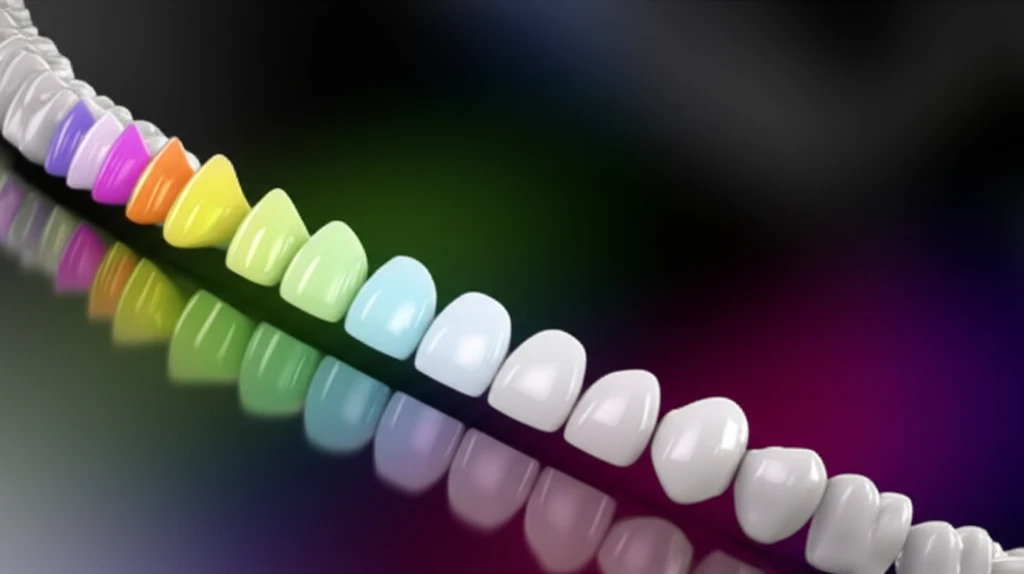
Will Your Veneers Last? Unveiling the Secrets to Long-Lasting Color

"Discover how the choice of ceramic and cement impacts the long-term color stability of your dental restorations."
All-ceramic restorations are a popular choice for achieving a beautiful, natural-looking smile. Unlike older metal-ceramic systems, they offer excellent aesthetics and color stability, closely mimicking the appearance of natural teeth. However, maintaining the initial shade of these restorations over time can be a challenge.
The long-term color of ceramic restorations is influenced by several factors, including the ceramic material itself, the thickness of the restoration, the shade and opacity of the underlying tooth structure, and the type of resin cement used to bond the restoration in place. Resin cements, in particular, play a crucial role, as they can mask underlying discoloration and affect the final color.
This article explores how different ceramic systems (feldspathic and lithium disilicate) and resin cements affect the color stability of dental restorations over time, shedding light on the factors that contribute to lasting aesthetics.
The Science Behind Color Changes: What the Research Reveals
A recent study published in the Brazilian Dental Journal investigated the color stability of two common dental ceramics – feldspathic porcelain and lithium disilicate – when cemented with different resin cements. Researchers assessed color changes (ΔΕ00) by measuring the L, a, b, c, and h values of transmitted light through the samples, both immediately after cementation and after six months of storage in controlled humidity.
- Ceramic Matters: The type of ceramic used significantly impacted color stability. Feldspathic ceramic showed greater color changes (higher ΔΕ00 values) compared to lithium disilicate, regardless of the resin cement used.
- Cement's Subtle Role: While the type of cement didn't have a statistically significant impact on overall color stability in this study, both cements exhibited similar degradation behavior over time.
- Feldspathic Sensitivity: Feldspathic ceramic experienced more significant variations in individual color coordinates (L, a, b, c, and h) after aging, indicating a greater susceptibility to color changes.
Protecting Your Investment: Key Takeaways for a Lasting Smile
Choosing the right materials is crucial for ensuring the longevity and aesthetics of your ceramic restorations. Lithium disilicate appears to offer superior color stability compared to feldspathic porcelain, potentially making it a better choice for patients particularly concerned about maintaining a consistent shade over time.
While this study suggests that the specific resin cements tested had a less significant impact on color stability than the ceramic itself, proper cementation techniques and the use of high-quality materials remain essential. Factors like complete polymerization of the cement and protection from external staining agents can further contribute to long-term success.
Ultimately, maintaining the brilliance of your ceramic restorations requires a collaborative effort between you and your dentist. Open communication about your aesthetic goals and a thorough understanding of the materials being used are key to achieving a smile that lasts.