
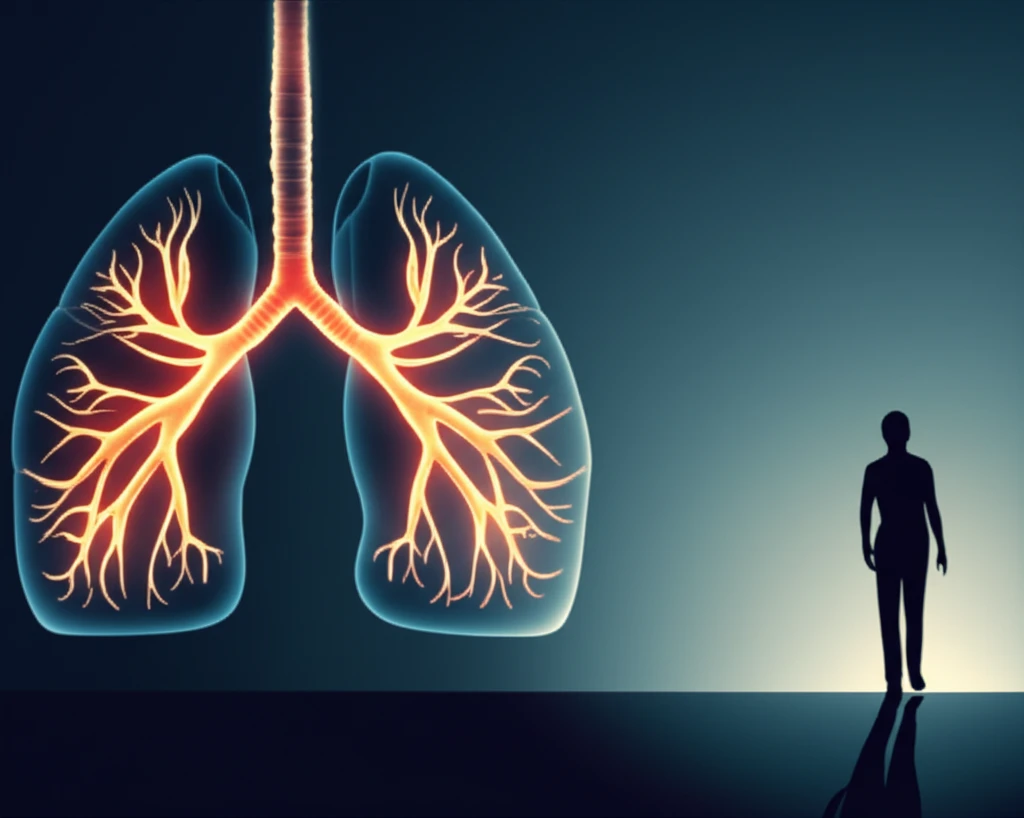
Why Your Lungs Might Still Struggle After Pulmonary Angioplasty

"New research sheds light on why some CTEPH patients experience limited exercise capacity despite successful treatment, revealing a crucial link to lung oxygenation."
Chronic thromboembolic pulmonary hypertension (CTEPH) is a serious condition where blood clots accumulate in the lungs, leading to high blood pressure in the pulmonary arteries. This puts a strain on the heart and can significantly reduce a person's ability to be active. Balloon pulmonary angioplasty (BPA) has emerged as a valuable treatment, helping to open up blocked vessels and improve blood flow.
Many patients experience significant relief and improved heart function after BPA. However, a frustrating issue remains: some individuals continue to struggle with exercise, even when their heart pressures have returned to near-normal levels. This disconnect has puzzled doctors, prompting a search for other factors that might be limiting recovery.
New research investigates the link between lung function and exercise capacity in CTEPH patients after BPA. The study pinpoints a specific lung issue – inefficient oxygen transfer due to residual intrapulmonary shunting – as a key reason why some individuals don't regain their full exercise potential. Understanding this connection is crucial for developing strategies to improve outcomes and quality of life for CTEPH patients.
The Oxygenation Puzzle: Why Some Lungs Don't Fully Recover
The core question this research tackles is: why do some CTEPH patients still have trouble with exercise after BPA, even when their pulmonary hemodynamics (blood flow and pressure) improve? The researchers hypothesized that the answer lies in respiratory function, specifically how efficiently the lungs are transferring oxygen into the bloodstream.
- Pulmonary hemodynamics (pressures in the heart and lungs)
- Respiratory function tests (lung capacity, airflow, and oxygen transfer efficiency)
- Exercise capacity (measured by a six-minute walk test)
What This Means for CTEPH Patients and Future Treatment
This research underscores that successful BPA, while improving heart function, doesn't always guarantee a full return to exercise capacity. The lingering issue of intrapulmonary shunting can significantly limit a patient's ability to be active and enjoy a good quality of life.
The study highlights the importance of assessing lung function, specifically oxygenation efficiency, in CTEPH patients after BPA. Monitoring A-aDO2 and Qs/Qt (intrapulmonary shunt fraction) can help identify individuals who may benefit from targeted therapies to improve lung oxygen transfer.
While there isn't yet a specific treatment to directly address intrapulmonary shunting in this context, recognizing it as a limiting factor opens avenues for future research. Strategies to improve lung function and oxygenation in CTEPH patients after BPA could include pulmonary rehabilitation programs or, potentially, targeted drug therapies. Further research is needed to explore these possibilities and optimize recovery for all CTEPH patients.