
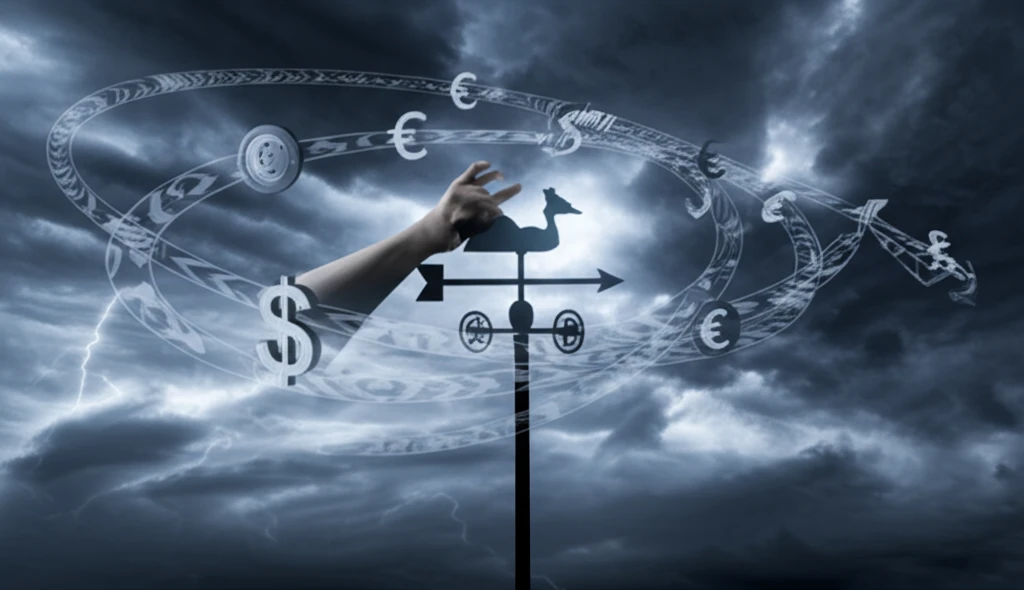
Chaotic weather vane in an economic storm, symbolizing unpredictable forecasts.

Why Economic Forecasts Are Often Wrong: The Feedback Loop Effect

"Uncover how policy decisions and forecaster uncertainty skew economic predictions, leading to biased results despite best efforts."


Economic forecasts are a constant presence in our lives, influencing everything from investment decisions to government policy. But have you ever wondered why these forecasts are so often off the mark? While it's easy to blame forecasters for being irrational or incompetent, the reality is far more nuanced. The problem isn't necessarily the skills of the forecasters, but the system they are working within.

Traditional methods of evaluating economic forecasts often assume that forecasters operate in a vacuum, where their predictions have no impact on the events they are predicting. However, this assumption breaks down when forecasts themselves influence policy decisions. These policy decisions then affect the very outcomes the forecasts were trying to predict, creating a feedback loop that can significantly distort the accuracy of those forecasts.

In this article, we will explore this 'feedback loop effect' and its impact on the reliability of economic forecasts. We'll delve into a new study that examines how the interaction between forecasters and decision-makers introduces bias into the forecasting process, leading to systematically skewed predictions. By understanding this dynamic, we can gain a more realistic perspective on the limitations of economic forecasts and the challenges of making informed decisions in an uncertain world.

The Hidden Influence: How Policy Decisions Skew Economic Forecasts

Chaotic weather vane in an economic storm, symbolizing unpredictable forecasts.

Imagine a weather forecast that could change the weather. Sounds absurd, right? Yet, in a way, that's what happens with economic forecasts. When these forecasts are used to inform policy decisions, the policies enacted can alter the very economic conditions the forecasts were initially trying to predict. This creates a feedback loop where the forecast influences the outcome, making it difficult to assess the true accuracy of the initial prediction.

The traditional approach to evaluating economic forecasts assumes that forecasters are simply trying to predict an outcome independent of their actions. It presumes their rationality and any differences are due to irrationality or asymmetries. However, this approach fails to account for the strategic interaction between forecasters and policymakers.

  • Irrationality: Interpreting forecast errors as a sign that forecasters are not thinking straight.
  • Asymmetric Loss: Thinking forecasters deliberately skew results because they feel the consequences of over- or under-prediction differently.
The study highlights that even under ideal conditions—where forecasters are perfectly rational and using the best available information—forecasts can still be systematically biased due to this feedback effect. The bias arises because forecasters must anticipate how policymakers will react to their predictions and how those reactions will influence the final economic outcome. This requires forecasters to not only understand the economy but also to predict the behavior of those who wield economic power.

A New Perspective on Economic Predictions

The implications of this research are significant. It suggests that we should be cautious about interpreting forecast errors as evidence of forecaster incompetence or irrationality. Instead, we need to recognize the inherent challenges of forecasting in a world where predictions can influence outcomes. By acknowledging the feedback loop effect, we can develop more sophisticated methods for evaluating economic forecasts and making informed decisions in an uncertain economic landscape. Further research is needed to refine our understanding of these complex interactions and develop forecasting models that account for the dynamic relationship between forecasters, policymakers, and the economy.

About this Article -

This article was crafted using a human-AI hybrid and collaborative approach. AI assisted our team with initial drafting, research insights, identifying key questions, and image generation. Our human editors guided topic selection, defined the angle, structured the content, ensured factual accuracy and relevance, refined the tone, and conducted thorough editing to deliver helpful, high-quality information.See our About page for more information.

This article is based on research published under:

DOI-LINK: https://doi.org/10.48550/arXiv.2308.15062,

Title: Forecasting With Feedback

Subject: econ.th econ.em

Authors: Robert P. Lieli, Augusto Nieto-Barthaburu

Published: 29-08-2023

Everything You Need To Know

1

Why are economic forecasts frequently inaccurate, even when experts use the best available data?

Economic forecasts are often wrong not because of a lack of skill among forecasters, but due to the 'feedback loop effect'. This effect arises when forecasts influence policy decisions, which in turn alter the very economic conditions the forecasts were trying to predict. This creates a dynamic where the initial prediction's accuracy is compromised by the subsequent policy responses. Traditional methods of evaluating economic forecasts may incorrectly attribute forecast errors to irrationality or asymmetric loss, overlooking the impact that forecasters and decision-makers interaction have on skewing predictions.

2

What is the 'feedback loop effect' in the context of economic forecasting, and how does it skew predictions?

The 'feedback loop effect' describes a situation where economic forecasts influence policy decisions, which subsequently alter the economic outcomes that the forecasts were initially attempting to predict. This interaction creates a loop, causing the forecasts to be biased. For instance, if a forecast predicts an economic downturn, policymakers might implement measures to stimulate growth, thereby changing the economic trajectory and invalidating the original forecast. This dynamic makes it difficult to assess the true accuracy of economic predictions.

3

How do policy decisions based on economic forecasts influence the accuracy of those same forecasts?

When policy decisions are informed by economic forecasts, the implemented policies can change the economic conditions that the forecasts were initially trying to predict. For example, if a forecast projects high inflation, a central bank might raise interest rates to curb spending. This action can then slow down economic growth, leading to different outcomes than those initially projected. The traditional approach of evaluating economic forecasts as irrationality or asymmetric loss fails to consider this strategic interaction between forecasters and policymakers.

4

What are 'irrationality' and 'asymmetric loss' in the context of economic forecasting, and why might they be insufficient explanations for forecast errors?

'Irrationality' refers to the interpretation of forecast errors as a sign that forecasters are not thinking straight. 'Asymmetric loss' suggests forecasters deliberately skew results because they perceive different consequences for over- or under-prediction. These explanations are insufficient because they don't account for the 'feedback loop effect', where the forecasts themselves influence policy decisions, which then affect the economic outcomes. Even rational forecasters using the best information can produce systematically biased forecasts due to this dynamic interaction.

5

What implications does the 'feedback loop effect' have for evaluating economic forecasts and making informed decisions?

The 'feedback loop effect' implies that we should be cautious about interpreting forecast errors solely as evidence of forecaster incompetence or irrationality. Instead, it highlights the inherent challenges of forecasting in a world where predictions can influence outcomes. Recognizing this effect encourages the development of more sophisticated methods for evaluating economic forecasts, considering the dynamic relationships between forecasters, policymakers, and the economy. It also suggests a need for forecasting models that account for these complex interactions to improve the accuracy and reliability of economic predictions.

Newsletter Subscribe

Subscribe to get the latest articles and insights directly in your inbox.