
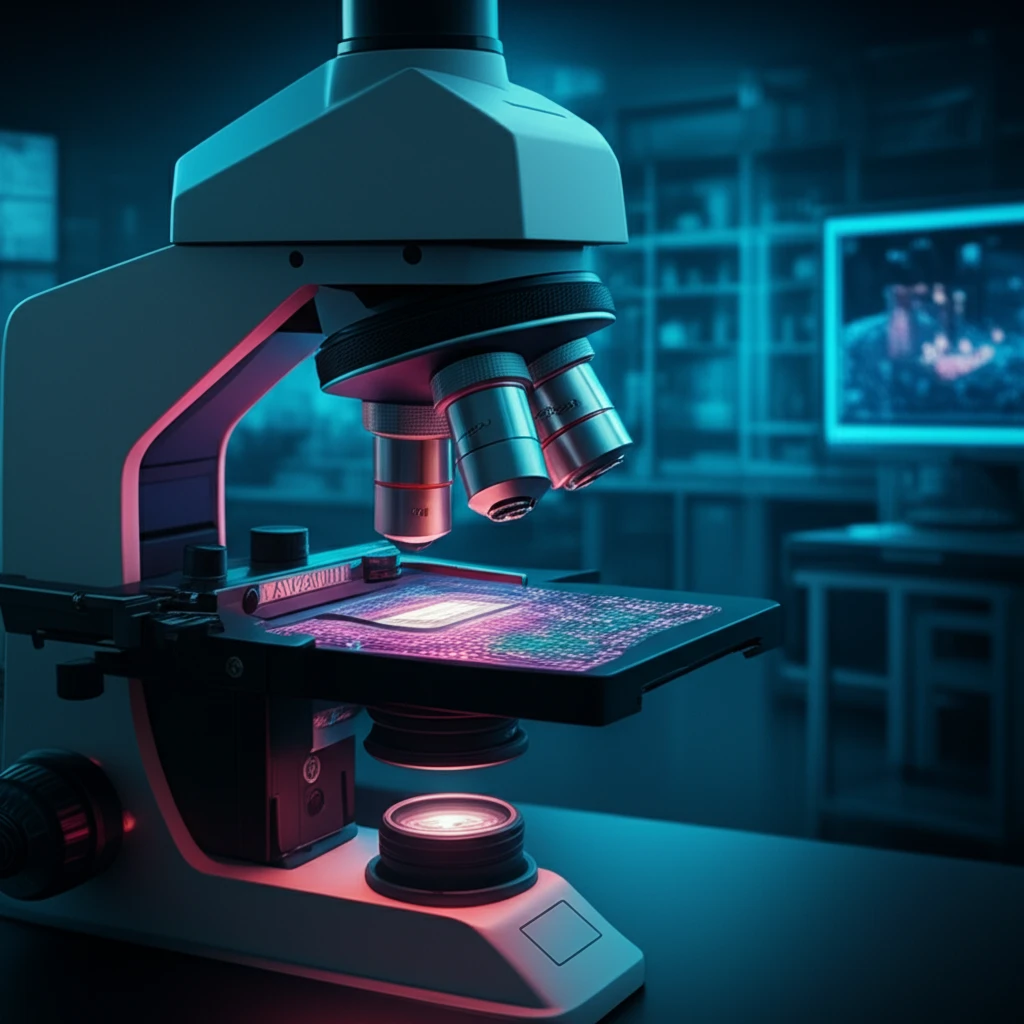
A digital microscope analyzing a tissue slide, representing advancements in digital pathology.

Whole Slide Imaging: The Future of Digital Diagnostics in Pathology

"Discover how whole slide imaging is revolutionizing pathology, enhancing diagnostics, and transforming medical education."


Pathology, the cornerstone of disease diagnosis, is undergoing a digital revolution. At the forefront of this transformation is whole slide imaging (WSI), a technology that digitizes traditional glass slides, creating virtual slides accessible via computer monitors. This shift promises to enhance diagnostic accuracy, improve workflows, and foster collaboration among medical professionals.

WSI's impact extends beyond mere digitization. It facilitates the use of advanced digital tools, expands service accessibility to underserved areas, and revolutionizes medical education. While the advantages are clear, the complexities of implementing WSI systems present obstacles to widespread adoption. Understanding these challenges and the strategies to overcome them is crucial for institutions aiming to integrate WSI into their practices.

This article explores the current state of WSI, its practical applications, and the regulatory landscape governing its use. By addressing the practical considerations for adoption and highlighting ongoing research, we aim to provide a comprehensive guide for anyone interested in harnessing the power of digital pathology.

What is Whole Slide Imaging and How Does It Work?

A digital microscope analyzing a tissue slide, representing advancements in digital pathology.

WSI involves digitizing entire histology slides or preselected areas, transforming them into high-resolution digital images. This process includes image acquisition (scanning), storage, editing, and display. WSI systems use specialized slide scanners equipped with light sources, slide stages, objective lenses, and high-resolution cameras to capture detailed images of tissue samples.

The scanning process can be categorized into brightfield, fluorescent, and multispectral imaging, depending on the staining techniques used on the slides. Brightfield imaging emulates standard brightfield microscopy, while fluorescent imaging is used to digitize fluorescently labeled slides. Multispectral imaging captures spectral information across the light spectrum, offering a more detailed analysis of tissue samples.

  • Brightfield Imaging: Best for routine histology and offers cost-effectiveness.
  • Fluorescent Imaging: Ideal for visualizing fluorescently labeled slides.
  • Multispectral Imaging: Provides detailed spectral information, beneficial for advanced research and analysis.
Focusing methods vary, with some systems focusing on every individual tile of the slide, while others focus on selected tiles or use focus maps to reduce image acquisition time. Modern scanners incorporate tissue recognition features, automatically detecting histology specimens via a low-magnification overview scan.

The Future is Digital

As technology advances and regulatory hurdles are cleared, WSI is poised to revolutionize pathology. By embracing these advancements, pathologists and healthcare professionals can unlock new possibilities for diagnosis, research, and education, ultimately improving patient outcomes and shaping the future of medicine.

About this Article -

This article was crafted using a human-AI hybrid and collaborative approach. AI assisted our team with initial drafting, research insights, identifying key questions, and image generation. Our human editors guided topic selection, defined the angle, structured the content, ensured factual accuracy and relevance, refined the tone, and conducted thorough editing to deliver helpful, high-quality information.See our About page for more information.

Everything You Need To Know

1

What is Whole Slide Imaging and how does it work?

Whole Slide Imaging (WSI) is a process that digitizes traditional glass slides, creating high-resolution virtual slides that can be viewed on a computer. It involves using specialized slide scanners equipped with light sources, objective lenses, and high-resolution cameras to capture detailed images of tissue samples. The process includes image acquisition (scanning), storage, editing, and display of these digital images. WSI facilitates the use of advanced digital tools, expands service accessibility, and revolutionizes medical education, all contributing to enhanced diagnostic accuracy and improved workflows in pathology.

2

What are the different types of scanning used in Whole Slide Imaging?

The three main types of scanning used in Whole Slide Imaging (WSI) are brightfield imaging, fluorescent imaging, and multispectral imaging. Brightfield imaging emulates standard brightfield microscopy and is cost-effective for routine histology. Fluorescent imaging is ideal for visualizing fluorescently labeled slides. Multispectral imaging captures spectral information across the light spectrum, offering a more detailed analysis of tissue samples. The choice of imaging type depends on the staining techniques used on the slides and the specific diagnostic or research needs.

3

How does the focusing work in Whole Slide Imaging?

Focusing methods in Whole Slide Imaging (WSI) vary depending on the system. Some systems focus on every individual tile of the slide, ensuring maximum detail across the entire sample. Others use selected tiles or create focus maps to reduce image acquisition time. Modern scanners often incorporate tissue recognition features, automatically detecting histology specimens via a low-magnification overview scan. This speeds up the process and reduces the need for manual intervention, improving efficiency and throughput in digital pathology workflows. These various methods are important to improve image quality of the digitized images.

4

Why is Whole Slide Imaging considered a significant advancement in pathology?

Whole Slide Imaging (WSI) is important because it enhances diagnostic accuracy, improves workflows, and fosters collaboration among medical professionals. By digitizing traditional glass slides, WSI facilitates the use of advanced digital tools for analysis and interpretation. It also expands service accessibility to underserved areas, allowing for remote consultations and diagnoses. Furthermore, WSI revolutionizes medical education by providing students with access to a vast library of digital slides for training and research. The ability to share and analyze digital slides remotely improves patient outcomes and shapes the future of medicine.

5

What are the broader implications of embracing Whole Slide Imaging in healthcare?

By embracing Whole Slide Imaging (WSI), pathologists and healthcare professionals can unlock new possibilities for diagnosis, research, and education. As technology advances and regulatory hurdles are cleared, WSI is poised to revolutionize pathology. The implication for improved patient outcomes and shaping the future of medicine stem from this digital transformation. By digitizing slides, WSI promotes efficiency gains and streamlined workflows. Widespread adoption of WSI promises to improve diagnostic capabilities, facilitate remote collaboration, and transform medical education, ultimately benefiting both healthcare providers and patients.

Newsletter Subscribe

Subscribe to get the latest articles and insights directly in your inbox.