
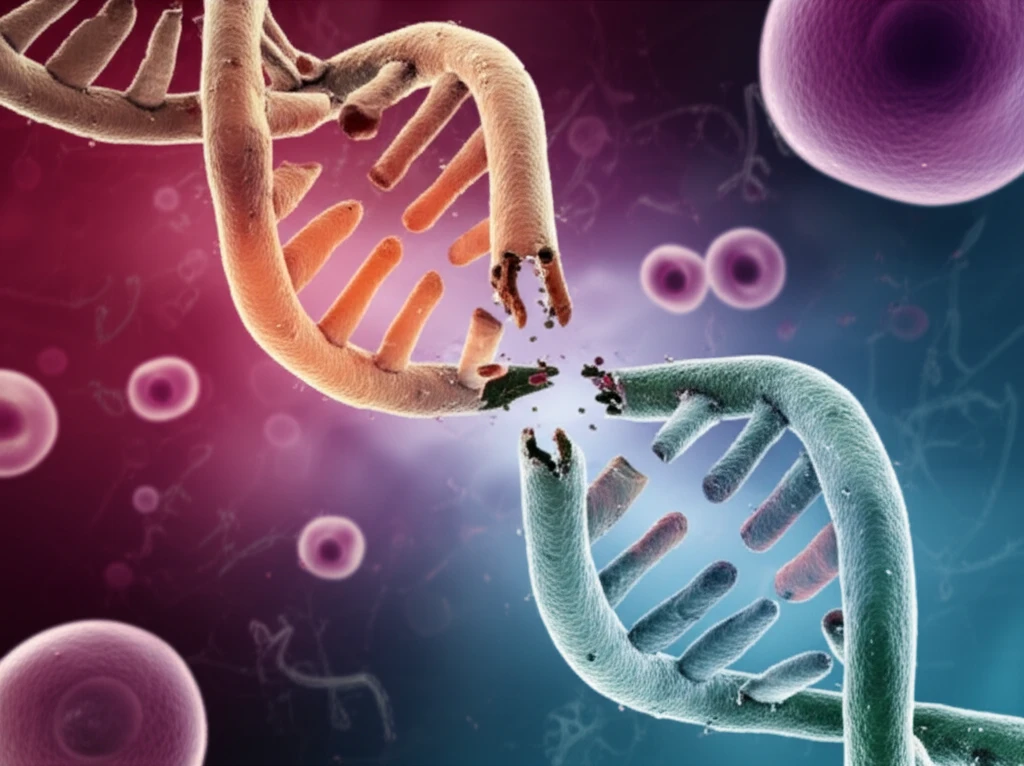
When Good Cells Go Bad: The mRNA Mix-Up Threatening Cancer Research

"A published study on colon cancer cells faces scrutiny due to a misleading genetic sequence, highlighting the need for vigilance in research practices."
In the fast-moving world of cancer research, accuracy is everything. A recent study published in OncoTargets and Therapy investigating the behavior of immature colon carcinoma cells has come under scrutiny, leading to an official 'Expression of Concern'. This highlights a critical issue: the potential for errors in fundamental research components to undermine entire studies and mislead future investigations.
The problem stems from a seemingly small but significant detail: a genetic sequence used as a control in the experiment. Control sequences are vital for comparison, acting as a baseline to determine the effects of the experimental treatment. In this case, the control sequence, intended to be neutral, was found to be unexpectedly similar to a sequence that actively targets a specific gene (TPD52L2) in cancer cells.
This discovery throws a wrench into the study's conclusions. If the control sequence wasn't truly neutral, it could have inadvertently influenced the results, making it difficult to determine whether the observed effects were due to the intended treatment or the flawed control. The journal editors, along with the publisher, Dove Medical Press, felt it necessary to alert the scientific community to these concerns.
The Case of the Misleading Sequence: TPD52L2
The heart of the issue lies in a sequence called TPD52L2. This particular sequence is a known target in cancer research, meaning it can be used to influence the behavior of cancer cells. The study in question used a short hairpin RNA (shRNA) sequence intended as a control – a sequence that shouldn't have any effect on the cells. However, it was discovered that this 'control' sequence shared a significant similarity to the TPD52L2-targeting shRNA.
- Compromised Baseline: A compromised control group makes it difficult to accurately assess the impact of the experimental treatment.
- Misinterpretation of Results: Observed changes in cancer cell behavior could be wrongly attributed.
- Replication Issues: Other researchers attempting to build upon this work may encounter inconsistent or contradictory findings.
Ensuring Accuracy in Cancer Research: A Path Forward
The case of the TPD52L2 sequence serves as a stark reminder of the importance of meticulousness and transparency in scientific research. While errors can happen, the key lies in identifying and addressing them swiftly to minimize potential harm.
This incident underscores the vital role of journal editors and publishers in upholding research integrity. By issuing an Expression of Concern, OncoTargets and Therapy has taken a proactive step to alert the scientific community and prevent the spread of potentially flawed information. This action aligns with the recommendations of the Committee on Publication Ethics (COPE), emphasizing the importance of ethical conduct in research publishing.
For researchers, this situation highlights the need for rigorous validation of research materials, including control sequences. It also emphasizes the importance of open communication and collaboration within the scientific community. Sharing data and addressing concerns promptly can help prevent errors from propagating and ensure that research efforts are built on a solid foundation. Ultimately, the goal is to ensure that cancer research continues to advance on a reliable and trustworthy path, leading to more effective treatments and improved patient outcomes.