
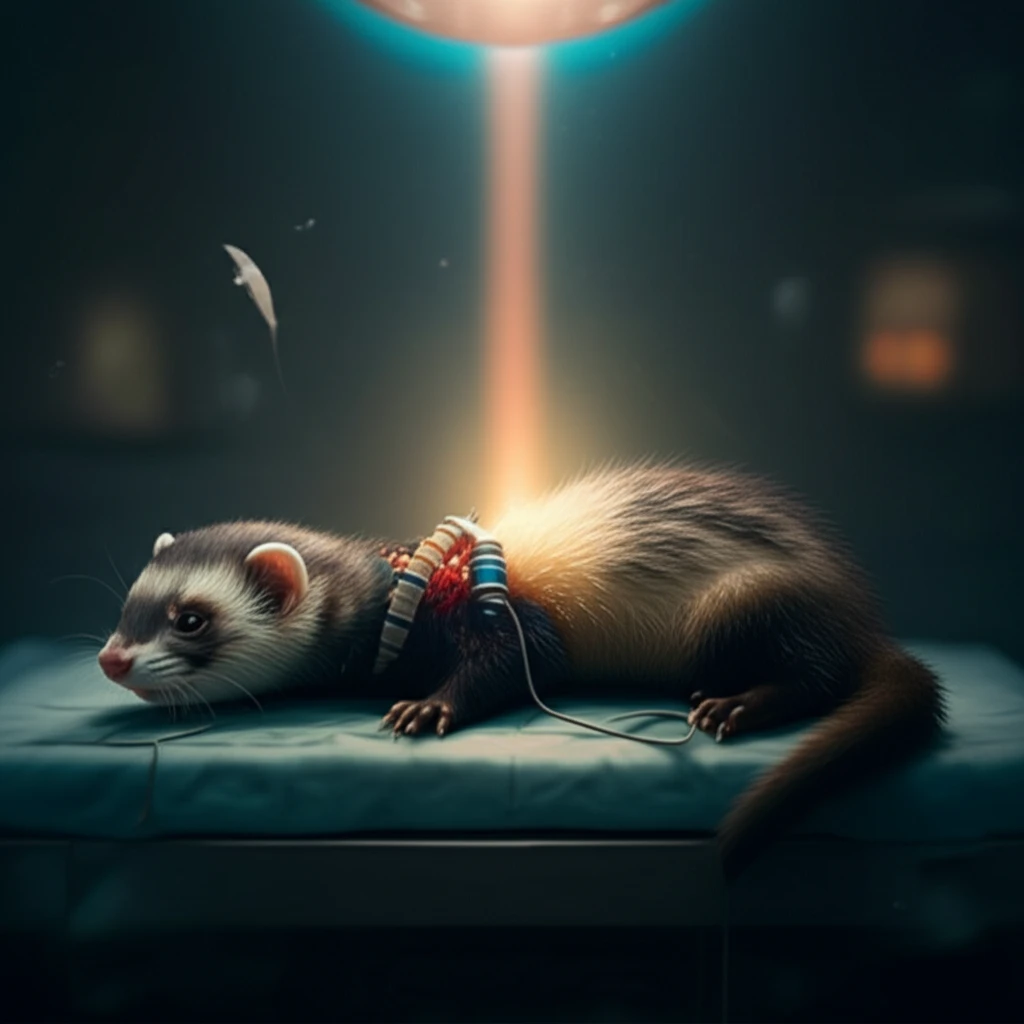
When Ferrets Face Fractures: A Breakthrough in Spinal Care

"Discover how a novel surgical approach offers hope for domestic ferrets with vertebral fractures caused by plasmacytomas, enhancing their quality of life and mobility."
Domestic ferrets, known for their playful antics, can face serious health challenges, including vertebral fractures. A particularly concerning cause of these fractures is osseous plasmacytoma, a type of plasma cell neoplasm that affects the bones. While rare, this condition can lead to significant mobility issues and pain, severely impacting a ferret's quality of life.
A recent study published in the Journal of Exotic Pet Medicine details a successful surgical treatment for a vertebral fracture caused by osseous plasmacytoma in a domestic ferret. This case offers valuable insights into diagnosing and managing this challenging condition, providing hope for ferret owners and veterinarians alike.
This article breaks down the details of this medical breakthrough, explaining the innovative approach, the diagnostic process, and the positive outcomes, making complex medical information accessible and reassuring for pet owners and animal care enthusiasts.
Understanding Osseous Plasmacytoma in Ferrets: A Path to Recovery
Osseous plasmacytoma is a type of cancer that affects plasma cells, which are a crucial part of the immune system. When these cells become cancerous, they can form tumors within the bone, leading to fractures and other complications. In the case described in the study, a four-year-old female ferret was diagnosed with a vertebral fracture caused by plasmacytoma. The ferret presented with acute progressive non-ambulatory paraparesis, indicating a severe impact on her mobility.
- Physical and Neurological Exams: Assessing the ferret's overall health and neurological function to identify signs of pain, reduced mobility, and other abnormalities.
- Computed Tomography (CT): Providing detailed images of the spine to reveal the fracture and any associated masses or lesions.
- Magnetic Resonance Imaging (MRI): Offering a clearer picture of the spinal cord and surrounding tissues to determine the extent of the plasmacytoma and any compression.
- Histopathological Analysis: Examining tissue samples under a microscope to confirm the diagnosis of plasmacytoma and rule out other potential causes.
A Promising Future for Ferrets with Spinal Fractures
The surgical treatment described in this study led to a significant improvement in the ferret's condition. At a ten-month follow-up, the ferret was comfortable and ambulatory, with only a residual left pelvic limb monoparesis. This outcome highlights the potential for surgical intervention to restore mobility and enhance the quality of life for ferrets with vertebral fractures caused by osseous plasmacytomas.
This case not only provides a successful treatment model but also underscores the importance of early diagnosis and comprehensive care. Veterinarians and pet owners should be vigilant in recognizing the signs of spinal issues in ferrets and pursue prompt diagnostic testing to identify the underlying cause.
While this study offers valuable insights, further research is needed to establish standardized treatment protocols for plasmacytomas in ferrets. However, the positive outcome in this case provides a beacon of hope for ferret owners and veterinarians, demonstrating that effective management and improved outcomes are possible with timely and appropriate intervention.