
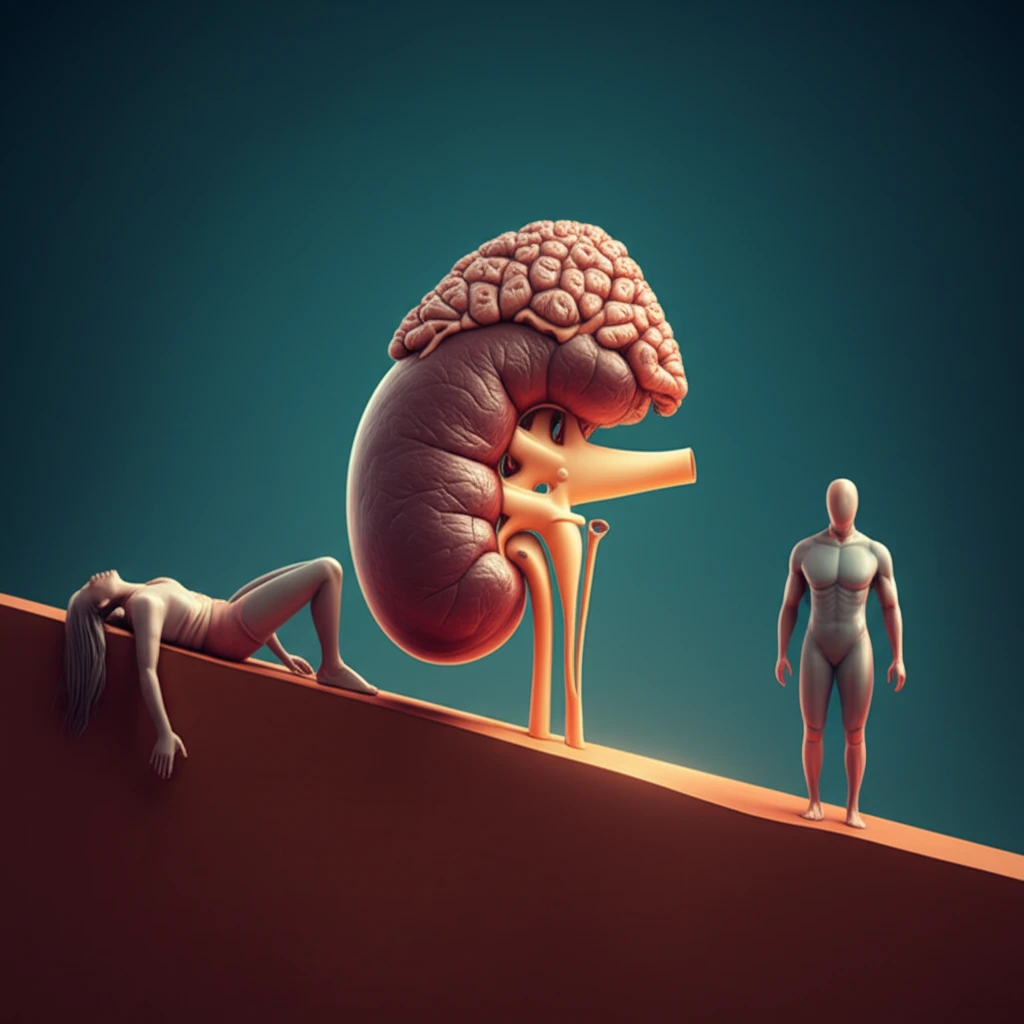
Surreal illustration of hormonal imbalance in adrenal gland leading to fainting

When Fainting Spells More: The Hidden Danger of Pheochromocytoma

"Unraveling the mystery of rare tumors that mimic common conditions like orthostatic hypotension, and why timely diagnosis is crucial for your health."


Fainting, or syncope, is often dismissed as a minor inconvenience caused by a sudden drop in blood pressure. However, recurrent fainting spells, especially when accompanied by other unusual symptoms, can sometimes indicate a more serious underlying condition. One such condition is pheochromocytoma, a rare tumor that can wreak havoc on your body's hormonal balance.

Pheochromocytomas are tumors that develop in the adrenal glands, which are responsible for producing essential hormones like adrenaline and noradrenaline. These hormones help regulate heart rate, blood pressure, and metabolism. When a pheochromocytoma forms, it can lead to the overproduction of these hormones, causing a wide range of symptoms that often mimic other common conditions.

A recent case study published in the journal Endocrinology and Metabolism sheds light on an unusual presentation of pheochromocytoma. The study details the case of a 72-year-old woman who presented with recurrent syncope (fainting) due to orthostatic hypotension (low blood pressure upon standing). What made this case unique was that syncope is a relatively rare symptom of pheochromocytoma, which typically manifests with high blood pressure.

Decoding Pheochromocytoma: More Than Just High Blood Pressure

Surreal illustration of hormonal imbalance in adrenal gland leading to fainting

Pheochromocytomas are tumors arising from chromaffin cells, typically found in the adrenal glands. These cells are responsible for producing catecholamines like adrenaline (epinephrine) and noradrenaline (norepinephrine), hormones vital for regulating heart rate, blood pressure, and the body's response to stress. When a pheochromocytoma develops, it can lead to an overproduction of these hormones, resulting in a variety of symptoms.

While high blood pressure is the most common symptom, not all patients experience it. In some cases, the tumor can cause a paradoxical drop in blood pressure, leading to symptoms like dizziness, lightheadedness, and fainting, especially upon standing – a condition known as orthostatic hypotension. This is what makes the diagnosis tricky, as it can easily be mistaken for other, more common causes of syncope.

  • Hypertension: Sustained or episodic high blood pressure is the most common sign.
  • Headaches: Often severe and can be accompanied by other symptoms.
  • Sweating: Excessive perspiration, often unrelated to physical activity or ambient temperature.
  • Palpitations: A rapid, pounding, or irregular heartbeat.
  • Anxiety and Panic Attacks: Feelings of intense fear or unease.
  • Pallor: Pale skin due to blood vessel constriction.
  • Orthostatic Hypotension: Dizziness or fainting upon standing.
In the case study, the 72-year-old woman initially presented with dizziness and fainting spells. Her blood pressure fluctuated dramatically, ranging from dangerously low to alarmingly high. Initial tests, including a brain MRI, were unremarkable. However, further investigation revealed a mass in her left adrenal gland, which was later confirmed to be a pheochromocytoma. This case highlights the importance of considering pheochromocytoma in patients with unexplained syncope, even in the absence of typical hypertension.

The Takeaway: Listen to Your Body and Advocate for Your Health

Pheochromocytoma is a rare but potentially life-threatening condition that can manifest in unusual ways. If you experience recurrent fainting spells, especially with other symptoms like headaches, sweating, or palpitations, it's essential to consult with your doctor and discuss the possibility of pheochromocytoma. Early diagnosis and treatment can significantly improve outcomes and prevent serious complications.

About this Article -

This article was crafted using a human-AI hybrid and collaborative approach. AI assisted our team with initial drafting, research insights, identifying key questions, and image generation. Our human editors guided topic selection, defined the angle, structured the content, ensured factual accuracy and relevance, refined the tone, and conducted thorough editing to deliver helpful, high-quality information.See our About page for more information.

This article is based on research published under:

DOI-LINK: 10.3803/enm.2011.26.2.155, Alternate LINK

Title: A Case Of Pheochromocytoma Presenting As Syncope Due To Orthostatic Hypotension

Subject: Endocrinology

Journal: Endocrinology and Metabolism

Publisher: Korean Endocrine Society

Authors: Ji Yeun Kim, Sung Woo Kim, Seung Jun Lee, Hyun Sook Kim, Eui Dal Jung, Yun Seop Kum

Published: 2011-01-01

Everything You Need To Know

1

What is pheochromocytoma and why is it important to recognize?

Pheochromocytoma is a rare tumor that develops in the adrenal glands. These glands produce essential hormones like adrenaline and noradrenaline, which regulate heart rate, blood pressure, and metabolism. Recognizing pheochromocytoma is crucial because when it forms, it can lead to the overproduction of these hormones, causing symptoms that mimic other common conditions. Early diagnosis and treatment can significantly improve outcomes and prevent serious complications related to hormonal imbalances and cardiovascular issues. Without prompt diagnosis, the continued overproduction of catecholamines can lead to organ damage and increased risk of cardiovascular events.

2

How can pheochromocytoma cause fainting, and why might this be misleading?

Pheochromocytoma can cause fainting, or syncope, due to the unpredictable release of catecholamines like adrenaline (epinephrine) and noradrenaline (norepinephrine). While it often manifests as high blood pressure, in some instances, it can cause a paradoxical drop in blood pressure, leading to orthostatic hypotension (low blood pressure upon standing). This is misleading because syncope is more commonly associated with other conditions, and the absence of hypertension can delay the consideration of pheochromocytoma as a possible cause. The fluctuating blood pressure, rather than consistently high levels, makes diagnosis challenging and can lead to misdiagnosis.

3

Besides fainting and high blood pressure, what are some other symptoms that might suggest the presence of a pheochromocytoma?

Besides fainting (syncope) and high blood pressure (hypertension), other symptoms that might suggest pheochromocytoma include severe headaches, excessive sweating (often unrelated to physical activity or ambient temperature), palpitations (a rapid, pounding, or irregular heartbeat), anxiety and panic attacks, and pallor (pale skin due to blood vessel constriction). It's important to note that not all patients will experience all of these symptoms, and the presentation can vary. Recognizing a cluster of these symptoms, especially when fainting is involved, should prompt further investigation for potential pheochromocytoma.

4

What are catecholamines, and what role do they play in the context of pheochromocytoma?

Catecholamines, such as adrenaline (epinephrine) and noradrenaline (norepinephrine), are hormones produced by the chromaffin cells in the adrenal glands. These hormones are vital for regulating heart rate, blood pressure, and the body's response to stress. In the context of pheochromocytoma, the tumor causes an overproduction of these catecholamines. This overproduction leads to a variety of symptoms, including hypertension, headaches, sweating, and palpitations. The excessive release of catecholamines can also cause the paradoxical drop in blood pressure that leads to fainting. Understanding the role of catecholamines is crucial for recognizing and managing the effects of pheochromocytoma on the body.

5

Why is early diagnosis of pheochromocytoma critical, even when symptoms are atypical such as in cases presenting primarily with orthostatic hypotension?

Early diagnosis of pheochromocytoma is critical because the condition, if left untreated, can lead to severe cardiovascular complications, including stroke, heart attack, and even death. Even when symptoms are atypical, such as in cases presenting primarily with orthostatic hypotension rather than hypertension, timely diagnosis is crucial. The continued, unregulated release of catecholamines can damage organs and increase the risk of life-threatening events. Early detection allows for timely intervention, such as surgical removal of the tumor or medical management of hormone levels, which can significantly improve patient outcomes and prevent serious long-term health consequences. Moreover, genetic testing may be warranted as some cases of pheochromocytoma are linked to hereditary conditions, impacting family members.

Newsletter Subscribe

Subscribe to get the latest articles and insights directly in your inbox.