
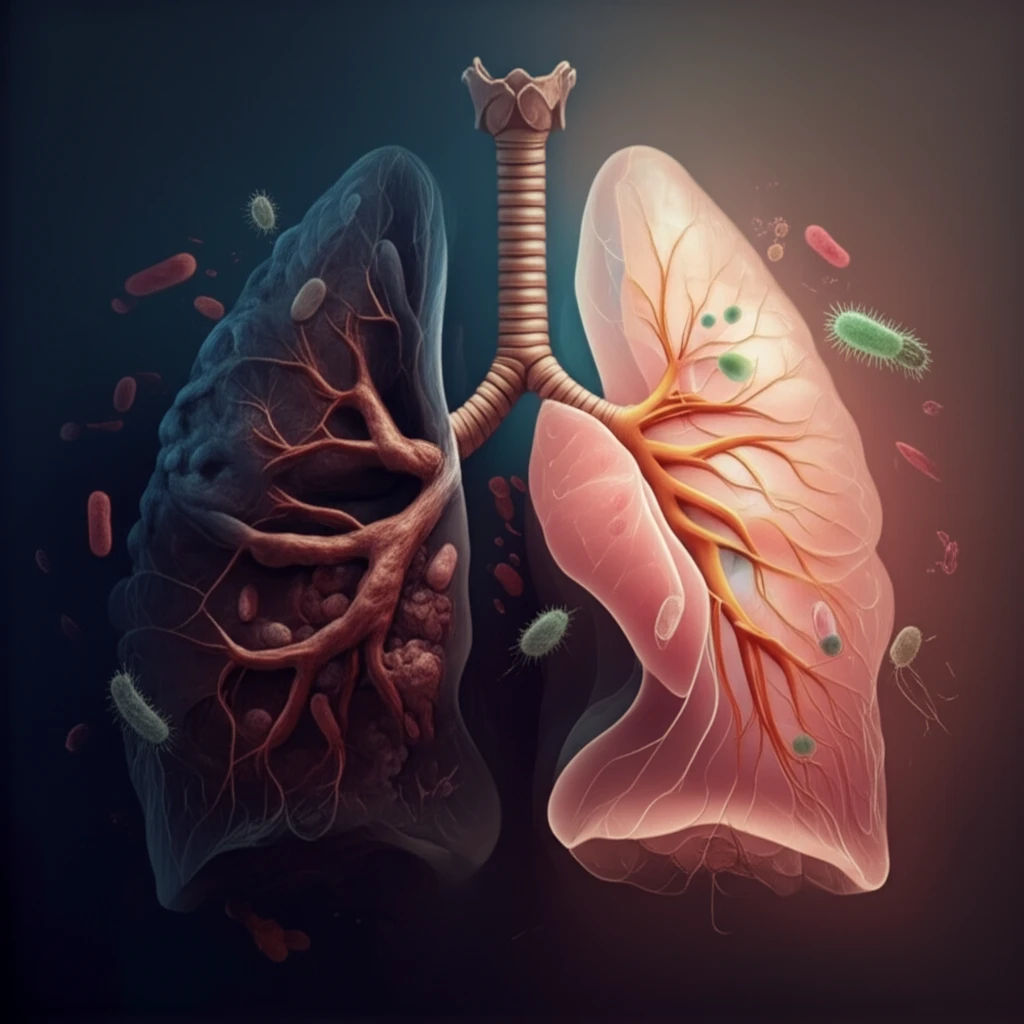
Illustration of a lung transforming from cancerous to healthy, symbolizing spontaneous regression.

When Cancer Disappears: The Mystery of Spontaneous Regression

"Could a bacterial infection hold the key to unlocking new cancer treatments?"


Imagine battling a serious illness, only for it to vanish without a trace. That's the reality of spontaneous regression (SR), a rare and intriguing phenomenon where cancer disappears without medical intervention. While SR is uncommon, especially in aggressive cancers like small cell lung carcinoma (SCLC), understanding its mechanisms could revolutionize cancer treatment.

SCLC is a particularly aggressive form of lung cancer, often diagnosed at advanced stages. Traditional treatments involve chemotherapy, radiation, and surgery. However, in extremely rare cases, something unexpected happens: the cancer simply goes away on its own. This is spontaneous regression, and scientists are keen to understand why it occurs.

Researchers are actively investigating potential explanations for SR in SCLC, including immune system activation and changes in the tumor environment. This article will explore a fascinating case where SCLC regression occurred alongside a bacterial infection, offering a glimpse into the complex interplay between infection, immunity, and cancer.

A Fortuitous Encounter: Infection and Cancer Regression

Illustration of a lung transforming from cancerous to healthy, symbolizing spontaneous regression.

A 63-year-old woman with a significant smoking history underwent a routine screening CT scan, which revealed a small nodule in her right lung. Further investigation via PET/CT confirmed a 16mm nodule, leading to a biopsy. The biopsy confirmed a diagnosis of SCLC, stage Ia.

Interestingly, just weeks after the initial diagnosis, the patient underwent a surgical procedure (lobectomy) to remove the affected portion of her lung. Surprisingly, the surgical pathology revealed no evidence of malignancy. Instead, the tissue showed signs of necrotizing granulomatous inflammation, containing numerous acid-fast bacteria. This indicated a likely Mycobacterium tuberculosis infection. She was started on anti-tuberculosis therapy.

  • The Unexpected Twist: The patient's cancer diagnosis was overshadowed by a concurrent bacterial infection.
  • Spontaneous Regression: Post-surgery, no cancer cells were found, suggesting the SCLC had regressed on its own.
  • Immune System Activation: The bacterial infection may have triggered an immune response that inadvertently targeted the cancer cells.
This case highlights a potential link between infection and cancer regression, prompting further investigation into the role of the immune system.

Implications and Future Directions

This case study provides valuable insights into the phenomenon of spontaneous cancer regression and suggests a potential role for the immune system in combating SCLC. It highlights the complex interplay between infection, immunity, and cancer, paving the way for novel therapeutic approaches. Additional research is needed to fully understand the mechanisms driving spontaneous regression and to develop targeted therapies that harness the power of the immune system to fight cancer.

About this Article -

This article was crafted using a human-AI hybrid and collaborative approach. AI assisted our team with initial drafting, research insights, identifying key questions, and image generation. Our human editors guided topic selection, defined the angle, structured the content, ensured factual accuracy and relevance, refined the tone, and conducted thorough editing to deliver helpful, high-quality information.See our About page for more information.

Everything You Need To Know

1

What is spontaneous regression (SR) and why is it significant in the context of cancer treatment?

Spontaneous regression (SR) is a rare phenomenon where cancer disappears without medical intervention. It is significant because understanding its mechanisms could revolutionize cancer treatment. In cases like the 63-year-old woman with Small Cell Lung Carcinoma (SCLC), the disappearance of the tumor suggests a potential for the body to fight cancer on its own, prompting research into immune system activation and other factors that may contribute to cancer regression.

2

How did the bacterial infection relate to the disappearance of the lung tumor in the patient with SCLC?

In the case study, a 63-year-old woman diagnosed with Small Cell Lung Carcinoma (SCLC) experienced spontaneous regression. This means the lung tumor vanished on its own. The patient also had a Mycobacterium tuberculosis infection. The article suggests the bacterial infection may have triggered an immune response that inadvertently targeted the cancer cells, leading to the regression of the SCLC tumor. The tissue showed signs of necrotizing granulomatous inflammation, confirming the infection's presence.

3

What is Small Cell Lung Carcinoma (SCLC) and why is it relevant to the discussion of spontaneous regression?

Small Cell Lung Carcinoma (SCLC) is a particularly aggressive form of lung cancer, often diagnosed at advanced stages. Traditional treatments include chemotherapy, radiation, and surgery. SCLC is relevant to the discussion of spontaneous regression because it is uncommon for this aggressive cancer to disappear on its own. The case study of the 63-year-old woman with SCLC is an exception, showing the intriguing potential of SR even in aggressive cancers.

4

What role did the immune system potentially play in the spontaneous regression of the SCLC?

The article suggests that the immune system played a crucial role in the spontaneous regression of the Small Cell Lung Carcinoma (SCLC). The bacterial infection, Mycobacterium tuberculosis, may have triggered an immune response. This immune response inadvertently targeted and eliminated the cancer cells. This immune system activation highlights a potential link between infection, immunity, and cancer regression, opening new avenues for therapeutic approaches.

5

What are the implications of this case study, and what are the future directions for research in this area?

This case study provides valuable insights into spontaneous cancer regression and suggests a potential role for the immune system in combating Small Cell Lung Carcinoma (SCLC). It highlights the complex interplay between infection, immunity, and cancer, paving the way for novel therapeutic approaches. Future research should focus on fully understanding the mechanisms driving spontaneous regression and developing targeted therapies that harness the power of the immune system to fight cancer, potentially improving cancer treatment strategies.

Newsletter Subscribe

Subscribe to get the latest articles and insights directly in your inbox.