
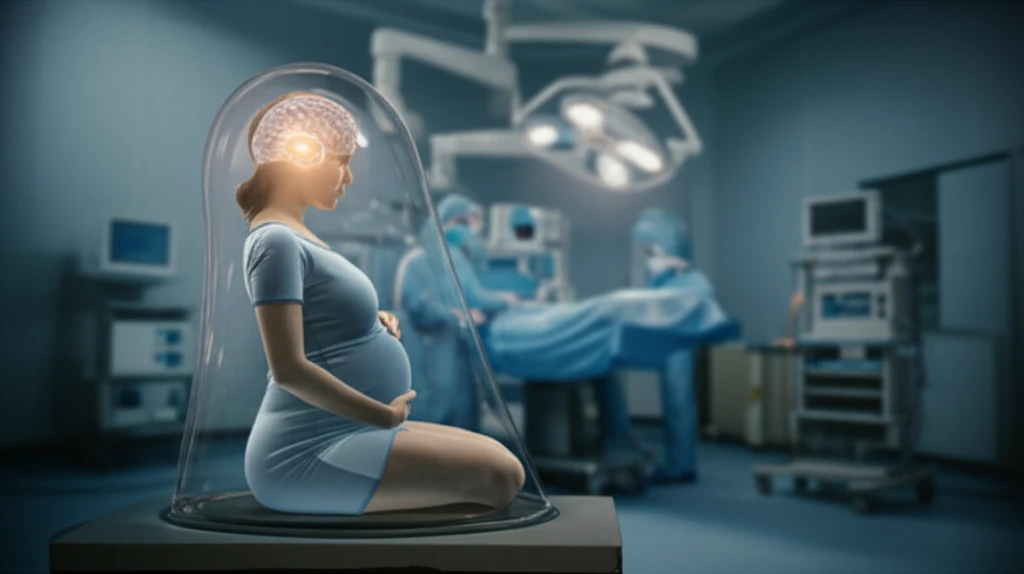
When Brain Tumors Meet Motherhood: Navigating Cesarean Sections Safely

"A Case Study on Balancing Obstetric and Neurological Risks"
The intersection of pregnancy and pre-existing health conditions presents unique challenges for both patients and healthcare providers. Intracranial neoplasms, or brain tumors, are relatively rare but can significantly complicate pregnancy. Studies suggest an incidence of approximately 21.42 cases per 100,000 people, highlighting the need for specialized care when these conditions overlap with obstetric needs.
Cesarean sections performed under neuraxial anesthesia, such as spinal or epidural blocks, are common in North America due to the benefits of reduced aspiration risk and easier airway management compared to general anesthesia. However, intracranial pathology traditionally poses a contraindication to neuraxial techniques. Concerns arise from the potential for increased intracranial pressure (ICP), reduced cerebrospinal fluid (CSF) flow, and the risk of herniation or neurological deterioration.
This article addresses a challenging case where a patient with a known frontal glioma required a cesarean section. We delve into the decision-making process, focusing on the careful consideration and application of neuraxial anesthesia in light of potential risks. The goal is to provide insights into safely managing such complex cases, balancing the well-being of both mother and child. Consent for publication was obtained from the patient.
The Case: Balancing Risks and Benefits
A 32-year-old woman (G3P2) at 35 weeks gestation was admitted to the hospital due to decreased fetal movement, a non-reassuring fetal heart rate, and an asthma exacerbation. Her medical history included asthma requiring home nebulizers, morbid obesity (BMI of 53), a known frontal glioma, a seizure disorder, and migraines. She had been hospitalized for asthma exacerbations twice in the previous month, with one instance complicated by pneumonia and sepsis requiring ICU admission.
- Comprehensive Assessment: Careful review of the patient’s neurological history, including previous imaging and symptoms.
- Multidisciplinary Consultation: Collaboration with neurosurgery and obstetrics teams to assess the risks and benefits of different anesthetic approaches.
- Anesthetic Planning: Consideration of both general and neuraxial anesthesia options, with a focus on minimizing potential complications.
Conclusion: Personalized Care is Key
Managing a cesarean section in a patient with a known intracranial neoplasm requires a comprehensive and individualized approach. While intracranial pathology has traditionally been considered a contraindication to neuraxial techniques, careful patient selection, thorough assessment, and close collaboration among medical teams can facilitate safe outcomes. This case highlights the importance of balancing the benefits and risks of different anesthetic options to ensure the best possible care for both mother and child.