
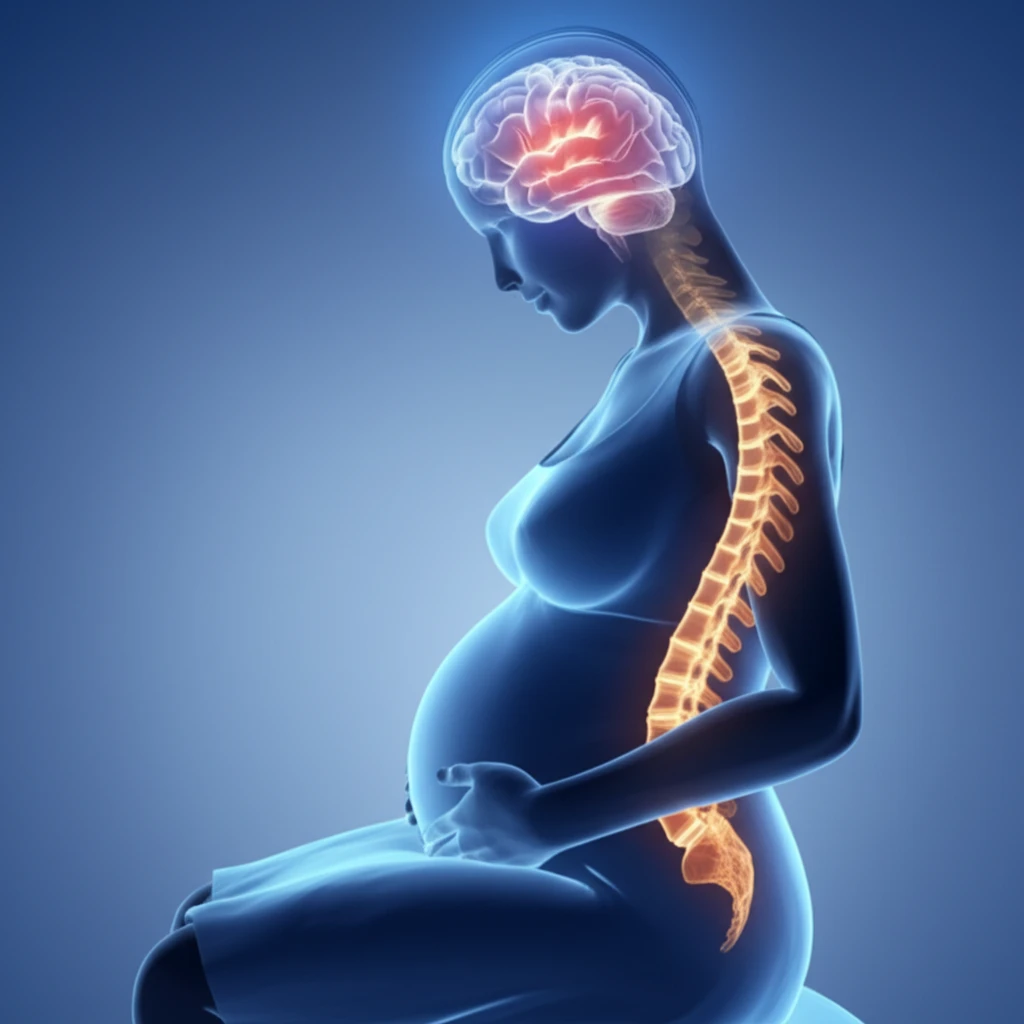
Surreal illustration of pregnancy and brain health.

When Brain Tumors and Pregnancy Collide: Navigating Cesarean Sections Safely

"A case study highlights the careful use of combined spinal-epidural anesthesia in a pregnant woman with a frontal glioma, challenging traditional contraindications and emphasizing personalized care."


The intersection of pregnancy and brain tumors presents a unique challenge in obstetric anesthesia. While intracranial neoplasms are relatively rare, affecting approximately 21.42 individuals per 100,000, their presence can significantly complicate the management of labor and delivery. Gliomas, the most common type of brain tumor, account for a substantial portion of these cases, raising concerns about potential neurological risks during childbirth.

Cesarean sections performed under neuraxial anesthesia (spinal or epidural) are a standard practice in North America, primarily due to the increased risk of difficult airways and aspiration associated with pregnancy. However, intracranial pathology has traditionally been considered a contraindication for neuraxial techniques. The concern stems from the potential for increased intracranial pressure (ICP), inadequate cerebrospinal fluid (CSF) flow, and the risk of herniation or neurological deterioration.

This article presents a compelling case of a pregnant patient with a known frontal glioma who underwent a cesarean section using a combined spinal-epidural anesthetic. This approach challenges the conventional wisdom surrounding neuraxial anesthesia in the presence of intracranial masses and highlights the importance of individualized assessment and collaborative decision-making.

The Case: Balancing Risks and Benefits

Surreal illustration of pregnancy and brain health.

A 32-year-old woman (G3P2) at 35 weeks' gestation was admitted to the hospital due to decreased fetal movement, a non-reassuring fetal heart rate, and an asthma exacerbation. Her medical history was significant for several factors:

Pre-existing conditions of patient:

  • Asthma requiring home nebulizers.
  • Obesity with a body mass index of 53.
  • Known frontal glioma.
  • Seizure disorder.
  • Migraines.
The patient had been previously hospitalized for asthma exacerbation, which was complicated by pneumonia and sepsis requiring ICU admission. During that time, she reported cramping and decreased fetal movements, which were difficult to assess due to the severity of her condition. Her treatment included nebulized medications and intravenous antibiotics. The patient's history also revealed a prior labor epidural in 2009, before her glioma diagnosis. She experienced hypotension following local anesthetic administration, potentially due to inadvertent dural puncture, resulting in a motor block. A postdural puncture headache followed, but she reported no lasting neurological issues. Her glioma diagnosis was confirmed through imaging and biopsy after a new-onset seizure several months later. Neurological examination showed a Glasgow Coma Scale of 15. Airway examination showed normal distance and mouth opening. Chest auscultation revealed normal yet decreased breath sounds, improved from the rhonchi appreciated at consultation. Blood work showed a haemoglobin of 93, platelet count of 242, international normalised ratio of 1.0, and partial thromboplastin time of 31. Urine was negative for proteinuria. Neurosurgery was consulted, who felt it would be safe to proceed with neuraxial technique given the stability in the patient's lesion, absence of raised ICP and absence of tumour vascularity.

Challenging Dogma, Embracing Collaboration

This case challenges the traditional contraindication of neuraxial techniques in patients with intracranial masses. It underscores the importance of careful patient selection, thorough evaluation, and collaborative decision-making between anesthesia, neurosurgery, and obstetrics. By carefully weighing the risks and benefits of different anesthetic approaches, and by prioritizing patient safety and individualized care, successful outcomes can be achieved even in complex obstetric scenarios.

About this Article -

This article was crafted using a human-AI hybrid and collaborative approach. AI assisted our team with initial drafting, research insights, identifying key questions, and image generation. Our human editors guided topic selection, defined the angle, structured the content, ensured factual accuracy and relevance, refined the tone, and conducted thorough editing to deliver helpful, high-quality information.See our About page for more information.

Everything You Need To Know

1

What is the primary challenge in managing cesarean sections for pregnant women with brain tumors?

The main challenge is balancing the need for safe anesthesia during cesarean sections with the potential risks associated with intracranial pathology. Traditional practices often consider intracranial masses, like the patient's frontal glioma, a contraindication for neuraxial anesthesia (spinal or epidural) due to the risk of increased intracranial pressure (ICP), inadequate cerebrospinal fluid (CSF) flow, and potential neurological complications. The case study highlights how these risks are carefully considered and managed to ensure patient safety during the procedure.

2

What is the significance of using combined spinal-epidural anesthesia in the described case involving a patient with a frontal glioma?

The use of a combined spinal-epidural anesthetic in a patient with a frontal glioma is significant because it challenges the traditional contraindication of neuraxial techniques in such cases. The case underscores that with thorough evaluation, careful patient selection, and collaborative decision-making between anesthesia, neurosurgery, and obstetrics, it's possible to safely use these techniques. This approach allows for the benefits of neuraxial anesthesia, such as avoiding the risks of general anesthesia like difficult airways and aspiration, while minimizing potential risks to the patient with the frontal glioma.

3

What specific medical conditions and factors did the 32-year-old patient present with, and how did they influence the anesthetic approach?

The 32-year-old patient had a complex medical history, including asthma requiring home nebulizers, obesity (BMI of 53), a known frontal glioma, a seizure disorder, and migraines. These factors, especially the frontal glioma and history of asthma exacerbations, influenced the anesthetic approach. The presence of the frontal glioma raised concerns about using neuraxial anesthesia, which is generally avoided. However, neurosurgery consultation and assessment of the glioma's stability and absence of raised ICP allowed the medical team to consider a combined spinal-epidural approach. Her asthma exacerbation history also played a role in the decision-making process. This approach aimed at minimizing the risks associated with both her neurological condition and her respiratory history, thus offering the safest option for her and the baby during the cesarean section.

4

How does this case study challenge conventional medical practices regarding anesthesia for pregnant women with brain tumors, and what does it emphasize?

This case study challenges the traditional practice of automatically contraindicating neuraxial techniques for cesarean sections in patients with intracranial masses. The study emphasizes the importance of individual patient assessment, careful planning, and collaboration among different medical specialists (anesthesia, neurosurgery, and obstetrics). Instead of a one-size-fits-all approach, this case advocates for weighing the risks and benefits of all anesthetic options, and tailoring the approach to the specific patient’s condition. By prioritizing individualized care and comprehensive evaluation, successful outcomes can be achieved even in complex obstetric scenarios, improving safety for both mother and child.

5

What are the key considerations when deciding on an anesthetic approach for a pregnant patient with a frontal glioma, and what factors influenced the final decision in this instance?

The key considerations involve a thorough evaluation of the patient's neurological status, including the stability of the frontal glioma, the presence or absence of increased intracranial pressure (ICP), and the risk of herniation. The medical team also needs to assess the patient's overall health, including respiratory and other medical conditions such as seizure disorders or migraines. In this case, several factors influenced the final decision. These included the stability of the patient's frontal glioma, as confirmed by imaging and biopsy; the absence of raised ICP, and the absence of tumor vascularity. The consultation with neurosurgery, which deemed neuraxial techniques safe given the patient's condition, also played a vital role. These collective assessments and the collaboration between different specialists led to the choice of a combined spinal-epidural approach as the safest option, balancing risks and benefits for both mother and baby during the cesarean section.

Newsletter Subscribe

Subscribe to get the latest articles and insights directly in your inbox.