
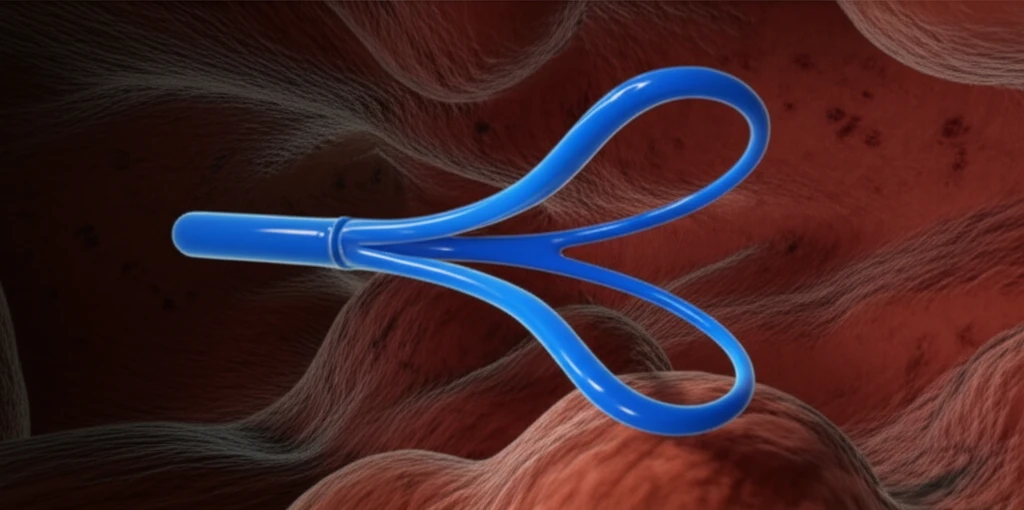
Digital illustration of a biliary stent having migrated within the digestive system.

When a Biliary Stent Goes Rogue: Understanding and Preventing Migration Complications

"A rare but serious case highlights the risks of biliary stent migration and the importance of vigilant post-procedure monitoring."


Biliary stents are essential tools in modern medicine, designed to widen bile ducts narrowed by malignant or benign conditions. These small tubes, typically placed endoscopically, help ensure proper bile flow and alleviate obstructive symptoms. While biliary stent placement is a routine procedure, it's not without risks. Complications can range from mild to severe, impacting patient health and requiring further intervention.

One of the more unusual but serious complications is stent migration, where the device moves from its intended location. In rare instances, this migration can lead to intestinal perforation, a life-threatening condition requiring immediate surgical attention. Understanding the risk factors, preventative measures, and recognition of atypical symptoms are crucial for healthcare providers and patients alike.

This article delves into a case study highlighting sigmoid diverticulum perforation secondary to biliary stent migration. We'll explore the background, potential causes, and preventive strategies associated with this complication, aiming to equip you with the knowledge necessary to navigate biliary stent procedures safely.

What Happens When a Stent Strays? Understanding the Risks of Biliary Stent Migration

Digital illustration of a biliary stent having migrated within the digestive system.

Biliary stent placement, while generally safe, carries a complication rate of 5-10%. The most common issues include cholangitis (bile duct inflammation) and stent obstruction. However, rarer and more severe complications can occur, such as pancreatitis, gastrointestinal bleeding, intestinal perforation, and, notably, biliary stent migration.

Stent migration can occur in two directions: proximally (towards the liver) or distally (towards the intestines). Distal migration is more frequent, with the stent typically passing through the intestinal tract and being excreted in the stool. However, if the stent becomes lodged or perforates the intestinal wall, significant complications can arise.

  • Proximal Migration: Stent moves towards the liver, potentially causing obstruction or damage to the bile ducts.
  • Distal Migration: Stent moves through the intestines and is usually excreted. Complications arise if the stent becomes lodged or perforates the intestinal wall.
Several factors can contribute to stent migration, including the type of stent used (plastic vs. metal), the presence of strictures (narrowing) in the bile duct, and individual patient anatomy. Patients with prior abdominal surgeries, hernias, or diverticulosis may be at higher risk. Recognizing these risk factors is the first step in preventing migration-related complications.

Preventing Biliary Stent Migration: A Proactive Approach to Patient Safety

Biliary stent migration, although rare, can lead to significant complications. By understanding the risk factors, implementing preventative strategies, and maintaining vigilant post-procedure monitoring, healthcare providers can minimize the likelihood of such events. Patients, too, play a crucial role in recognizing atypical symptoms and seeking prompt medical attention. Together, we can ensure safer and more effective biliary stent procedures, improving patient outcomes and quality of life.

About this Article -

This article was crafted using a human-AI hybrid and collaborative approach. AI assisted our team with initial drafting, research insights, identifying key questions, and image generation. Our human editors guided topic selection, defined the angle, structured the content, ensured factual accuracy and relevance, refined the tone, and conducted thorough editing to deliver helpful, high-quality information.See our About page for more information.

This article is based on research published under:

DOI-LINK: 10.4067/s0718-40262013000400011, Alternate LINK

Title: Perforación Diverticular Sigmoidea Secundaria A La Migración De Endoprótesis Biliar Plástica

Subject: Surgery

Journal: Revista chilena de cirugía

Publisher: SciELO Agencia Nacional de Investigacion y Desarrollo (ANID)

Authors: Beatriz De Andrés A, Francisca Moreno R, Patricia Legido M, José Rabadán J, Juan Beltrán De Heredia R

Published: 2013-08-01

Everything You Need To Know

1

What is a biliary stent and why is it used?

A **biliary stent** is a small tube inserted into the bile ducts to widen them. These stents are crucial for addressing conditions that cause bile duct narrowing, whether these conditions are **malignant or benign**. By ensuring proper bile flow, biliary stents alleviate obstructive symptoms and improve patient well-being. The placement is typically done endoscopically.

2

What are the potential complications associated with biliary stent placement?

While biliary stent placement is generally safe, several complications can occur. The most common include **cholangitis** (bile duct inflammation) and stent obstruction. More severe, but less frequent, complications comprise **pancreatitis**, **gastrointestinal bleeding**, **intestinal perforation**, and **biliary stent migration**. The complication rate is estimated to be 5-10% of the cases.

3

What are the different types of biliary stent migration, and what are their implications?

Biliary stent migration can occur in two directions: proximally or distally. **Proximal migration** happens when the stent moves towards the liver and potentially causes bile duct obstruction or damage. **Distal migration** involves the stent moving through the intestines. Usually, the stent is then excreted through the stool. However, if the stent becomes lodged or, more seriously, perforates the intestinal wall, severe complications such as **sigmoid diverticulum perforation** can arise, requiring immediate surgical intervention.

4

What factors increase the risk of biliary stent migration?

Several factors can elevate the risk of biliary stent migration. The type of stent used (plastic vs. metal), the presence of strictures (narrowing) in the bile duct, and individual patient anatomy all play a role. Patients with prior abdominal surgeries, hernias, or diverticulosis may also be at higher risk. Recognizing these risk factors is the first step in preventing migration-related complications. The article also emphasizes the importance of vigilant post-procedure monitoring.

5

How can biliary stent migration be prevented, and what role do patients play?

Preventing biliary stent migration involves a proactive approach from healthcare providers and patients. Healthcare providers can minimize risks by understanding the risk factors and implementing preventative strategies. These include selecting appropriate stent types and meticulously monitoring patients post-procedure. Patients play a crucial role by recognizing any atypical symptoms and promptly seeking medical attention. Together, these measures can enhance the safety and effectiveness of biliary stent procedures, improving patient outcomes.

Newsletter Subscribe

Subscribe to get the latest articles and insights directly in your inbox.