
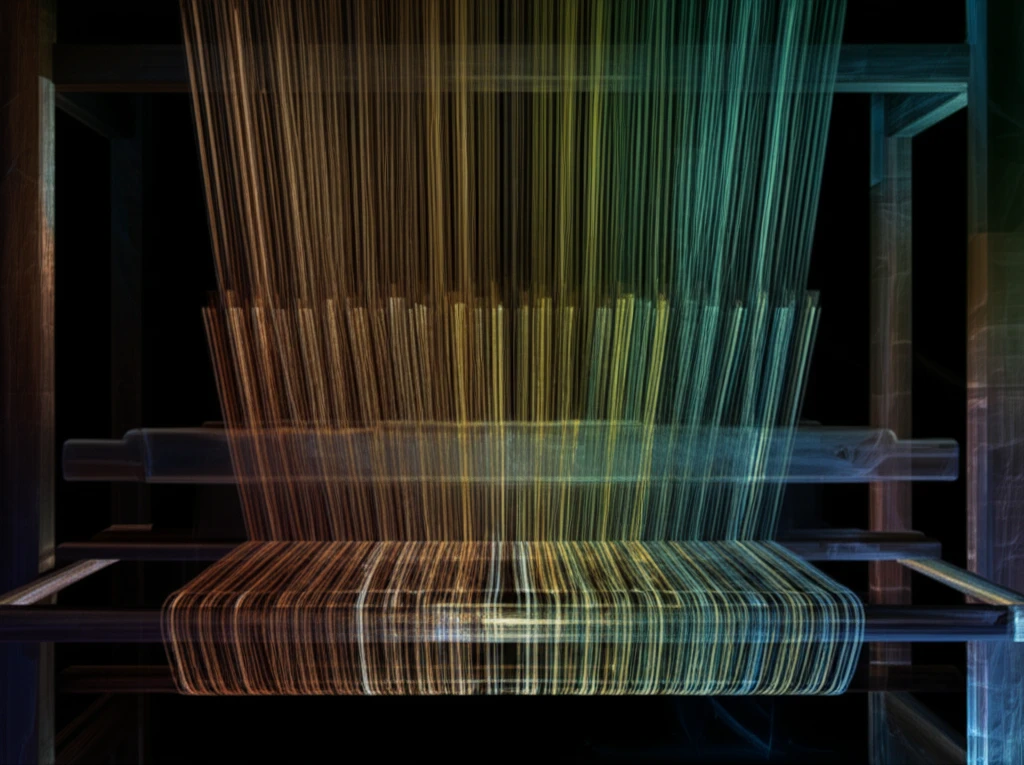
Weaving Wonders: The Secret to Stronger Jacquard Fabrics

"Unlock optimal warp tension and boost your fabric's resilience – a comprehensive guide for textile enthusiasts."
The textile industry is constantly evolving, with innovations transforming how we create fabrics. Among the key factors influencing fabric quality, warp tension stands out as a critical element. This tension—the pull applied to the lengthwise yarns during weaving—impacts not only the efficiency of the weaving process but also the final properties of the fabric itself.
Finding the 'sweet spot' for warp tension is an ongoing challenge. Too little tension can lead to yarn breakage and loom stoppages, while excessive tension can compromise the fabric's strength and appearance. Achieving the right balance is especially crucial for complex weaves like Jacquard, which are known for their intricate patterns and demanding production requirements.
This article delves into the science of warp tension, exploring how different fabric variables interact to influence the ideal tension setting. Drawing from experimental studies on Chenille fabric, a popular choice for its complex weave and practical applications, we'll uncover the relationships between warp tension, weft density, yarn count, and weave structure. The goal? To equip you with the knowledge to optimize your weaving process, enhance fabric quality, and minimize production headaches.
Decoding Warp Tension: What Influences Fabric Strength?
Warp tension isn't a one-size-fits-all setting. It's a dynamic value influenced by a range of fabric characteristics. Research highlights the following key relationships:
- Weft Density vs. Warp Tension: The relationship here is inverse. As you pack more weft yarns per inch (increasing weft density), the required warp tension decreases. Think of it like this: a tighter weft structure provides more support, reducing the need for extreme tension on the warp yarns.
- Weft Count & Weave Float vs. Warp Tension: This is a direct relationship. Higher weft counts (thicker weft yarns) and longer weave floats (longer sections where a yarn skips over others) both demand higher warp tension. These factors increase the stress on the warp yarns during weaving.
- Weft Type: Interestingly, the type of weft yarn used (e.g., different fibers or textures) doesn't have a significant impact on warp tension.
Weaving a Stronger Future: Practical Takeaways
Understanding and controlling warp tension is a cornerstone of efficient and high-quality textile production. By recognizing the relationships between warp tension and key fabric variables, textile manufacturers can fine-tune their processes for optimal results. This translates to fewer yarn breaks, reduced loom stoppages, and enhanced fabric performance.
The equations presented in the research offer a valuable starting point for determining the ideal warp tension for a given Jacquard fabric. However, it's important to remember that these are estimations. Real-world conditions can vary, so it's always best to conduct your own testing and adjustments to dial in the perfect tension for your specific loom and materials.
Ultimately, mastering warp tension is about more than just avoiding problems; it's about unlocking the full potential of your fabrics. By carefully balancing tension with other fabric parameters, you can create textiles that are not only visually stunning but also strong, durable, and perfectly suited for their intended applications.