
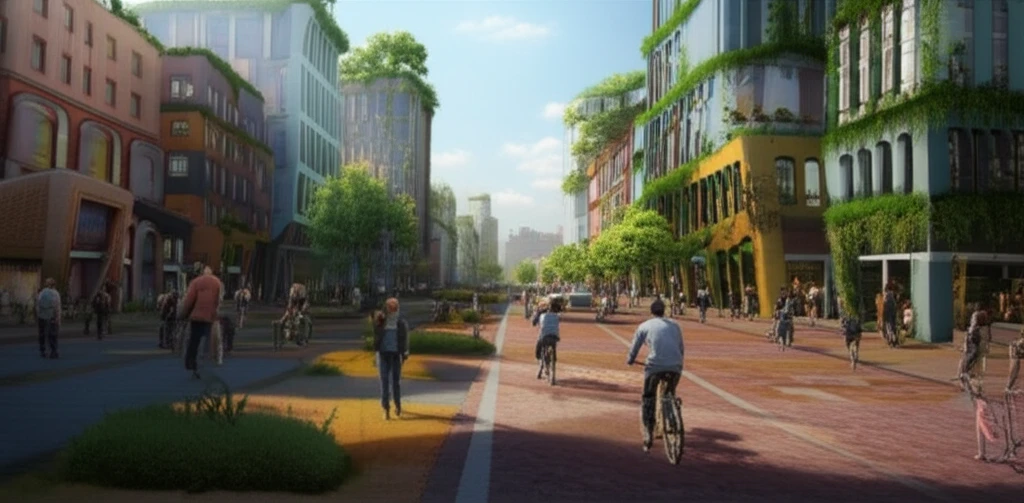
Walk This Way (and Cycle, Too!): How Your Neighborhood Shapes Your Active Transport Habits

"Uncover the hidden connections between your environment and your choice to walk or bike. It is time to turn your city into a fitness paradise."
In an era where health and environmental consciousness are on the rise, active transport (AT)—walking and cycling for travel—is gaining traction as a cornerstone of sustainable and healthy lifestyles. Replacing car trips with AT not only boosts personal well-being but also contributes to cleaner air, reduced traffic, and more vibrant communities. Yet, the prevalence of AT varies dramatically across the globe, highlighting the need to understand and optimize the factors that encourage it.
While the benefits of AT are clear, the question remains: what makes a neighborhood AT-friendly? The answer lies in a complex interplay of environmental attributes that either invite or inhibit walking and cycling. A 2016 study published in Environmental Health Perspectives sought to unravel these connections, examining how perceived neighborhood characteristics influence AT habits in diverse urban settings across 12 countries.
By diving into the perceptions of over 13,000 adults across 17 cities, the study sheds light on the specific environmental factors that promote walking and cycling for transport. From residential density to street connectivity and safety, the findings offer valuable insights for policymakers, urban planners, and individuals alike, paving the way for healthier, more active communities worldwide.
Decoding the Walkability and Cyclability Equation
The IPEN (International Physical Activity and Environment Network) study explored how perceptions of neighborhood environments related to walking and cycling for transport. Researchers gathered self-reported data from adults living in diverse neighborhoods across 17 cities in 12 countries. Participants shared their perceptions of various environmental attributes, including:
- Residential density: How closely packed housing is in the area.
- Land use mix-access: The availability of shops, services, and amenities within walking distance.
- Street connectivity: How well connected the street network is, offering multiple routes.
- Pedestrian infrastructure: The presence and quality of sidewalks, crosswalks, and other pedestrian facilities.
- Aesthetics: The visual appeal of the neighborhood, including trees, landscaping, and attractive buildings.
- Safety: Perceptions of safety from traffic and crime.
- Distance to destinations: How easy it is to reach common destinations like shops, parks, and transit stops.
Turning Insights into Action: Building Healthier Communities
The IPEN study provides a clear roadmap for creating environments that encourage active transport. By prioritizing mixed land use, safe streets, and pedestrian-friendly infrastructure, communities can empower residents to embrace walking and cycling as integral parts of their daily lives. Understanding these nuances paves the way for targeted interventions and policies that truly make a difference, fostering healthier, more sustainable communities for all.