
Vitreomacular Traction: Is Diameter Really Enough?

"Experts challenge reliance on diameter alone, urging a more holistic approach to VMT assessment for better outcomes."
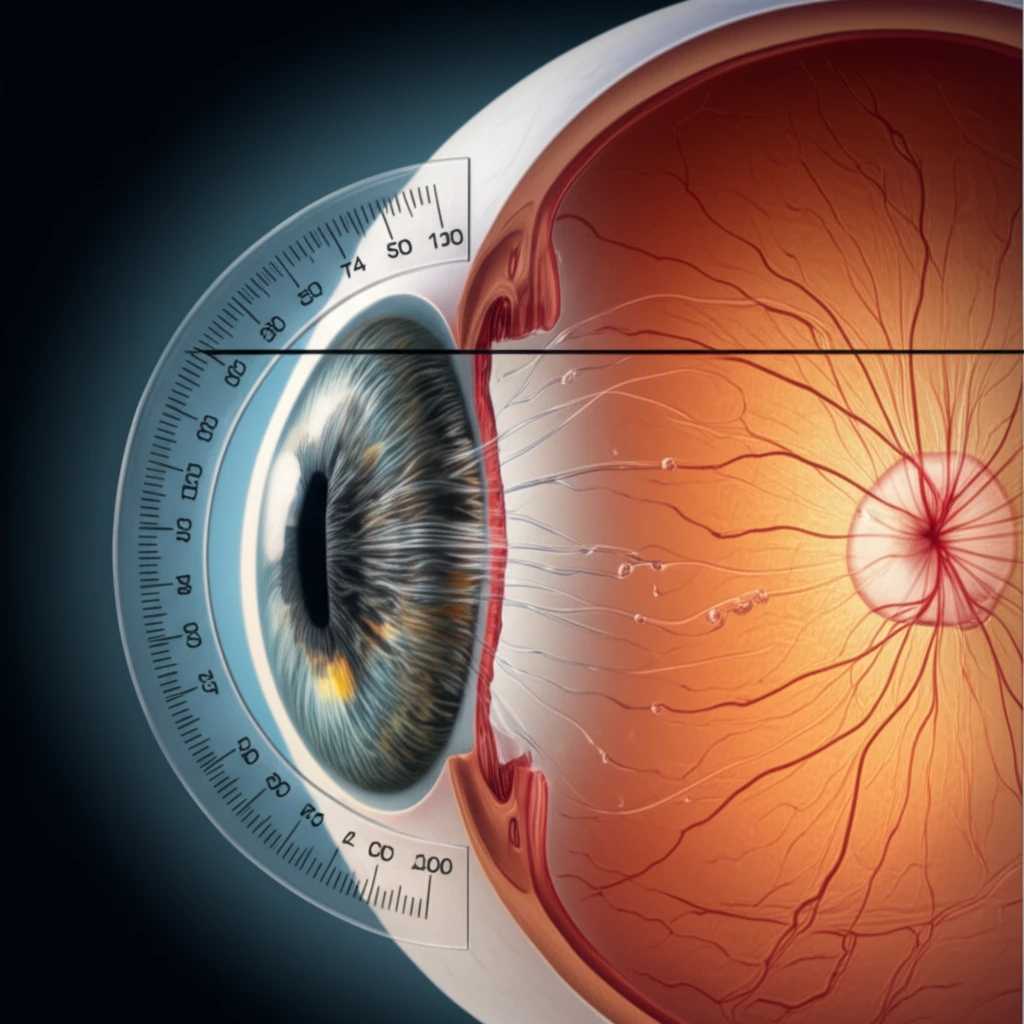
Vitreomacular Traction (VMT) is a condition where the vitreous humor, the gel-like substance that fills the eye, pulls abnormally on the retina. This can lead to distorted vision and, in severe cases, retinal detachment. Recent research has focused on refining the methods used to assess and manage VMT, with one study suggesting that measuring the area of traction might be more accurate than simply using the diameter of the traction site.
However, a new commentary raises important questions about this approach, arguing that focusing solely on the measured area of traction overlooks other critical factors, particularly the vitreous adhesion angle. This angle, representing the force exerted by the vitreous on the retina, may play a more significant role in predicting the spontaneous resolution of VMT.
This article explores the debate surrounding VMT assessment, shedding light on why a comprehensive approach that considers both the area of traction and the vitreous adhesion angle could lead to better diagnostic and treatment strategies.
The Diameter Debate: Is Bigger Always Better?
The initial study highlighted the limitations of using only the diameter of the traction site to assess VMT, pointing out that vitreous attachment sites often have irregular shapes that deviate significantly from a perfect circle. This irregularity can lead to inaccuracies when estimating the area of traction, potentially affecting decisions about patient management.
- Accuracy Concerns: Traditional diameter measurements may not accurately represent the complex shape of vitreous attachment sites.
- Force Dynamics: The vitreous adhesion angle provides insights into the forces at play between the vitreous and retina.
- Predictive Power: Changes in the VMA angle may better predict spontaneous VMT resolution.
Moving Forward: A Comprehensive Approach to VMT Assessment
The debate highlights the complexity of VMT assessment and the need for a comprehensive approach that considers multiple factors beyond just the diameter or area of traction. By incorporating the vitreous adhesion angle and other relevant parameters, clinicians can gain a more nuanced understanding of the condition and make more informed decisions about patient management, ultimately leading to better outcomes and improved visual health.