
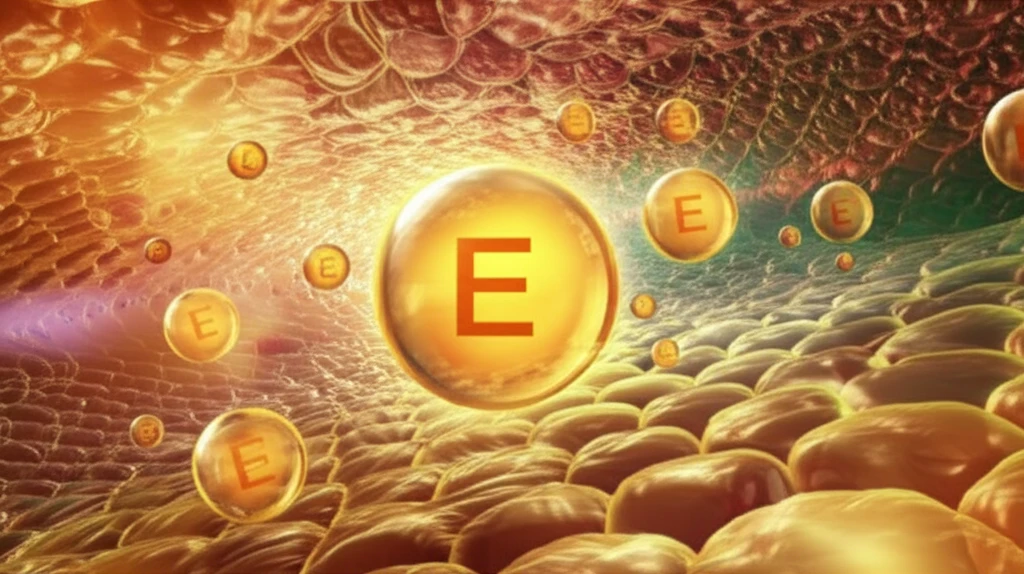
Illustration of a cell membrane with Vitamin E molecules, representing cellular protection and health.

Vitamin E and Your Health: What the Science Says About Boosting Your Well-being

"Discover how Vitamin E, a powerful antioxidant, plays a crucial role in your health, from protecting your cells to potentially influencing weight and metabolic health."


In the ever-evolving landscape of health and wellness, Vitamin E stands out as a nutrient with a fascinating story. Known primarily for its antioxidant properties, this fat-soluble vitamin has been a subject of extensive research, revealing its multifaceted roles in maintaining overall well-being. From protecting your cells from damage to potentially influencing your weight and metabolic health, Vitamin E's influence is far-reaching.

This article explores the complex relationship between Vitamin E and your health, drawing on the latest scientific findings. We'll unravel the science behind its antioxidant capabilities, delve into its potential impact on weight management and metabolic health, and explore how genetic factors may influence its effectiveness. Whether you're a health enthusiast, someone looking to improve your diet, or simply curious about the role of nutrients, this guide offers valuable insights.

As we navigate the complexities of modern health, understanding the role of essential nutrients like Vitamin E becomes increasingly crucial. Join us as we explore the world of Vitamin E, providing you with the knowledge to make informed decisions about your health and well-being.

The Antioxidant Powerhouse: How Vitamin E Protects Your Cells

Illustration of a cell membrane with Vitamin E molecules, representing cellular protection and health.

At its core, Vitamin E is a potent antioxidant, working tirelessly to protect your cells from damage caused by free radicals. These unstable molecules can wreak havoc on your body, contributing to aging and various health issues. Vitamin E neutralizes free radicals, preventing them from harming your cells and reducing oxidative stress.

The antioxidant properties of Vitamin E are particularly vital for your cell membranes. These membranes are composed of fats, making them vulnerable to free radical attacks. By residing within these membranes, Vitamin E acts as a shield, preventing damage and maintaining the integrity of your cells.

  • Cellular Protection: Vitamin E safeguards cell membranes from oxidative damage.
  • Reduced Oxidative Stress: By neutralizing free radicals, Vitamin E helps reduce overall oxidative stress in the body.
  • Potential Anti-Aging Effects: The protection against cellular damage may contribute to anti-aging effects.
Beyond its role as an antioxidant, Vitamin E plays a crucial role in various metabolic processes. It influences how your body handles fats and cholesterol, which can have a significant impact on your health. This connection is particularly relevant in conditions like obesity and metabolic syndrome, where these processes often go awry.

Embracing Vitamin E for a Healthier Tomorrow

Vitamin E is more than just a nutrient; it's a key player in the intricate symphony of your body's defenses. By understanding its antioxidant power and its role in metabolic health, you can make informed choices to support your well-being. Remember, a balanced diet rich in fruits, vegetables, and healthy fats, combined with a lifestyle that embraces physical activity and stress management, can work synergistically with Vitamin E to enhance your overall health. As the science of nutrition continues to evolve, the importance of Vitamin E in safeguarding our health remains steadfast.

About this Article -

This article was crafted using a human-AI hybrid and collaborative approach. AI assisted our team with initial drafting, research insights, identifying key questions, and image generation. Our human editors guided topic selection, defined the angle, structured the content, ensured factual accuracy and relevance, refined the tone, and conducted thorough editing to deliver helpful, high-quality information.See our About page for more information.

This article is based on research published under:

DOI-LINK: 10.3390/nu10121919, Alternate LINK

Title: Vitamin E Metabolic Effects And Genetic Variants: A Challenge For Precision Nutrition In Obesity And Associated Disturbances

Subject: Food Science

Journal: Nutrients

Publisher: MDPI AG

Authors: Sebastià Galmés, Francisca Serra, Andreu Palou

Published: 2018-12-04

Everything You Need To Know

1

What is the primary function of Vitamin E in the body, and how does it achieve this?

The primary function of Vitamin E is to act as a potent antioxidant. It achieves this by neutralizing free radicals, which are unstable molecules that can damage cells and contribute to aging and various health issues. By neutralizing these free radicals, Vitamin E helps protect cells from oxidative stress and maintains their integrity, particularly within cell membranes composed of fats.

2

How does Vitamin E protect cell membranes, and why is this protection important?

Vitamin E protects cell membranes by residing within them and acting as a shield against free radical attacks. Cell membranes are composed of fats, making them vulnerable to damage from these unstable molecules. By preventing this damage, Vitamin E maintains the integrity of cells, which is crucial for their proper functioning and overall health. Without this protection, cells can become damaged and contribute to various health problems.

3

Besides its antioxidant properties, what other roles does Vitamin E play in metabolic processes, and why are these roles significant?

Beyond its antioxidant capabilities, Vitamin E influences how the body handles fats and cholesterol. This influence is significant because it can impact conditions like obesity and metabolic syndrome, where fat and cholesterol metabolism often go awry. While not fully detailed, this connection suggests that Vitamin E may play a role in managing these conditions and promoting overall metabolic health. Further research may explore the specifics of these processes.

4

In what ways might the antioxidant properties of Vitamin E contribute to anti-aging effects?

The antioxidant properties of Vitamin E can contribute to anti-aging effects by protecting cells from damage caused by free radicals. This protection can reduce oxidative stress, which is a major factor in the aging process. By safeguarding cell membranes and preventing cellular damage, Vitamin E helps maintain cell function and integrity, potentially slowing down the aging process at a cellular level. However, it's important to note that aging is a complex process influenced by many factors, and Vitamin E is just one piece of the puzzle.

5

How can individuals ensure they are getting enough Vitamin E to support their health, and what other lifestyle factors can enhance its effectiveness?

Individuals can ensure they are getting enough Vitamin E by consuming a balanced diet rich in fruits, vegetables, and healthy fats. This dietary intake, combined with a lifestyle that embraces physical activity and stress management, can work synergistically with Vitamin E to enhance overall health. These lifestyle factors support the body's natural defenses and metabolic processes, allowing Vitamin E to function more effectively in its role as an antioxidant and metabolic regulator. While specific food sources rich in Vitamin E are not mentioned, focusing on a diverse and healthy diet is key.

Newsletter Subscribe

Subscribe to get the latest articles and insights directly in your inbox.