
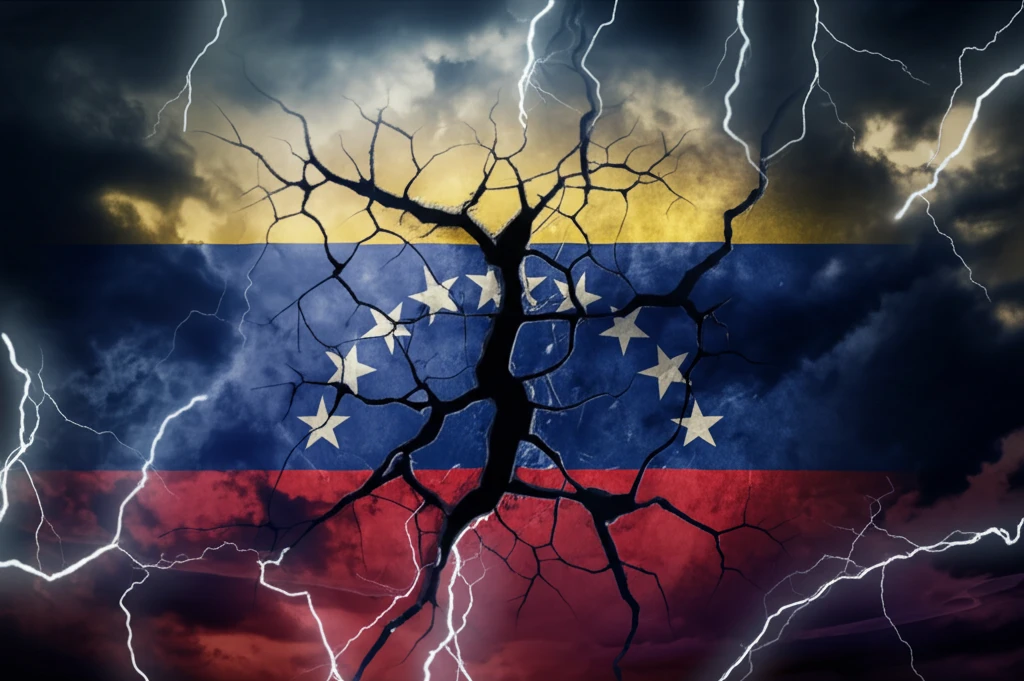
Venezuela's Political Crisis: How Polarization Erodes Democracy

"A deep dive into the factors driving Venezuela's democratic decline, from participatory democracy to social divides."
Venezuela, once a beacon of democratic promise in Latin America, now grapples with a severe political and economic crisis. Understanding how it got here requires a close examination of the concept of political polarization. This isn't just about differing opinions; it's about how deeply divided societies can undermine the very foundations of democracy.
Political polarization, as seen in Venezuela, occurs when societies split into opposing groups with conflicting values, principles, and ideologies. This division makes rational debate and compromise nearly impossible. When these differences intensify to the point where opposing groups view each other as enemies, the potential for violence and authoritarianism rises dramatically.
This article explores how political polarization took root in Venezuela, specifically during the Bolivarian Revolution led by Hugo Chávez and Nicolás Maduro. By examining the interplay of participatory democracy, social class, and competing political narratives, we can better understand the conditions that led to the erosion of democracy in this South American nation.
Polarization as a Driver of Democratic Decline
Political polarization is the divergence of political attitudes away from the center, toward ideological extremes, and scholars distinguish between ideological polarization and affective polarization. In sharply polarized electorates, even voters who value democracy will be willing to sacrifice fair democratic competition for the sake of electing politicians who champion their interests. This dynamic shows how polarization erodes an electorate's commitment to democratic norms.
Measuring Polarization and Its Limits
The signs of political polarization are evident on both ends of the political spectrum, though the trajectory, nature, and extent differ between sides. Research in political science is at the frontier of more detailed measures of polarization that show what drives those feelings. A second generation of understanding focuses on mass affective polarization, described as emotional dislike based on identity that affects regular people. Interventions to reduce policy-based polarization among political elites represent one accepted approach, though elite-focused strategies face limits when polarization is rooted in identity rather than policy.
Weimar's Warning
The Weimar Republic's lesson is how polarization, economic crisis, and demagoguery can destroy a democracy and lead to authoritarian rule. It is a warning that even an advanced society with educated citizens is not immune to descending into authoritarianism. This historical case remains foundational for understanding how polarization can undermine democratic institutions.
The Roots of Polarization: Competing Visions of Democracy
The seeds of Venezuela's polarization were sown with the introduction of participatory democracy into the country's constitution. While seemingly inclusive, this concept created a rift between competing visions of democracy: representative versus participatory. Those aligned with the traditional elite and middle class often favored a liberal-representative model, emphasizing individual rights and established institutions. Conversely, supporters of Chávez, largely from the marginalized popular sectors, championed participatory democracy, prioritizing collective social and economic rights.
- Competing Definitions: The core problem began from a political-ideological clash around the concepts of democracy itself – participatory versus representative.
- Rights Prioritization: The visions also privileged distinctly different rights, setting individual civil and political rights against collective social and economic rights.
- Exclusion: The previous dominant groups (middle and upper classes) became the political opposition, further exacerbating the divide.
From Ideological to Affective Polarization
Recent scholarship has moved beyond policy-based disagreement toward what researchers call mass affective polarization: emotional dislike based on identity that affects regular people, not just political elites. Survey research documents that polarization is evident on both ends of the political spectrum, though its trajectory, nature, and extent differ. This research provides insight on what might change the course of a nation.
Resilience and the Limits of Immunity
One counterargument holds that mature, educated democracies are resilient against polarization's worst effects, yet the Weimar case shows that even an advanced society with educated citizens is not immune to descending into authoritarian rule. Political polarization is also not unique to the United States, though research indicates its causes are. This complicates any assumption that a single remedy can reverse polarization across different national contexts.
Shared Polarization, Distinct Causes
Political polarization is not unique to the United States, but research indicates its causes are specific to national contexts. Within the American case, the signs of polarization are evident on both ends of the political spectrum, though the trajectory, nature, and extent differ. Contrasting models such as participatory democracy, in which citizens participate individually and directly in decision-making, offer an alternative framework for comparison.
Navigating Beyond Polarization: A Path Forward
Venezuela's experience offers critical lessons for other societies grappling with deep divisions. To prevent democracy from eroding, it's essential to reduce poverty and social inequality, foster ideological compatibility, and design inclusive public policies. A clear constitutional framework reflecting plurality is also crucial, ensuring that all citizens, regardless of their differences, feel represented and included. Without these safeguards, the promise of participatory democracy can turn into a path toward authoritarianism.
Democracy's Willing Sacrifice
Expert analysis concludes that in sharply polarized electorates, even voters who value democracy will sacrifice fair democratic competition to elect politicians who champion their interests. Polarization therefore erodes an electorate's commitment to democratic competition from within, rather than through external attack. This internal erosion is a central mechanism linking polarization to democratic backsliding.
Next Frontiers in Measuring and Repairing Polarization
Research in political science is at the frontier of more detailed measures of polarization that show what drives those feelings, offering insight into what might change the course of a nation. A second generation of understanding targets mass affective polarization and emotional dislike based on identity. Participatory democracy, in which citizens participate individually and directly, may represent a forward direction for rebuilding civic engagement.
The Systemic Roots of Backsliding
Proposed causes of democratic backsliding include economic inequality, unemployment, culture wars, culturally conservative reactions to societal changes, populist or personalist politics, and external influence from great powers. These systemic pressures interact with polarization to strain democratic institutions. The Weimar case illustrates how polarization, combined with economic crisis and demagoguery, can lead to authoritarian rule.
When Neighbors Become Adversaries
Polarization is not only a matter of policy disagreement but emotional dislike based on identity that affects regular people in their daily lives. Even citizens who genuinely value democracy may be willing to sacrifice fair democratic competition to elect politicians who champion their interests. This identity-driven hostility is what transforms ordinary political rivalry into a threat to democratic stability.