
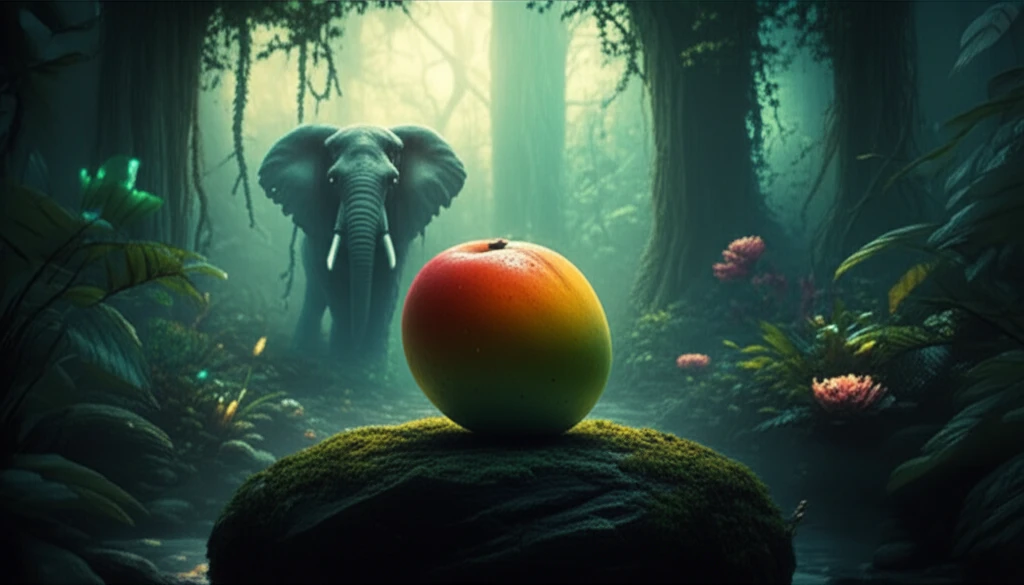
Vanishing Giants: How Overhunting Reshapes Plant Evolution

"Could the decline of large fruit-eating animals lead to a world with dramatically smaller fruits?"
The world's ecosystems are facing a silent crisis: defaunation, the loss of large vertebrates. While habitat loss and climate change often take center stage, the disappearance of animals like elephants, large birds, and primates is triggering ripple effects we're only beginning to understand. One of the most intriguing is how it could be reshaping the very fruits that sustain them.
For millennia, plants and fruit-eating animals have co-evolved, with fruit size, color, and other traits influenced by the animals that disperse their seeds. But what happens when the largest of these animals vanish? Do fruits adapt, shrinking to cater to smaller frugivores, or do they face an uncertain future?
A recent study across the Indo-Malay Archipelago offers a compelling glimpse into this evolutionary cascade. By comparing fruit traits in regions with varying levels of frugivore diversity, scientists are uncovering how overhunting and habitat loss are not just causing species extinctions, but are actively altering the evolutionary trajectory of plant life.
The Shrinking Fruit Phenomenon: A Natural Experiment
The Indo-Malay Archipelago, with its diverse islands and distinct faunal compositions separated by zoogeographic barriers like the Wallace Line, provides a unique 'natural experiment.' Plant lineages have spread across these islands, adapting to the varying suites of fruit-eating birds and mammals present.
- Fruit size, in particular, showed a striking pattern. On average, fruits in the Moluccas and Sulawesi were 40-46% smaller than those in the Sunda Region.
- This suggests a direct link between the presence of large frugivores and the evolution of larger fruit sizes.
- Fruit color, however, did not show a significant correlation with vertebrate diversity.
A Warning for the Future: The Homogenization of Fruit
The study's findings carry a sobering warning. As large frugivores continue to decline in tropical forests due to overhunting and habitat loss, we may be witnessing the beginning of a widespread shift towards smaller fruit sizes. This homogenization of fruit traits could reduce the diversity of seed dispersal mechanisms, making ecosystems more vulnerable to environmental changes.
While the research focused on fruit size, the authors caution that other fruit characteristics, such as color and placement, could also be affected by the changing selection pressures. Further research is needed to fully understand the long-term consequences of defaunation on plant evolution and ecosystem health.
Ultimately, conserving large frugivores is not just about protecting individual species; it's about safeguarding the intricate web of interactions that sustains entire ecosystems. By understanding the evolutionary links between animals and plants, we can better appreciate the far-reaching consequences of defaunation and work towards a more sustainable future.