
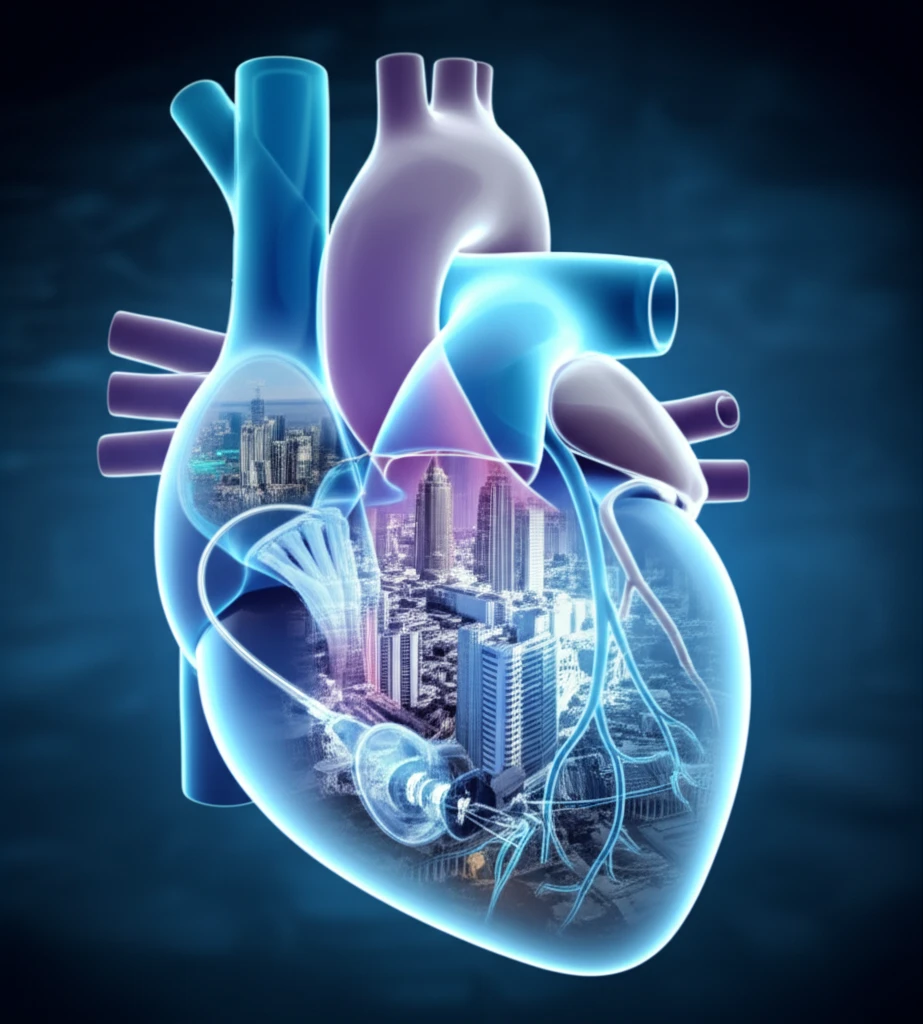
Surreal illustration of a heart with a cityscape inside, representing HLHS treatment.

Valve-in-Valve Innovation: A Lifeline for Complex Heart Conditions

"Explore how a novel hybrid transcatheter technique offers new hope for patients with hypoplastic left heart syndrome (HLHS) and tricuspid valve dysfunction."


For individuals grappling with congenital heart conditions, advancements in medical technology offer renewed optimism. One such innovation is the transcatheter valve-in-valve implantation, a less invasive alternative to traditional open-heart surgery for failing tricuspid bioprostheses. This procedure has gained recognition as a viable option, demonstrating high success rates and minimal complications in various acquired and congenital heart lesions.

Among the most challenging congenital heart conditions is hypoplastic left heart syndrome (HLHS), where the left side of the heart is severely underdeveloped. Tricuspid valve dysfunction, a common complication in HLHS, significantly contributes to patient morbidity and mortality. Traditional surgical interventions can be complex and carry substantial risks, making less invasive alternatives highly desirable.

Now, a groundbreaking case report details the successful hybrid trans-atrial implantation of an Edwards Sapien XT valve in the tricuspid position of a 9-year-old patient with HLHS. This marks a significant milestone as the first documented case of this specific procedure in this unique anatomical location. Let's delve into the details of this innovative approach and its potential to revolutionize the treatment of HLHS and tricuspid valve dysfunction.

Understanding the Hybrid Transcatheter Valve-in-Valve Procedure

Surreal illustration of a heart with a cityscape inside, representing HLHS treatment.

The hybrid transcatheter valve-in-valve procedure represents a significant advancement in the treatment of tricuspid valve dysfunction, particularly in the context of complex congenital heart conditions like HLHS. Unlike traditional open-heart surgery, this minimally invasive approach offers several advantages, including reduced recovery time, lower risk of complications, and improved patient outcomes.

In the case of the 9-year-old patient with HLHS, the procedure involved the trans-atrial implantation of an Edwards Sapien XT valve into a dysfunctional bioprosthetic valve in the tricuspid position. This hybrid approach combines surgical and catheter-based techniques to achieve optimal results. Here's a breakdown of the key steps involved:

  • Pre-operative Assessment: A thorough evaluation of the patient's cardiac anatomy and function is essential to determine the suitability of the procedure and guide the selection of the appropriate valve size and implantation technique.
  • Surgical Access: A limited right anterior thoracotomy (surgical incision in the chest) is performed to gain access to the right atrium, the heart's upper chamber.
  • Catheter Placement: A guiding catheter is advanced through the right atrium to the site of the dysfunctional tricuspid valve.
  • Valve Implantation: The Edwards Sapien XT valve, mounted on a balloon catheter, is carefully positioned within the existing bioprosthetic valve.
  • Balloon Inflation: The balloon is inflated to expand the valve, securing it in place and restoring proper valve function.
  • Post-operative Monitoring: The patient is closely monitored in the intensive care unit to ensure optimal valve function and detect any potential complications.
The successful implantation of the Edwards Sapien XT valve in this case resulted in an immediate reduction in Fontan pressures (pressure in the systemic veins) and significant clinical improvement. The valve has continued to function well for nearly three years post-implantation, demonstrating the long-term efficacy of this innovative approach.

A Promising Future for Complex Heart Conditions

This groundbreaking case report offers a glimmer of hope for patients with HLHS and tricuspid valve dysfunction. The successful hybrid transcatheter valve-in-valve procedure demonstrates the potential to improve outcomes, reduce complications, and enhance the quality of life for individuals with these challenging conditions. As research and innovation continue to advance, we can anticipate further breakthroughs in the treatment of congenital heart disease, offering new hope and improved outcomes for patients and their families.

About this Article -

This article was crafted using a human-AI hybrid and collaborative approach. AI assisted our team with initial drafting, research insights, identifying key questions, and image generation. Our human editors guided topic selection, defined the angle, structured the content, ensured factual accuracy and relevance, refined the tone, and conducted thorough editing to deliver helpful, high-quality information.See our About page for more information.

This article is based on research published under:

DOI-LINK: 10.1002/ccd.27910, Alternate LINK

Title: Hybrid Transcatheter Tricuspid Valve-In-Valve Placement Of An Edwards Sapien Xt Valve In Palliated Hypoplastic Left Heart Syndrome

Subject: Cardiology and Cardiovascular Medicine

Journal: Catheterization and Cardiovascular Interventions

Publisher: Wiley

Authors: Andrew B. Ho, Markku Kaarne, Michael Mullen, Nicholas Hayes

Published: 2018-11-12

Everything You Need To Know

1

What is hypoplastic left heart syndrome (HLHS), and why is it a concern?

HLHS is a severe congenital heart condition where the left side of the heart is underdeveloped. This makes it difficult for the heart to pump blood effectively, leading to insufficient blood flow to the body. Tricuspid valve dysfunction, a common complication in HLHS, further exacerbates the problem. This dysfunction significantly increases the risk of morbidity and mortality for those affected, making innovative treatments like the hybrid transcatheter valve-in-valve procedure crucial.

2

What is the hybrid transcatheter valve-in-valve procedure and how does it work?

The hybrid transcatheter valve-in-valve procedure is a minimally invasive approach used to treat tricuspid valve dysfunction, especially in complex heart conditions such as HLHS. It involves the implantation of a new valve, like the Edwards Sapien XT valve, within a dysfunctional bioprosthetic valve. The procedure begins with a pre-operative assessment, followed by surgical access via a limited right anterior thoracotomy to the right atrium. A catheter is then guided to the tricuspid valve site, where the Edwards Sapien XT valve is deployed and secured using a balloon catheter. This approach aims to restore proper valve function and improve blood flow.

3

What are the benefits of the hybrid transcatheter approach compared to traditional surgery?

The hybrid transcatheter valve-in-valve procedure offers several advantages over traditional open-heart surgery. These include a reduced recovery time for the patient, lower risk of complications, and overall improved patient outcomes. This minimally invasive technique allows for a less traumatic approach, which can be particularly beneficial for patients with complex conditions like HLHS who might be at higher risk from more invasive procedures.

4

What specific valve was used in the reported successful case, and where was it implanted?

In the case report, the Edwards Sapien XT valve was successfully implanted. The valve was placed in the tricuspid position, which is a significant advancement as it is the first documented instance of this specific procedure in this unique anatomical location. This placement is crucial because it addresses the tricuspid valve dysfunction that often accompanies HLHS, improving the patient's cardiac function and overall health.

5

How has the hybrid transcatheter valve-in-valve procedure impacted the treatment of HLHS and tricuspid valve dysfunction?

The hybrid transcatheter valve-in-valve procedure has shown promising results in treating HLHS and tricuspid valve dysfunction. The successful implantation of the Edwards Sapien XT valve has led to immediate reduction in Fontan pressures and significant clinical improvement in the patient. This approach offers a less invasive alternative to traditional surgery, potentially reducing complications and improving the quality of life for those with these challenging congenital heart conditions. The long-term efficacy of this procedure continues to be monitored, but initial results indicate a significant advancement in the treatment of complex heart conditions.

Newsletter Subscribe

Subscribe to get the latest articles and insights directly in your inbox.