
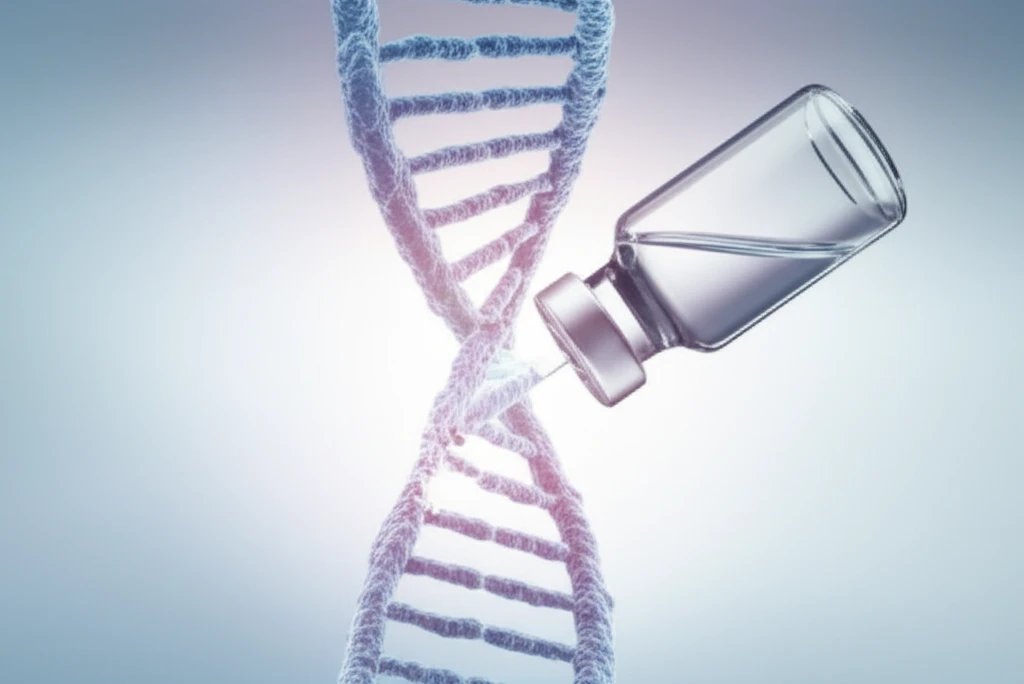
DNA helix merging with a vaccine vial, representing personalized immunity

Vaccines Personalized: How Genetics Will Shape Your Immunity

"Unlocking the code to individual immune responses for better protection in the age of personalized medicine."


Vaccines stand as one of medicine's greatest achievements, effectively preventing and controlling infectious diseases. Historically, vaccines have been administered with the goal of inducing a protective immune response in everyone. However, the reality is that individuals respond differently to vaccines; what works well for one person may not be as effective for another.

For over a century, vaccines have dramatically reduced the incidence and mortality of diseases like polio, smallpox, and measles. But the field is constantly evolving, seeking to address new and old challenges. The development of vaccines has been categorized into generations: the first involving live attenuated or inactivated pathogens, and the second utilizing isolated cellular components. Advances in DNA technology and carbohydrate chemistry have propelled the second generation forward.

Traditional vaccine development faces hurdles such as non-cultivable pathogens and those with highly variable antigens. The ultimate aim of vaccination is to trigger a robust immune response in everyone, yet achieving universal protection is rare. Factors like gender, age, co-existing conditions, and genetics influence how individuals respond to vaccines. Specifically, an individual's genetic makeup shapes both innate and adaptive immune responses, impacting vaccine effectiveness against viruses like smallpox and influenza.

Decoding Your Immunity: How Genetics Influence Vaccine Response

DNA helix merging with a vaccine vial, representing personalized immunity

The burgeoning field of genomics has opened new avenues for vaccine research. With the first draft of a living organism's genome sequence completed in the mid-90s, scientists gained a fresh perspective. Today, the complete genomic information of numerous microorganisms, including those causing human diseases, is available. High-throughput sequencing technologies are driving sophisticated approaches to understand vaccine-induced immune responses, heralding an era of personalized and predictive vaccinology.

Personalized medicine aims to tailor treatments based on an individual's genetic profile and molecular characteristics. By studying the genomes of both pathogens and hosts, researchers are gaining mechanistic insights to develop novel diagnostics, therapeutics, and vaccine candidates. The concept of "vaccinomics" integrates immunogenetics, immunogenomics, metagenomics, immune profiling, and functional studies to predict immune responses to vaccines.

  • Vaccinomics: Studies how genes affect the body's response to vaccines.
  • Immunogenetics: Focuses on genes related to the immune system.
  • Immunogenomics: Examines the genomic basis of immunity.
  • Metagenomics: Studies the genetic material from microbial communities.
These innovative approaches incorporate various "omics" technologies—transcriptomics, metagenomics, metabolomics, and adversomics—to decipher the functionality and organization of immune responses. By correlating genome-wide information, scientists aim to unravel the mechanisms through which genetic and environmental factors interact. Ultimately, the goal is to identify specific immunological profiles that can be customized to provide long-term protection against pathogens. Systems biology approaches can forecast the immunogenicity and efficacy of vaccine candidates, enabling the identification of protective signatures related to immunological responses.

The Future of Vaccines: Personalized and Predictive

The immune response network theory posits that a vaccine's effect is the cumulative result of interactions driven by a host of genes and their interplay, making it theoretically predictable. Scientists are increasingly recognizing the impact of epigenetics and metagenomics on vaccine responses. Overcoming obstacles such as genetic variability and pathogen evolution requires a systemic approach. By integrating various layers of omic information, researchers aim to identify biomarker signatures that reveal how innate and adaptive responses can be integrated into a unified network. To realize the full potential of personalized and predictive vaccinology, ongoing research is essential to navigate the complex interplay between genetics, immunity, and environmental factors, ultimately leading to more effective and safer vaccines.

About this Article -

This article was crafted using a human-AI hybrid and collaborative approach. AI assisted our team with initial drafting, research insights, identifying key questions, and image generation. Our human editors guided topic selection, defined the angle, structured the content, ensured factual accuracy and relevance, refined the tone, and conducted thorough editing to deliver helpful, high-quality information.See our About page for more information.

Everything You Need To Know

1

Why don't vaccines work the same for everyone?

Vaccines have traditionally aimed to induce a protective immune response in everyone. However, individuals respond differently due to factors like genetics. Understanding how genes influence the immune response is crucial for developing more effective and personalized vaccines. This involves studying the genetic makeup of both pathogens and hosts to gain insights into immune responses.

2

What is 'vaccinomics,' and why is it important?

Vaccinomics is the study of how genes affect the body's response to vaccines. It's important because it helps scientists understand why some people respond better to vaccines than others. By integrating vaccinomics with other 'omics' technologies, researchers aim to identify specific immunological profiles that can be customized to provide long-term protection against pathogens.

3

What are immunogenetics and immunogenomics, and why are they important for vaccine development?

Immunogenetics focuses on genes related to the immune system, while immunogenomics examines the genomic basis of immunity. These fields are significant because they help decipher the complex interplay between genetics, immunity, and environmental factors. By studying these genes, researchers can better predict how individuals will respond to vaccines and tailor them accordingly. The innovative approaches incorporate various 'omics' technologies—transcriptomics, metagenomics, metabolomics, and adversomics—to decipher the functionality and organization of immune responses.

4

What is metagenomics, and what does it have to do with vaccines?

Metagenomics studies the genetic material from microbial communities. Understanding the metagenome is significant because it sheds light on how microbial communities influence immune responses to vaccines. By analyzing the genetic material of these communities, scientists can gain insights into the interactions between the host, microbes, and vaccines, ultimately leading to the development of more effective and safer vaccines.

5

What is personalized medicine, and how does it relate to vaccines?

Personalized medicine aims to tailor treatments based on an individual's genetic profile and molecular characteristics. This approach is crucial for vaccines because it recognizes that individuals respond differently to vaccines due to their unique genetic makeup. By understanding these genetic differences, vaccines can be customized to enhance effectiveness and safety. This customization involves using various 'omics' technologies to decipher the functionality and organization of immune responses.

Newsletter Subscribe

Subscribe to get the latest articles and insights directly in your inbox.