
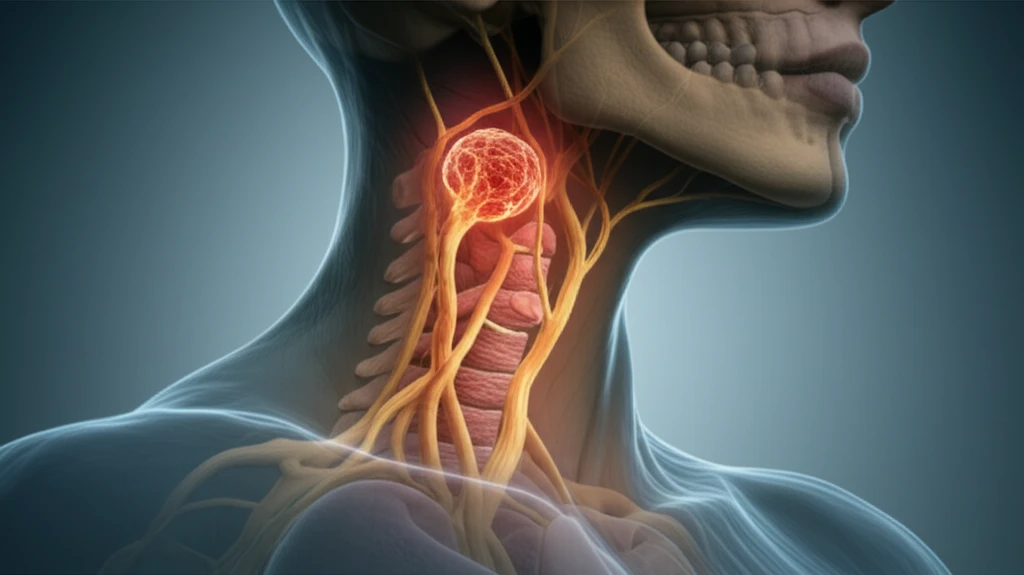
Illustration of a vagal schwannoma in the neck, emphasizing the delicate balance of structures.

Unveiling the Uncommon: What You Need to Know About Vagal Schwannomas

"From Diagnosis to Treatment: Navigating the Challenges of a Rare Neck Tumor"


Imagine a persistent lump in your neck, a seemingly innocuous swelling that sparks a cascade of medical investigations. For some, this could be a vagal schwannoma, a rare tumor arising from the vagal nerve, a critical component of your nervous system. While uncommon, understanding this condition is crucial for effective management and improved quality of life. This article delves into the intricacies of vagal schwannomas, offering a comprehensive overview of what you need to know.

Vagal schwannomas often present unique challenges, given their location and potential impact on vital functions such as voice, swallowing, and heart rate regulation. Diagnosis can be tricky, and treatment decisions require careful consideration. This article provides a clear and accessible guide to navigate these complexities, ensuring you're well-informed every step of the way.

Whether you're a patient seeking answers, a healthcare professional looking for updated information, or simply curious about rare medical conditions, this article provides a comprehensive and easy-to-understand guide to vagal schwannomas, covering everything from their nature and causes to diagnostic approaches and treatment options.

Deciphering Vagal Schwannomas: What Are They?

Illustration of a vagal schwannoma in the neck, emphasizing the delicate balance of structures.

Vagal schwannomas are benign tumors that develop from the Schwann cells, which insulate the vagal nerve. The vagal nerve, also known as the tenth cranial nerve, plays a crucial role in regulating various bodily functions, including heart rate, digestion, and voice production. These tumors are relatively uncommon, making their diagnosis and management a unique medical challenge.

The symptoms associated with vagal schwannomas can vary, often depending on the tumor's size and location. Many individuals may experience a painless neck mass, while others may have voice changes, such as hoarseness, or difficulty swallowing. In some cases, the tumor can also affect the function of other cranial nerves, leading to a variety of symptoms. The rarity of these tumors means that specialized medical expertise is often required for accurate diagnosis and treatment.

  • Painless Neck Mass: A common initial symptom, often noticed as a lump in the neck.
  • Voice Changes: Hoarseness or alterations in voice quality due to nerve involvement.
  • Swallowing Difficulties: Problems with swallowing, possibly caused by compression of the surrounding structures.
  • Other Cranial Nerve Involvement: Potential impact on other cranial nerves leading to diverse symptoms.
Diagnosing a vagal schwannoma typically involves a combination of physical examination, imaging studies (such as CT scans and MRI), and potentially a biopsy. However, the location of the tumor near critical structures like the carotid artery and jugular vein necessitates careful evaluation to minimize risks. Treatment options often depend on the tumor's characteristics, symptoms, and overall health of the patient. Surgical removal is a common approach, while watchful waiting may be considered in certain cases. The goal is to alleviate symptoms, preserve nerve function, and prevent complications.

Empowering Informed Decisions

Navigating the diagnosis and management of a vagal schwannoma requires a collaborative approach between the patient and healthcare team. By understanding the nature of the condition, the diagnostic process, and available treatment options, individuals can make informed decisions that prioritize their well-being. With the right information and medical support, patients can successfully manage their condition and maintain a good quality of life. Remember to consult with qualified medical professionals for personalized guidance and care.

About this Article -

This article was crafted using a human-AI hybrid and collaborative approach. AI assisted our team with initial drafting, research insights, identifying key questions, and image generation. Our human editors guided topic selection, defined the angle, structured the content, ensured factual accuracy and relevance, refined the tone, and conducted thorough editing to deliver helpful, high-quality information.See our About page for more information.

This article is based on research published under:

DOI-LINK: 10.1016/j.ijscr.2018.10.025, Alternate LINK

Title: Challenges In Managing A Vagal Schwannomas: Lesson Learnt

Subject: Surgery

Journal: International Journal of Surgery Case Reports

Publisher: Elsevier BV

Authors: Norhafiza Mat Lazim

Published: 2018-01-01

Everything You Need To Know

1

What exactly is a vagal schwannoma and what makes it different from other types of neck tumors?

A vagal schwannoma is a rare, benign tumor that originates from the Schwann cells which insulate the vagal nerve. The vagal nerve, or tenth cranial nerve, is essential for regulating functions like heart rate, digestion, and voice production. Unlike other neck tumors, vagal schwannomas specifically arise from this nerve, making their diagnosis and management unique due to the nerve's crucial role and proximity to other vital structures. The rarity requires specialized medical expertise for accurate diagnosis and treatment, setting it apart from more common neck masses.

2

How do vagal schwannomas typically present themselves, and what are the potential long-term implications if left untreated?

Vagal schwannomas often manifest as a painless neck mass, which is usually the first noticeable symptom. However, as the tumor grows, it can affect the vagal nerve, leading to voice changes like hoarseness, or difficulties in swallowing. In some instances, it can impact other cranial nerves, resulting in a variety of symptoms. If left untreated, a vagal schwannoma can continue to grow, potentially causing progressive nerve damage, impacting voice and swallowing functions and possibly affecting heart rate regulation due to compression of the vagal nerve. Early diagnosis and management are therefore essential to prevent long-term complications and preserve nerve function.

3

What are the primary methods for diagnosing a vagal schwannoma, and what are the key considerations during the diagnostic process given the tumor's location?

Diagnosing a vagal schwannoma typically involves a combination of physical examinations and imaging studies, such as CT scans and MRI. In some cases, a biopsy may be necessary. The location of the tumor near critical structures, including the carotid artery and jugular vein, is a key consideration during the diagnostic process. Therefore, careful evaluation is essential to minimize risks during imaging and potential biopsies. Specialized medical expertise is needed to accurately differentiate a vagal schwannoma from other neck masses and to carefully assess the tumor's relationship to surrounding structures.

4

What are the main treatment options available for vagal schwannomas, and how is the best course of action determined for each individual case?

The primary treatment options for vagal schwannomas include surgical removal and, in select cases, watchful waiting. Surgical removal is a common approach to alleviate symptoms and prevent further growth. However, the decision to proceed with surgery depends on various factors, including the tumor's size, location, the severity of symptoms, and the patient's overall health. Watchful waiting may be considered for small, asymptomatic tumors, with regular monitoring to detect any changes. The best course of action is determined through a collaborative approach between the patient and healthcare team, carefully weighing the benefits and risks of each treatment option to preserve nerve function and quality of life.

5

Beyond surgical intervention, what ongoing management strategies and lifestyle adjustments might be necessary for someone diagnosed with a vagal schwannoma to maintain a good quality of life?

Even after successful surgical removal of a vagal schwannoma, ongoing management strategies may be necessary to ensure a good quality of life. This can include regular follow-up appointments with medical professionals to monitor for any recurrence or complications. Speech therapy may be recommended to address any persistent voice or swallowing difficulties resulting from vagal nerve involvement. Lifestyle adjustments might include dietary modifications to manage swallowing issues and voice exercises to improve vocal quality. Additionally, managing any anxiety or emotional distress associated with the diagnosis and treatment through counseling or support groups can be beneficial. The goal is to provide comprehensive care that addresses both the physical and emotional aspects of living with a vagal schwannoma.

Newsletter Subscribe

Subscribe to get the latest articles and insights directly in your inbox.